
During December a lot of progress has been accomplished on the Branch. As before, the action is taking place at the railhead near A Bond warehouse and Ashton Avenue Bridge.
As previously described, the work is being done in phases.
1 – Build a single track from the railhead into the new platform road using wooden sleepers.
2 – Reconnect ‘the gap’ where the wall collapse in 2020 severed the line (the civil engineering has been done by contractors but the rails and sleepers have not yet gone back in).
3 – Once the first two stages are done (and when the scaffolding on Vauxhall Bridge has been removed), the Coles Crane will be able to access the site, making adding the pointwork, replacing wooden sleepers with concrete where necessary, and general re-jigging much easier.
The following is what’s been achieved over 3 working days. Currently the working parties are a small number of people, partially due to the confines of the site, partially because there are only so many tools to go around, and partially due to the ability to supervise groups of people. With time, the hope is to be able to do working days with more people.
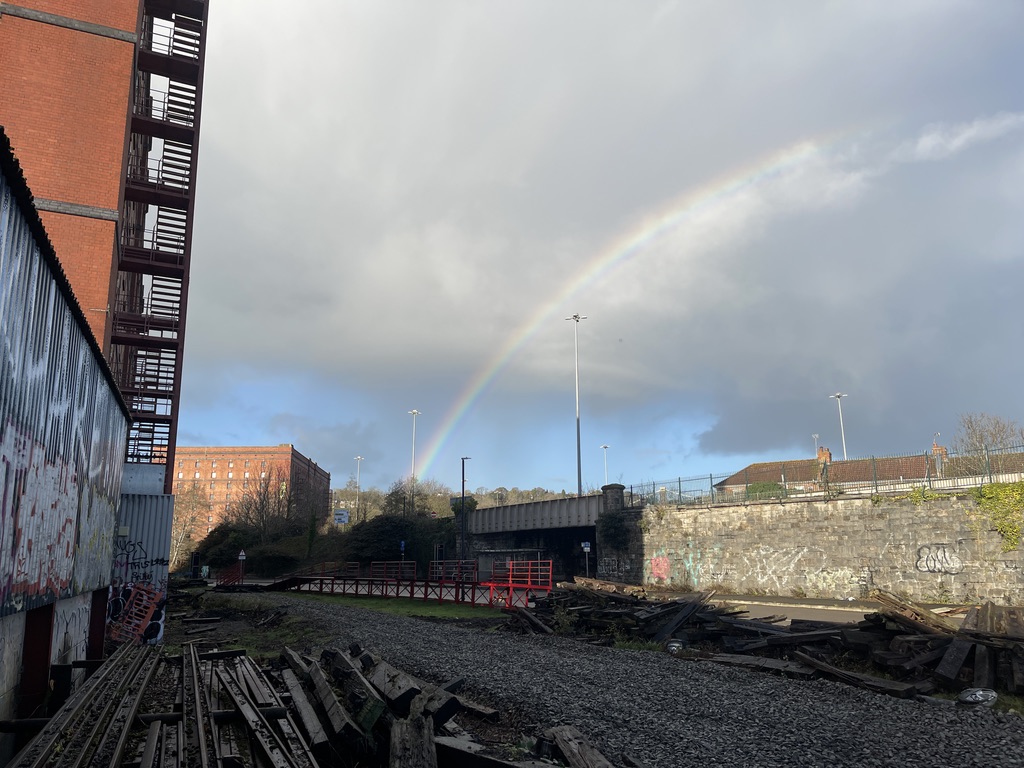
Day 1 kicked off with a lovely rainbow, and cutting down the contractor’s fence that blocked access to the branch alongside the chocolate path. Then some short rail was dragged out of the pile to be used.
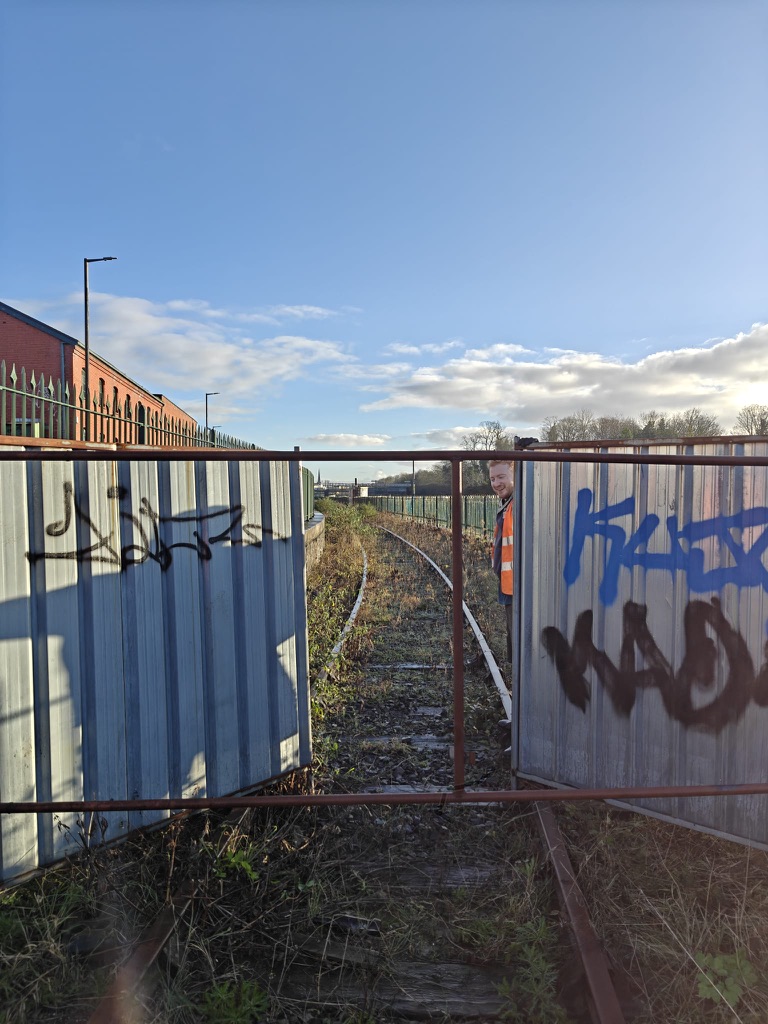
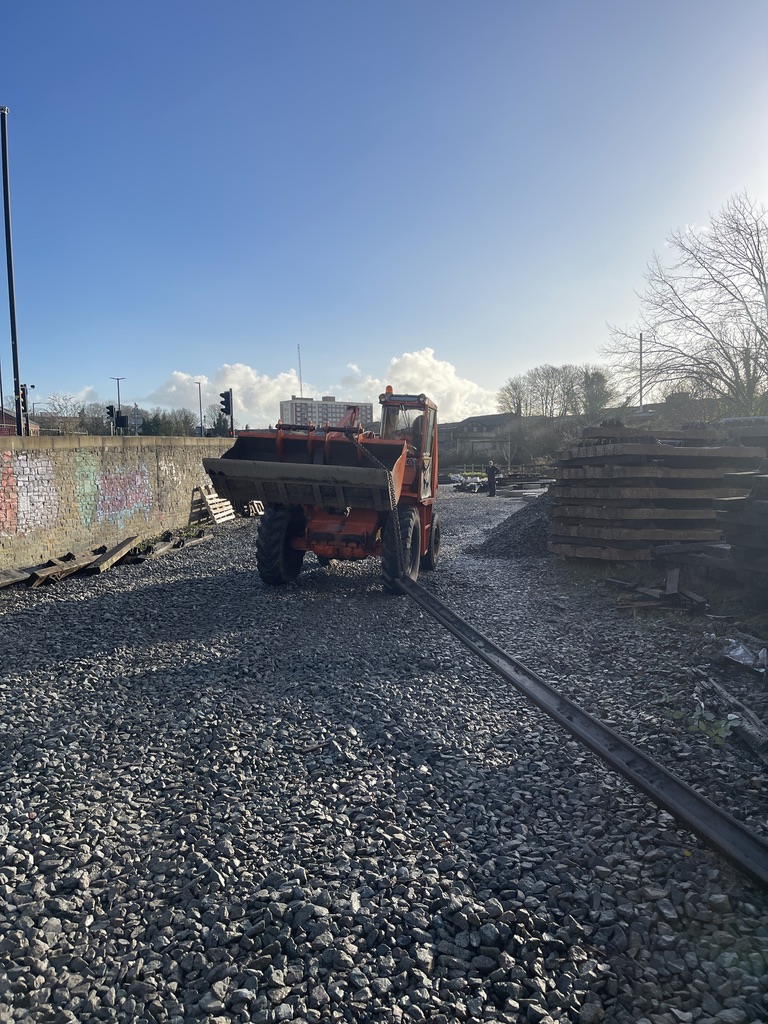
Larry’s forks have been removed again, which enabled Chris to scrape out the excess ballast from the platform area and dump it next to the sleeper piles earlier in the month.
We added track keys to make the new track rigid so that we could get screw jacks underneath the track, followed by the laborious task of shovelling ballast under the rails to give the track some stability and make it level (ish). Did the first new fishplate too!
Once that was done, we dropped the short rail into the North side of the old track, then clipped it up and got more jacks under it.
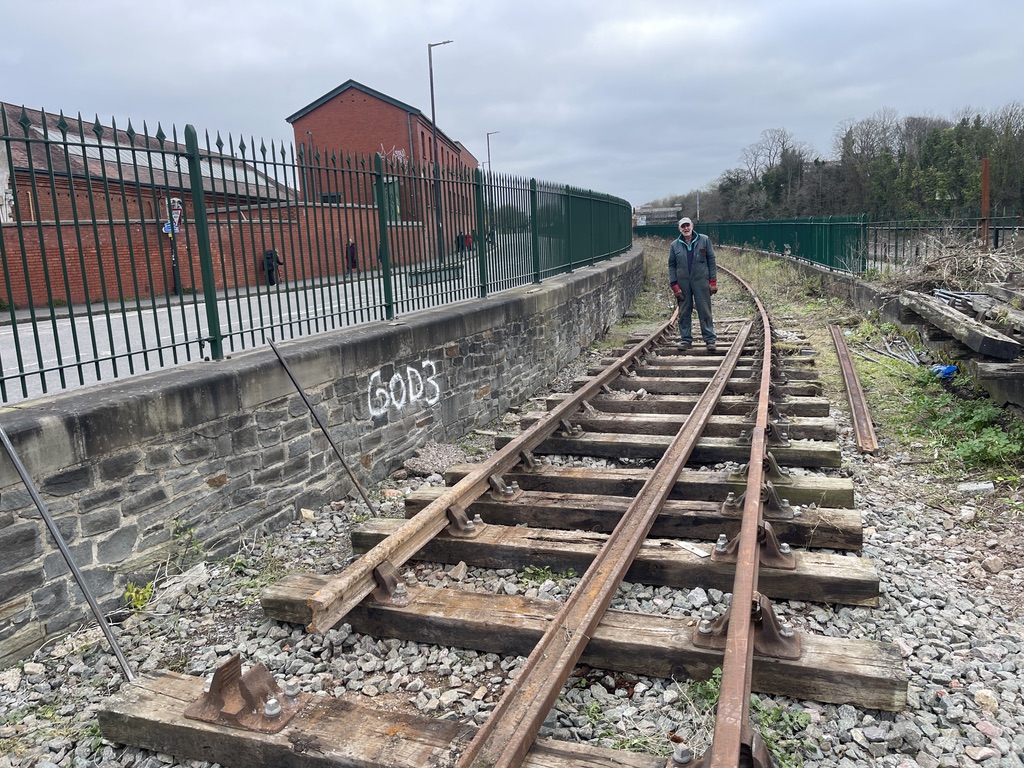
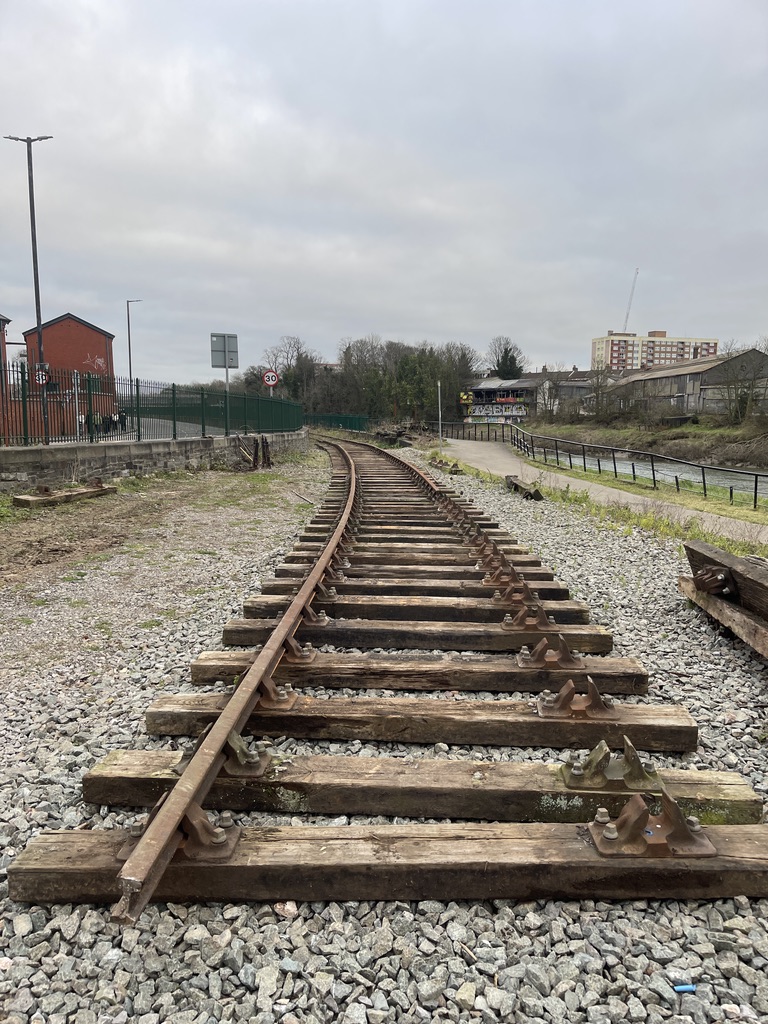
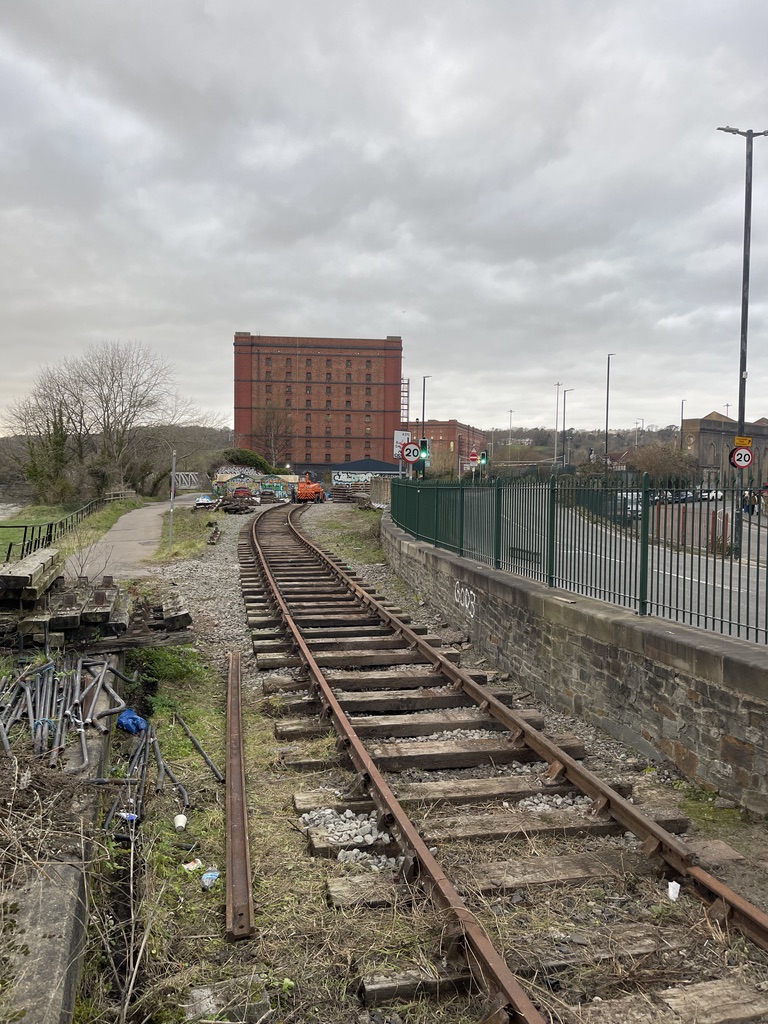
The last photo in this sequence shows the huge height difference between old track and new. Where the old line dipped down, it now needs to climb up towards the new station. The tops of the sleepers were previously at ground level!
The gradient in this section is currently too steep and a much larger segment will need to be height-adjusted and re-ballasted once the track is connected up.
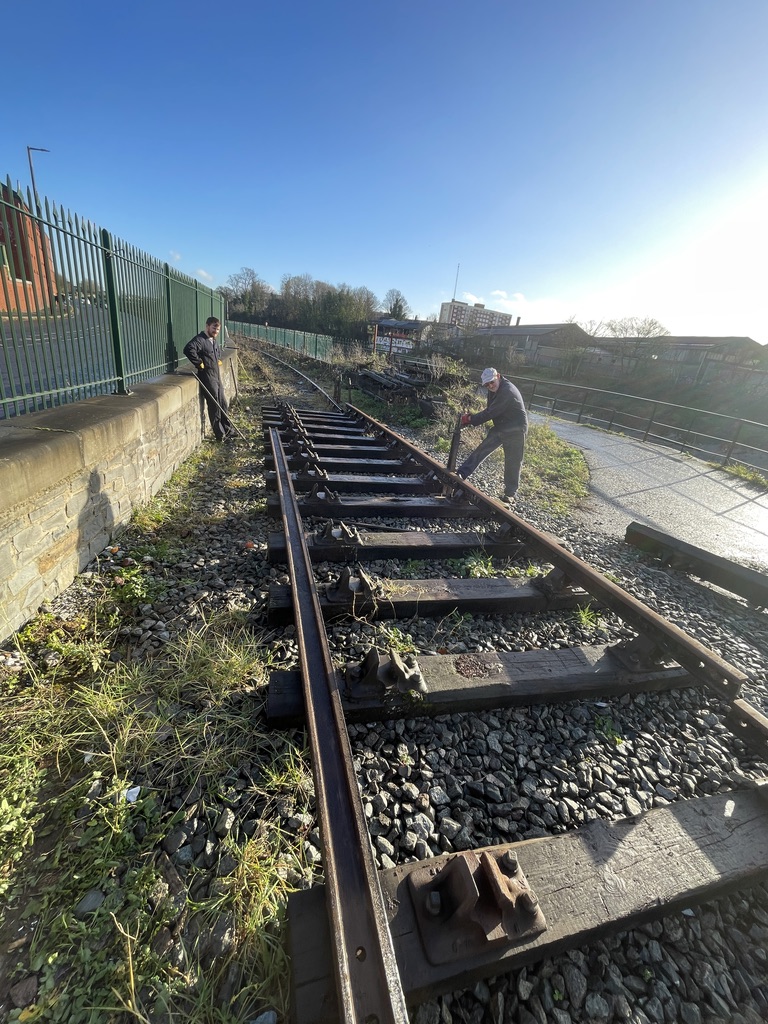
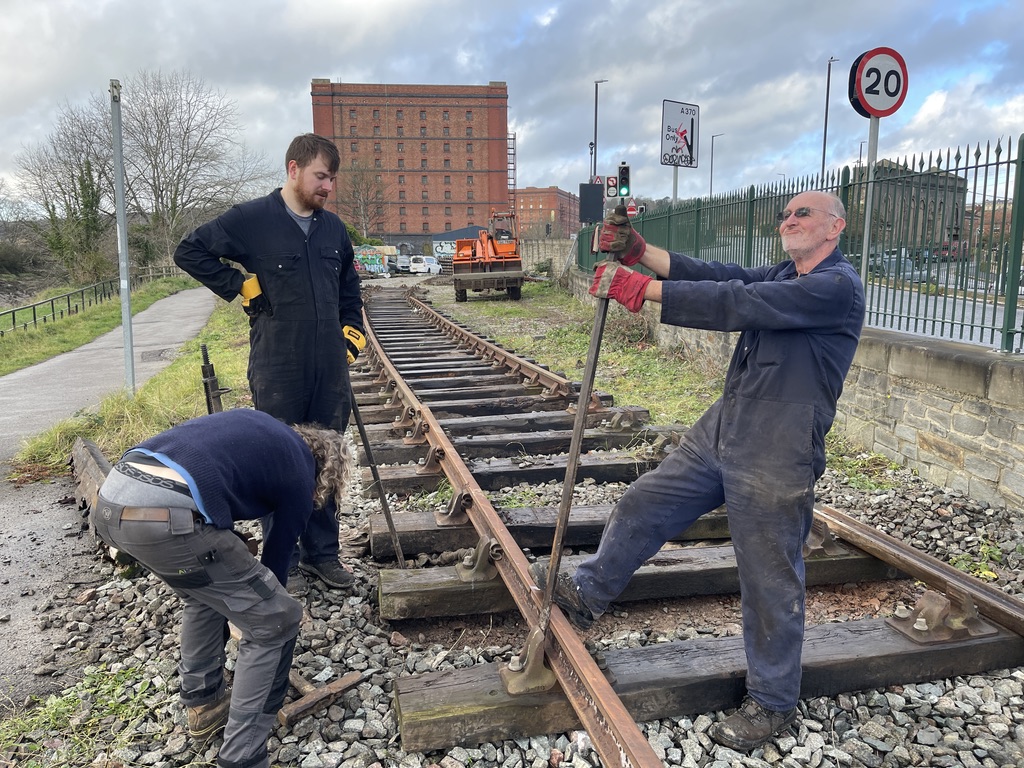

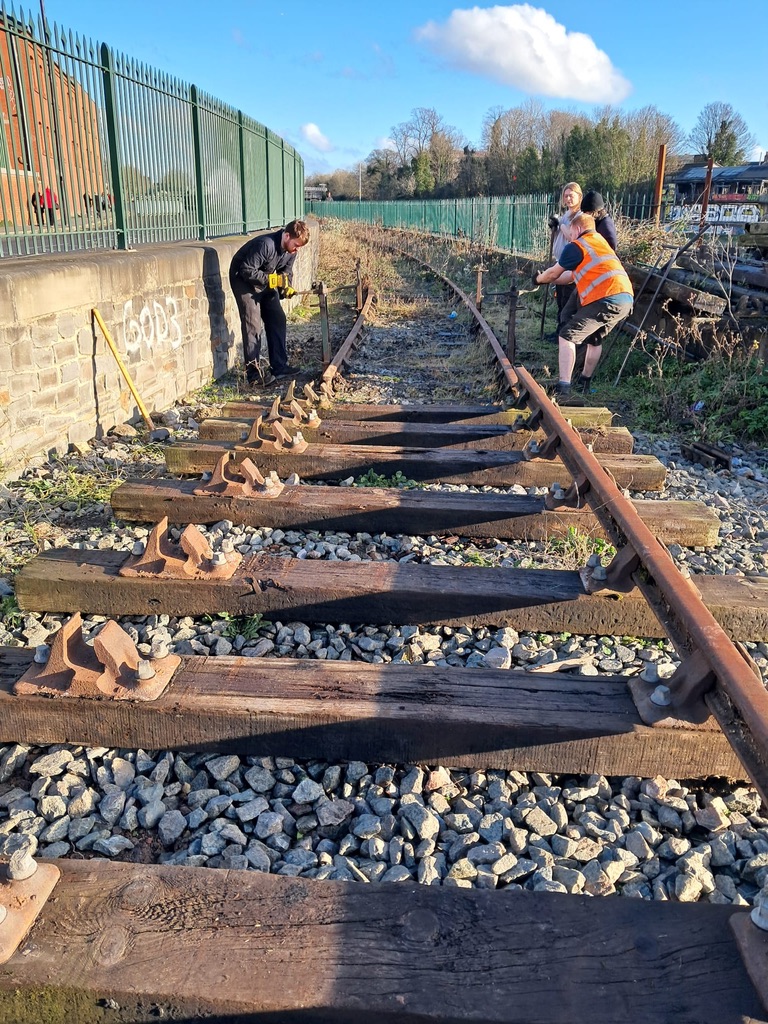

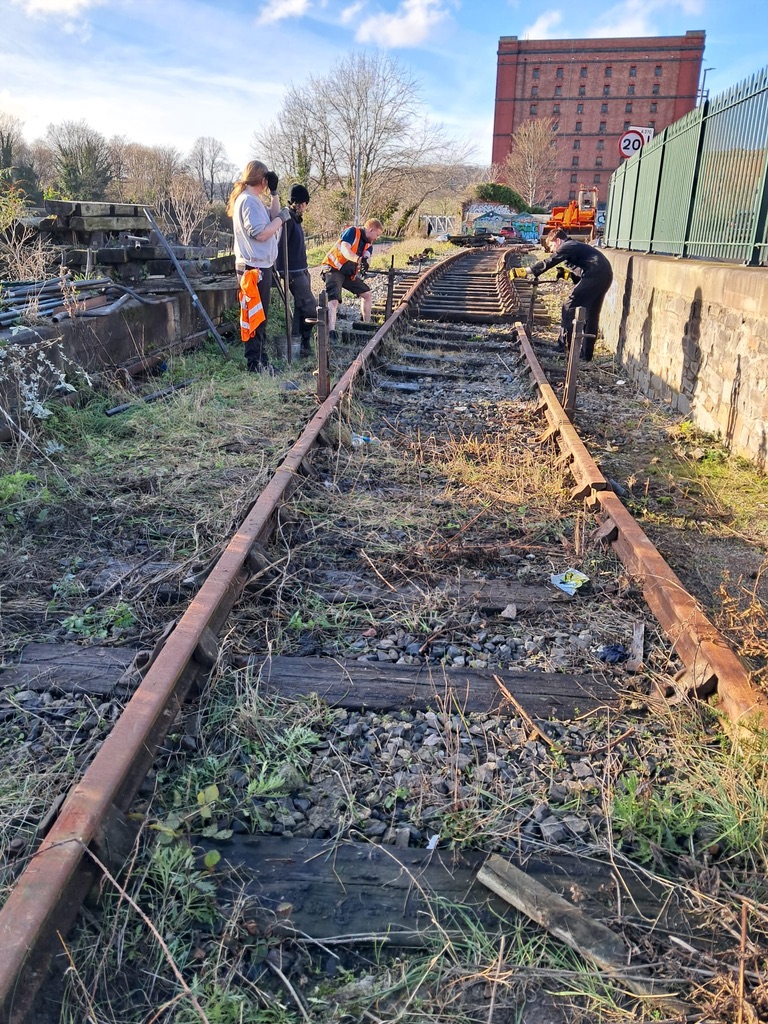
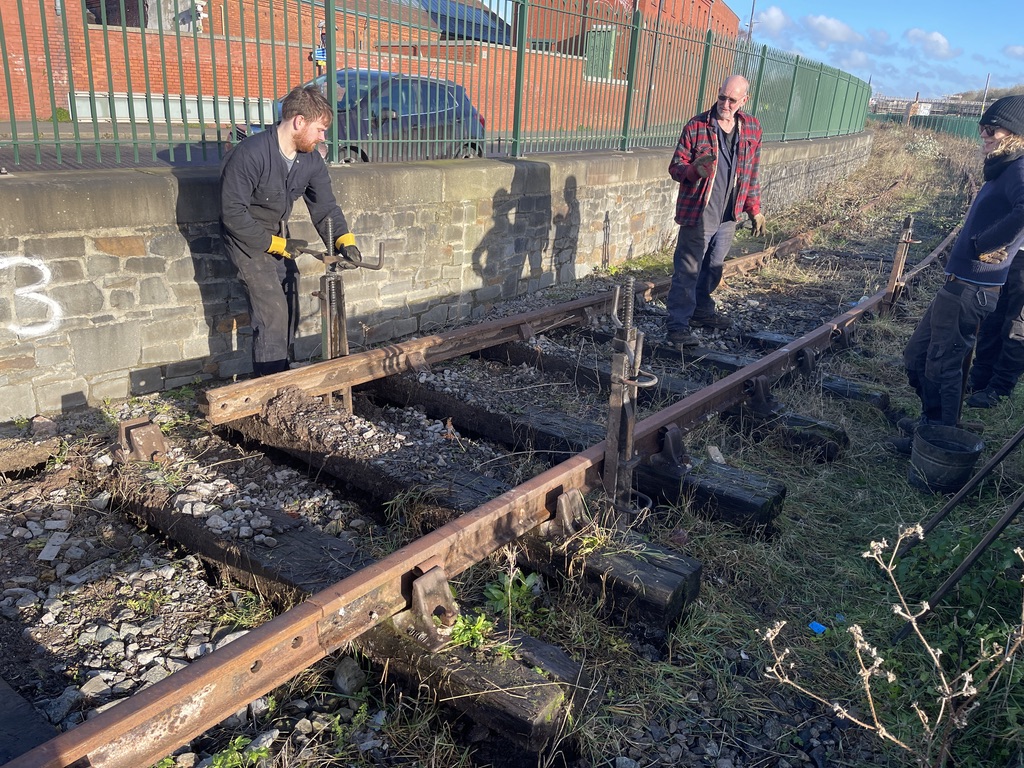
Larry brought down fresh ballast to be shovelled under the track to support it now that it’s been jacked up. Then the opportunity was taken to dig out the two rails that had been dumped in the cess 10ish years ago. They’d been there so long that they were well and truly buried!
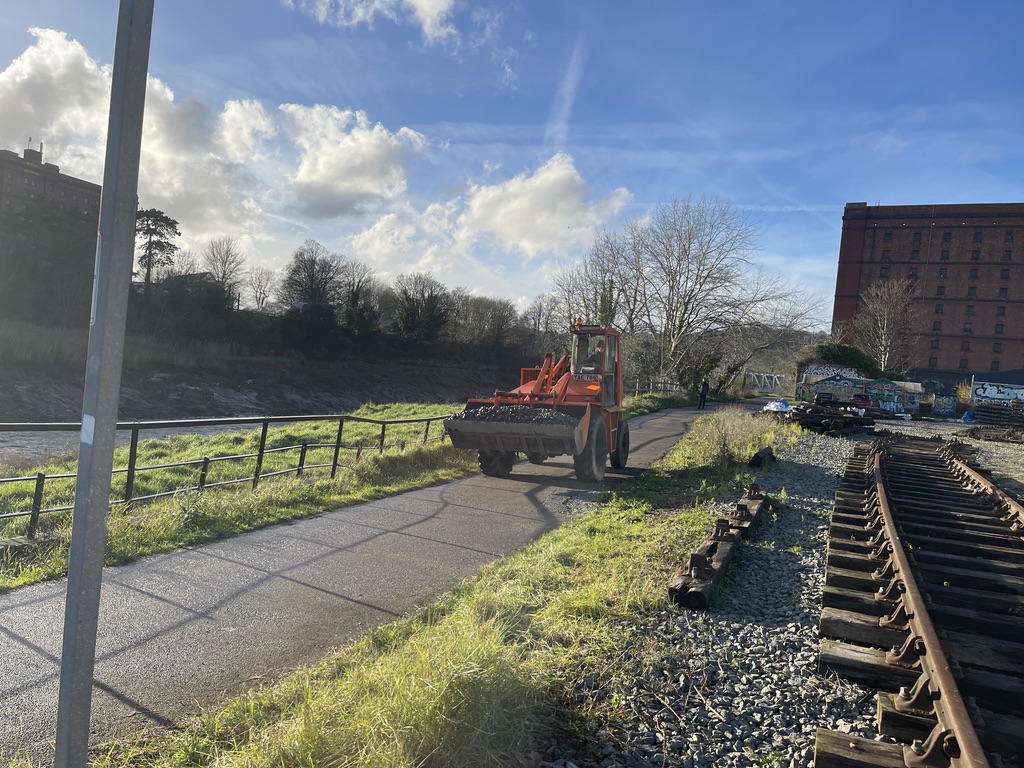
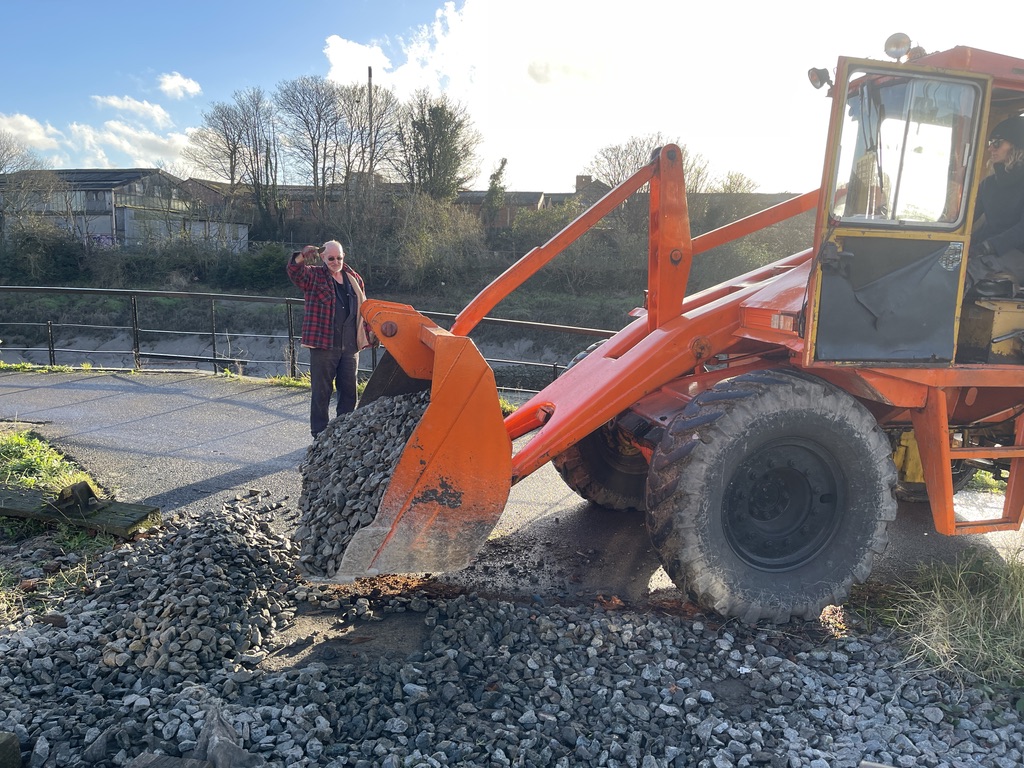
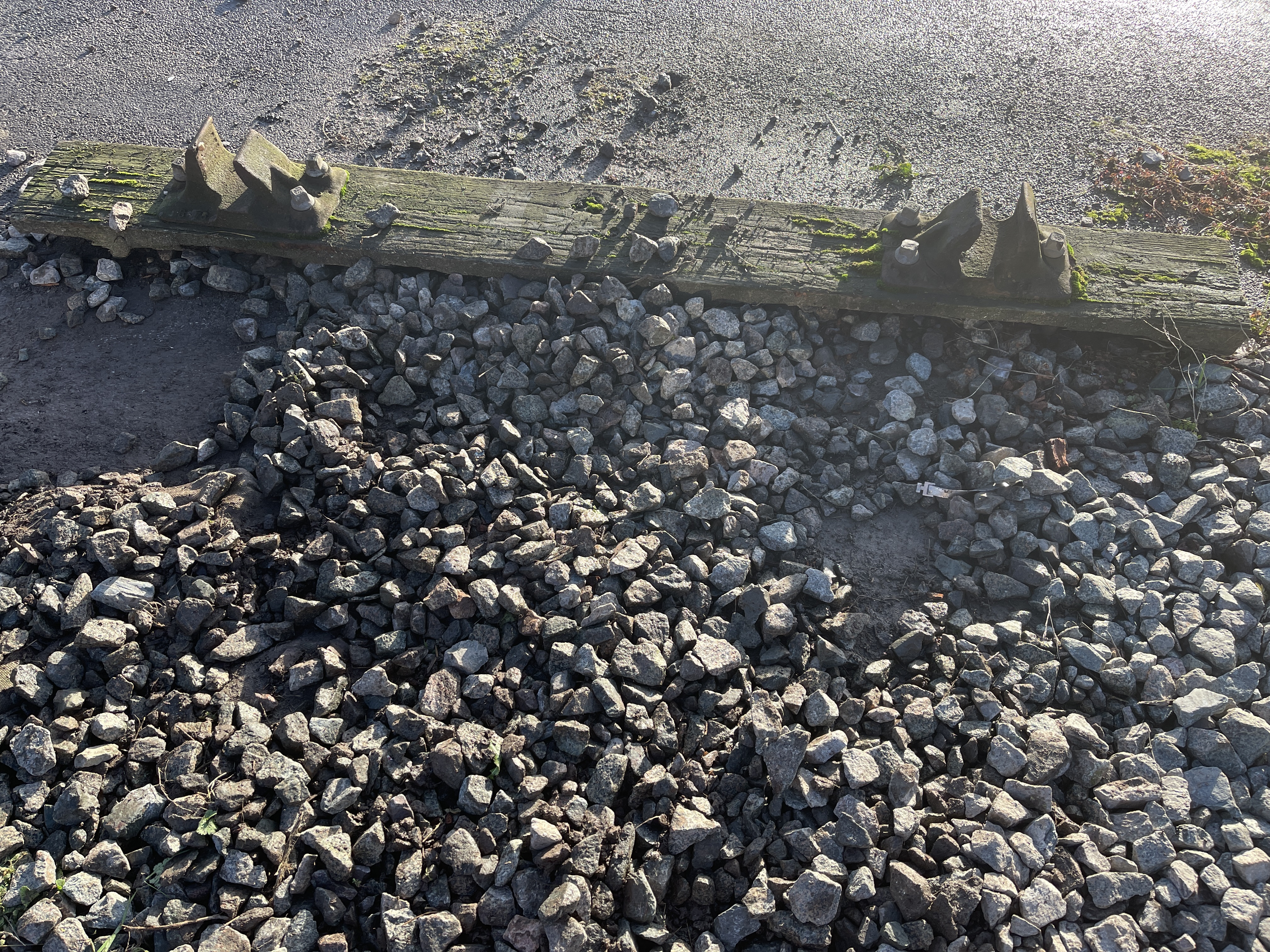
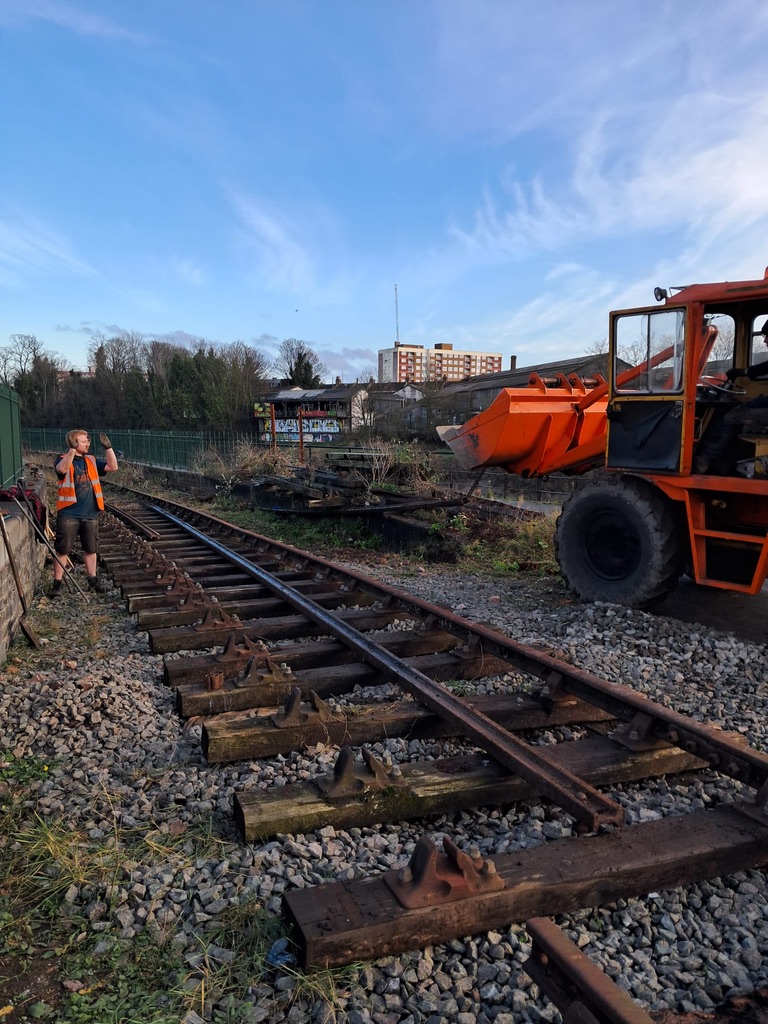
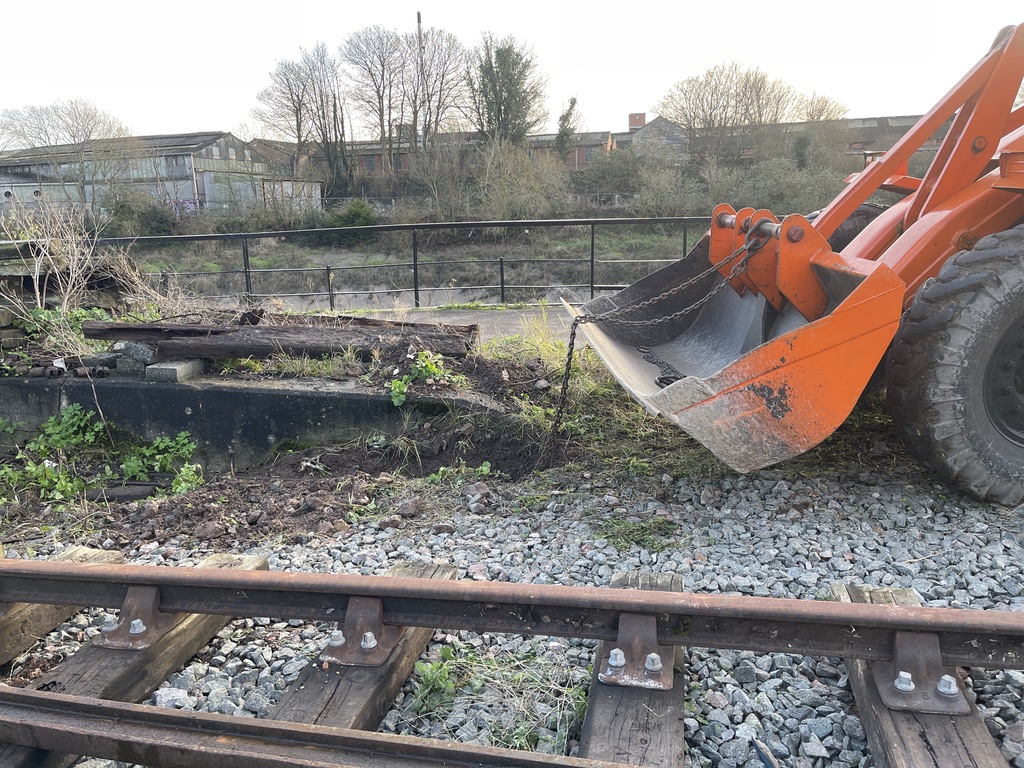
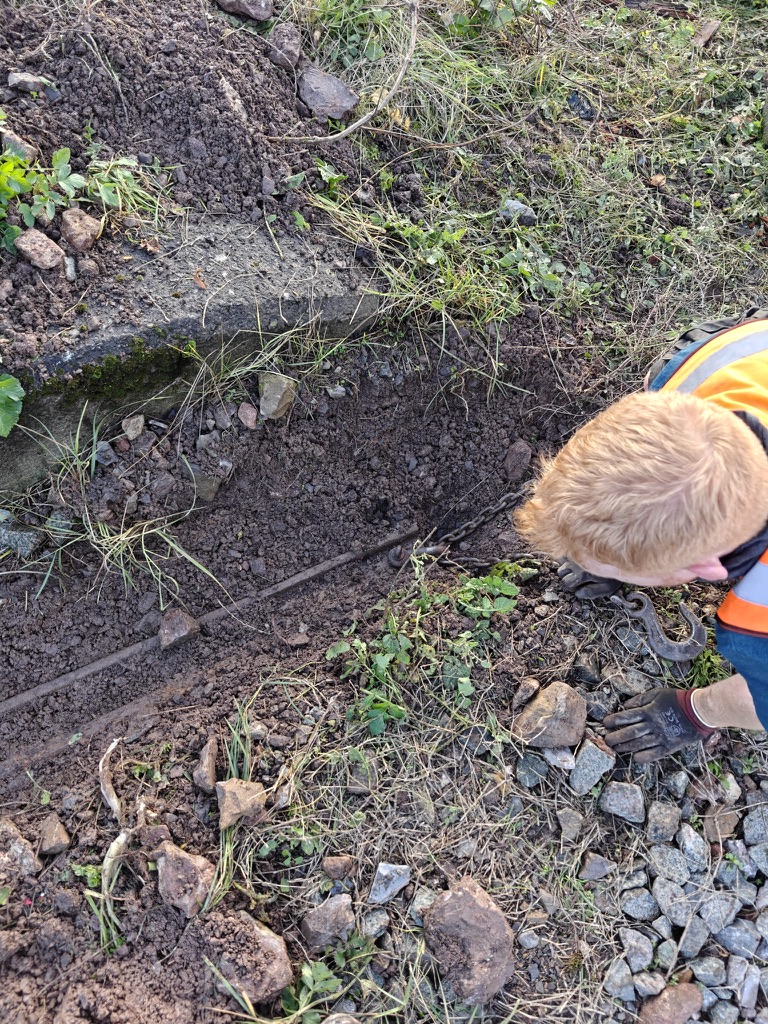
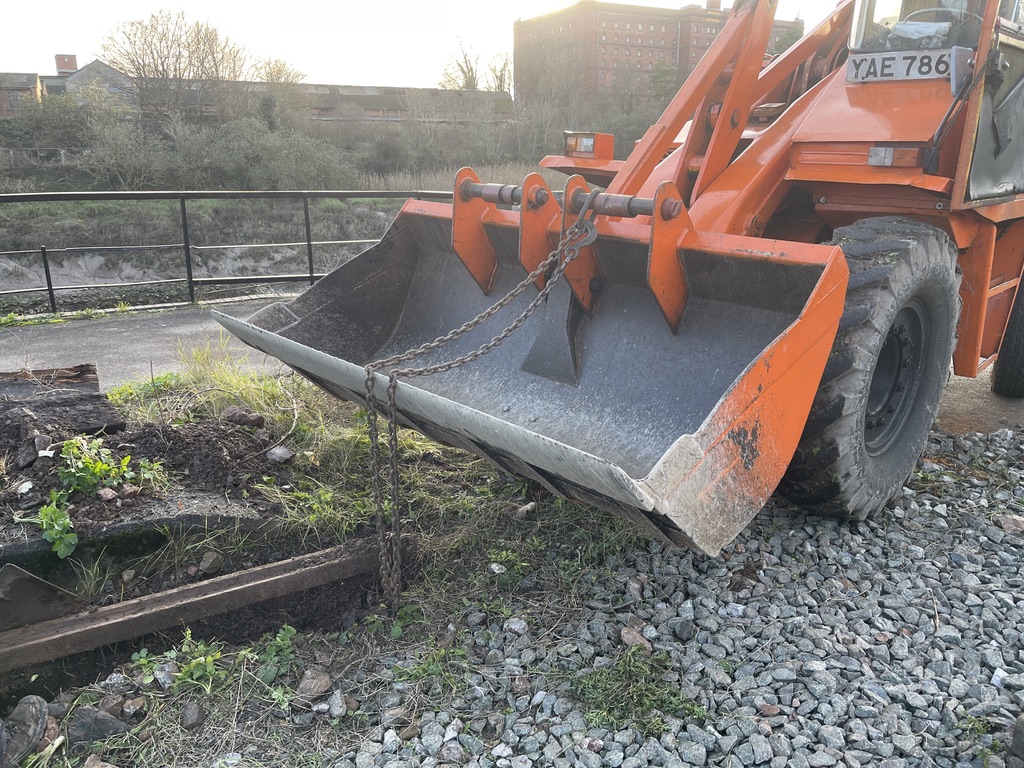
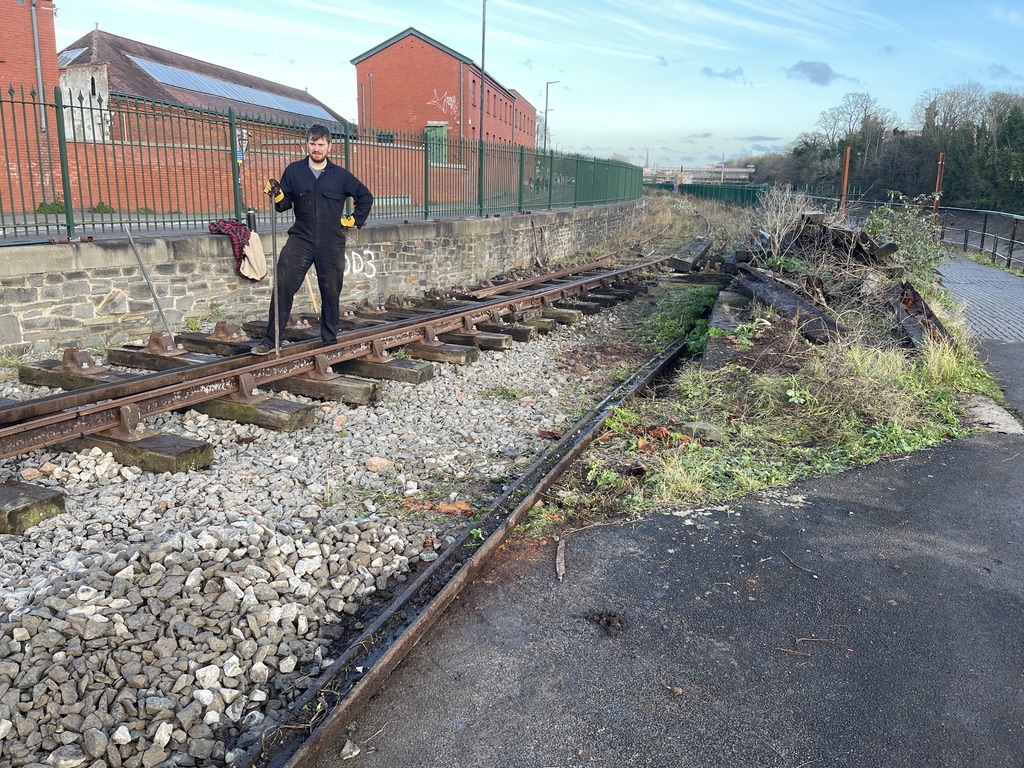
At the end of Day 1, we had half-reconnected the old running line with the new, as well as packed the sleepers and opened up the line again.
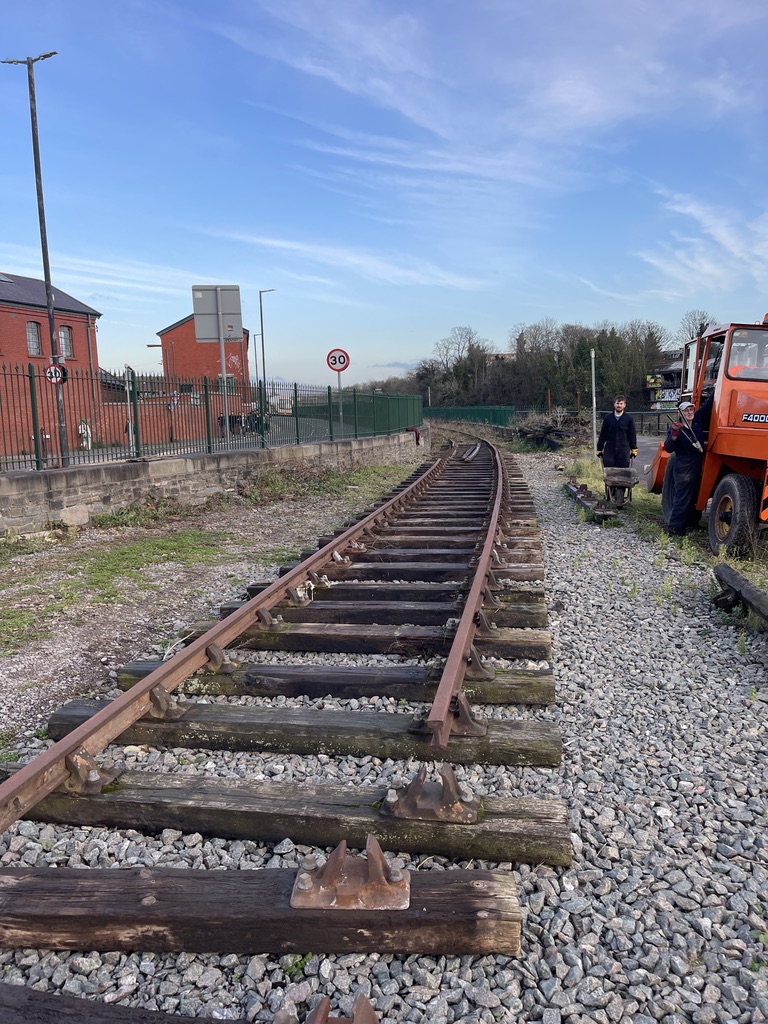
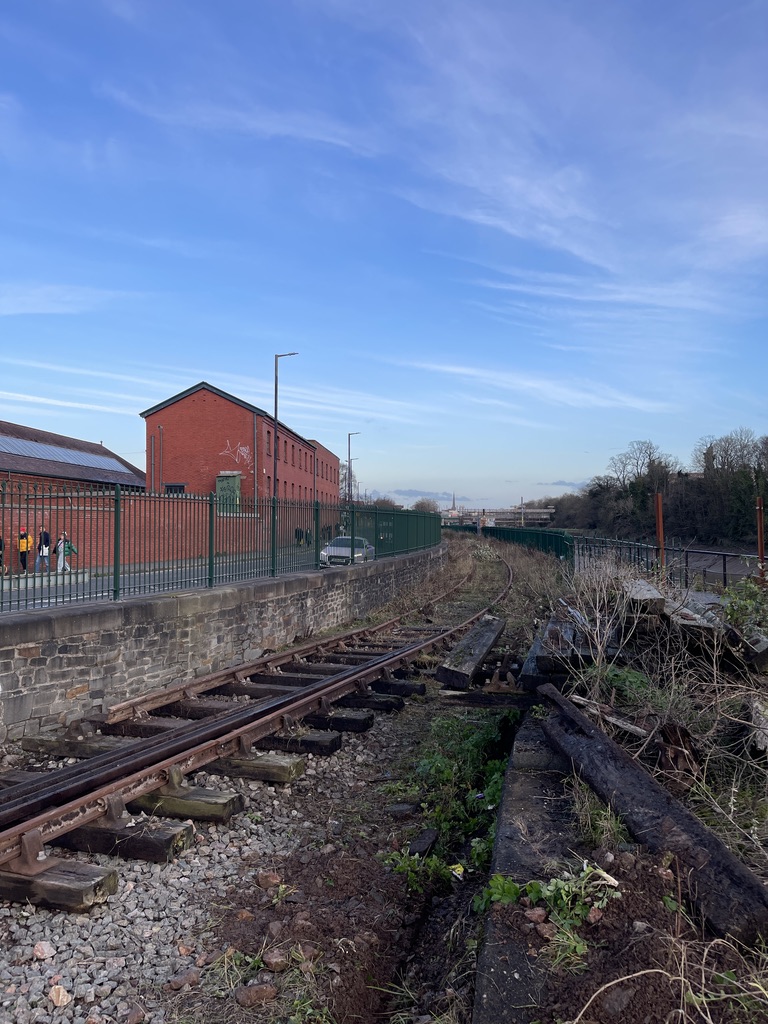
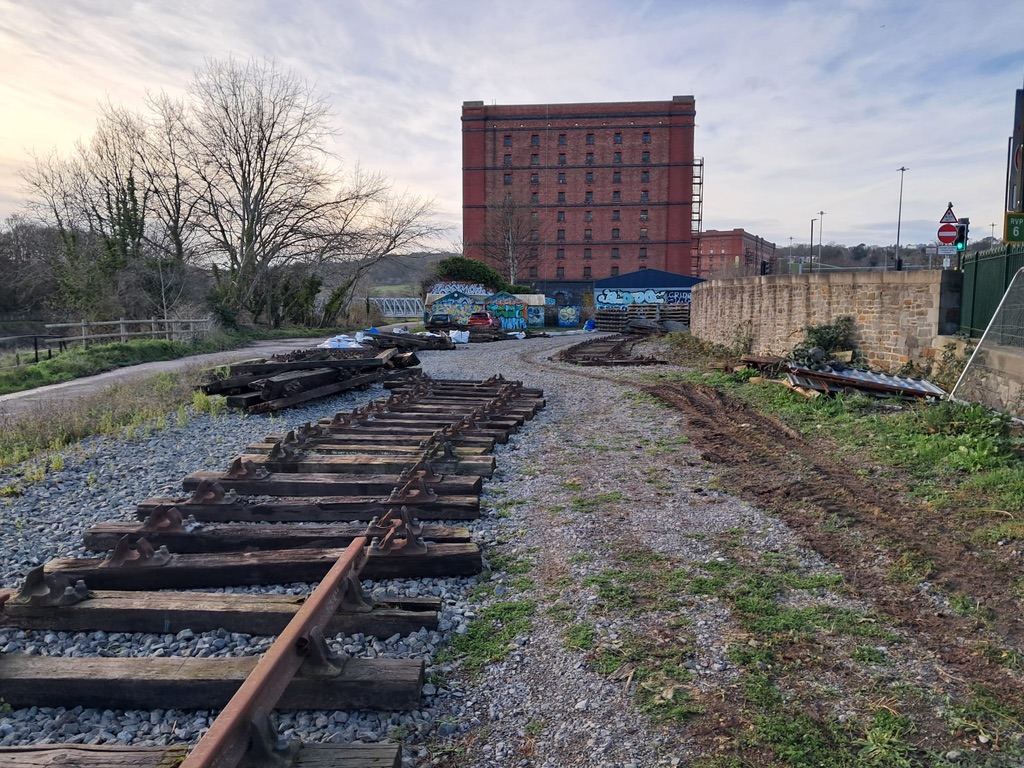
Day 2 and 3 were done back-to-back in the Christmas/New Year gap. The first task was to pop out the 10ft length of rail on the North side that we’d been using to jack the track up. Then we took a deep breath and removed the 60ft rail we’d previously laid (due to it having a sharp edge on the inside) and turned the whole rail around to drop it back in. This was quite a challenge given the confines of the site!
Next, a longer-than-10ft-but-shorter-than-30ft rail was dropped in on the North side in the gap and keyed. The final picture is at the end of Day 2, when the 60ft rail had been re-installed the right way around. This process involved a lot of keying chairs and moving sleepers around.
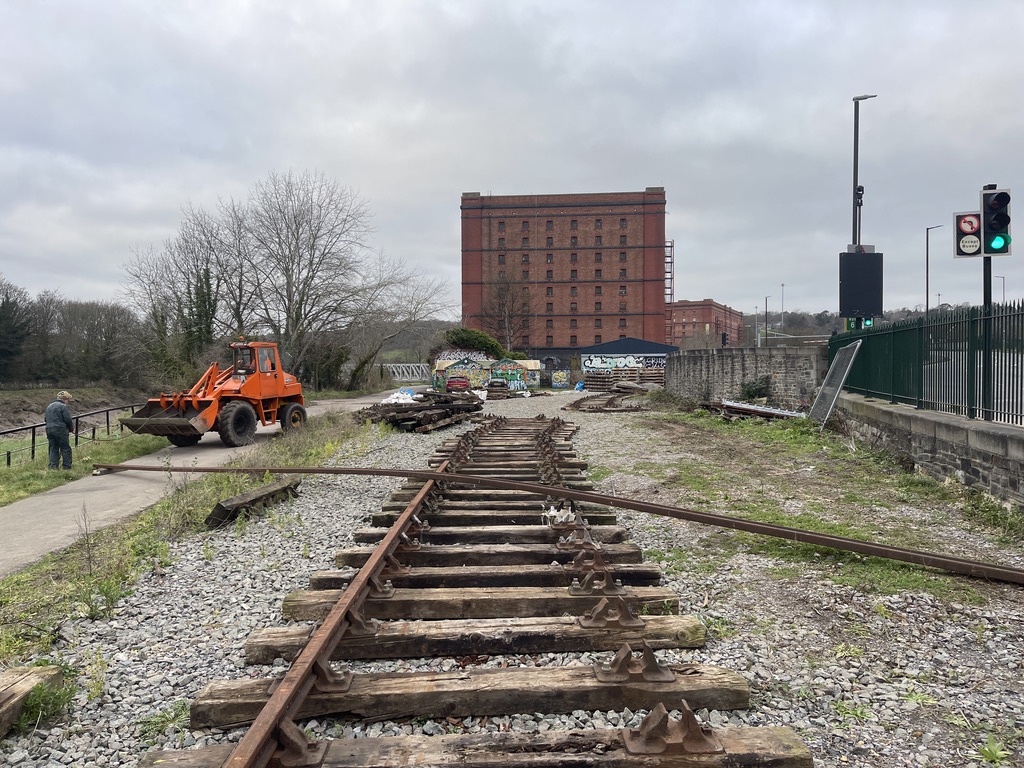
Day 3 must have been busy because I took barely any photos! There was a lot of faffing around dragging various rails out of the pile and then finding that they were too badly worn to be used for the running line. The good stuff was buried further down.
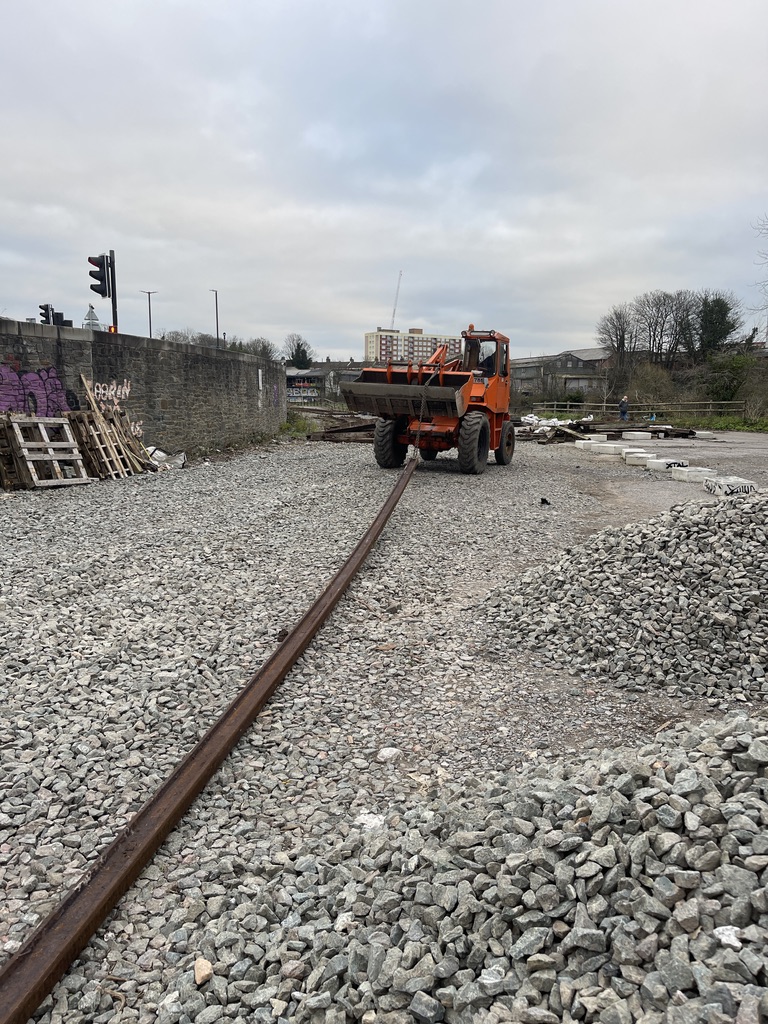
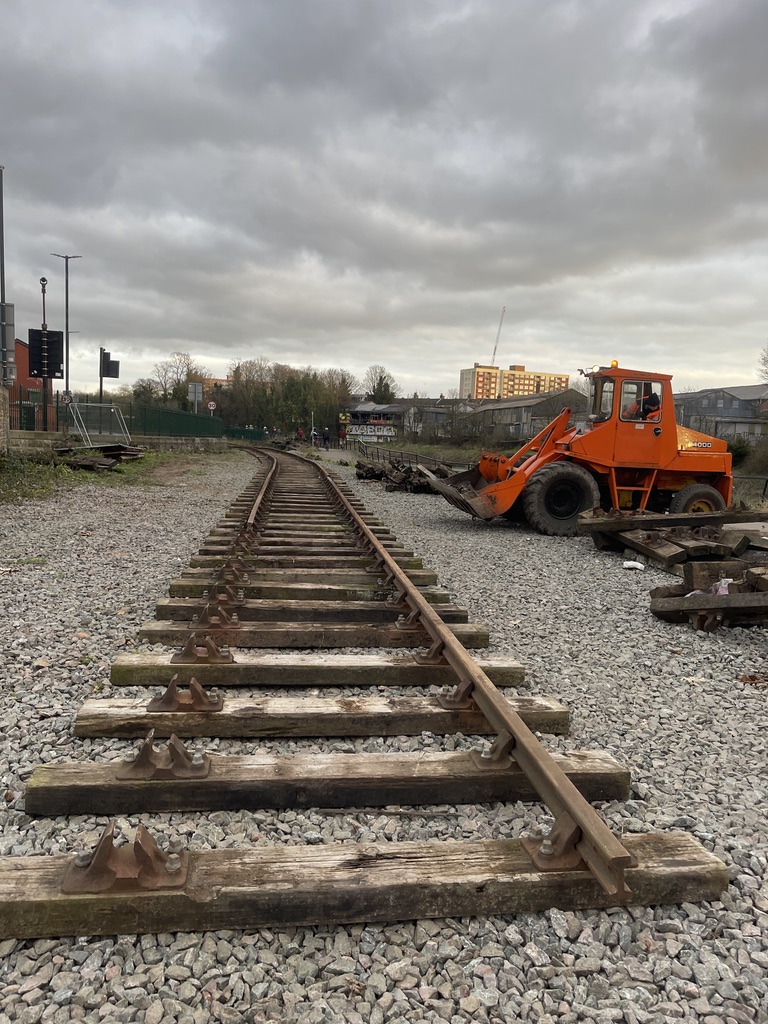
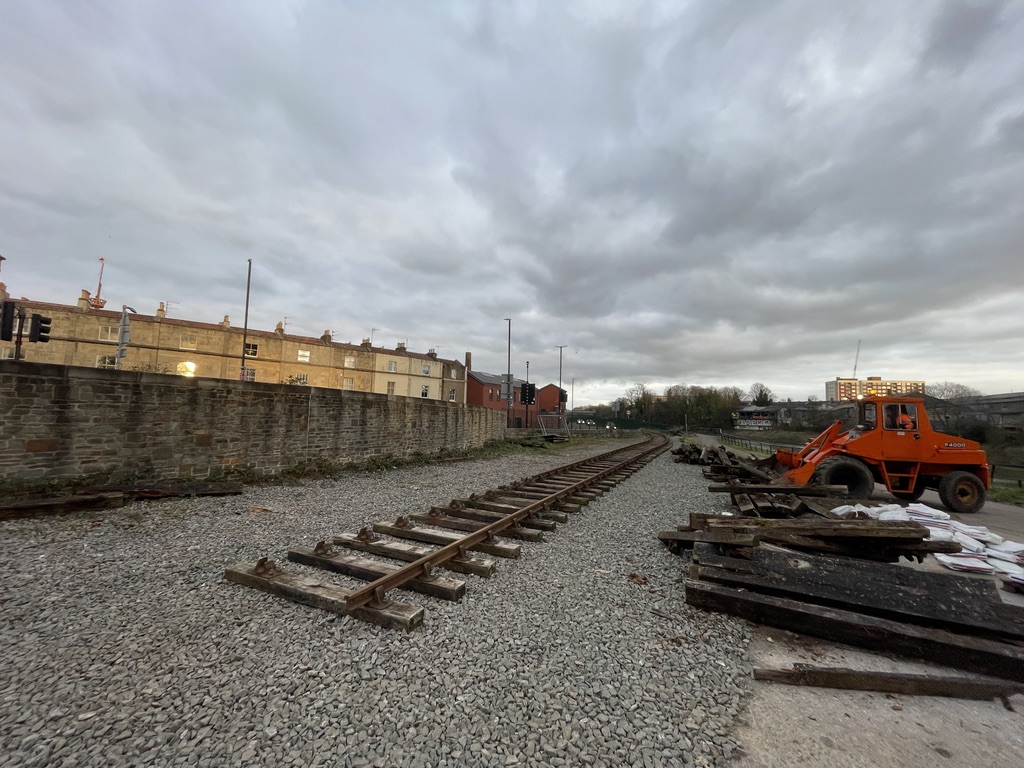
More sleepers were moved into the gap so that another 60ft length could be installed on the South side. The view at the end of the day shows the amazing extent of track that’s been laid so far. It’s much easier to put the track together on the straight, so when the next length of rail goes in, we’ll need to employ the tirfor winch thingy again to start slewing it over towards the road wall and thus the platform line.
 Bristol Harbour Railway Blog
I had to laugh when you comment how difficult it was to turn rails end or end due to the confines of the site. When I worked on the London Underground we used to turn rail like that on the deep level tube. It involved moving them to the nearest station within the engineering possession then turning them within the station confines. And that had to be done without damaging any of the station structures, tiling etc.