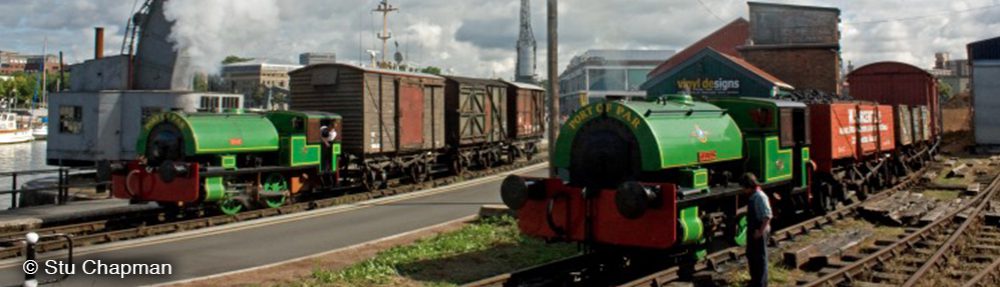
A little known and lesser-spotted member of the M Shed Collection is Fox, Walker and Company 0-6-0ST Locomotive Number 242.
Built in 1874, it is the oldest of the three steam locomotives, being 43 years older than ‘Portbury’ (and 63 years older than ‘Henbury’!) and enables the museum to represent all the major engine builders in the Bristol area.
Fox, Walker and Company was taken over by Thomas Peckett in 1880 and became Peckett and Sons, the builders of ‘Henbury’ and her sisters.
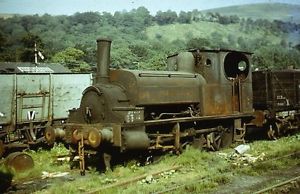
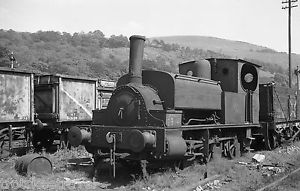
242 was the first locomotive to arrive in the museum’s collection. It was donated by the National Coal Board in 1962, having previously worked at Mountain Ash Colliery in Wales, where it was No.3.
These two photographs were spotted for sale on ebay, unfortunately only the thumbnails were available to view online. They show 242 while still at Mountain Ash.
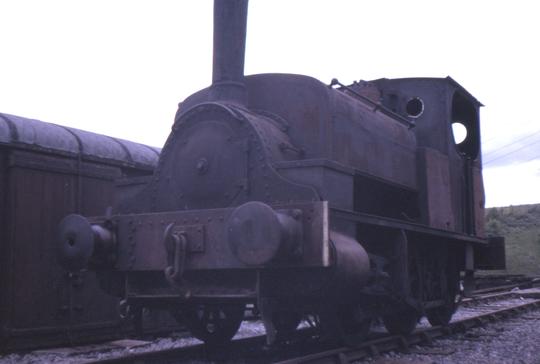
This photo is copyright Malcolm Williams and was found on steamlocomotive.info
It shows NCB Mountain Ash No.3 in detail before departing for Preservation.
Prior to the preserved BHR opening in 1978, she, along with ‘Henbury’ and ‘Portbury’, was to be found at Radstock Station. This was the hub of the initiative to re-open a section of the famous S and D route, spearheaded by the Somerset and Dorset Railway Trust. As previously mentioned, the SDRT moved to Washford station on the WSR in 1976.
Geoff Cryer took these pictures of 242 in the shed at Radstock in September 1975.
-
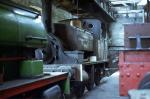
- Copyright Geoff Cryer
-
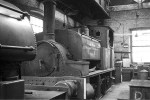
- Copyright Geoff Cryer
Source: http://www.geoffspages.co.uk/raildiary/radstock.htm and http://www.geoffspages.co.uk/monorail/gc01.htm
When the Radstock project was disbanded, Number 242 went to Bitton (on what is now the Avon Valley Railway) between 1977 and 1986, when she returned to Bristol and was stored in L Shed.
As preparations were made for Bristol Industrial Museum’s conversion into M Shed Museum, the locomotive was made ready to move to another secure location.
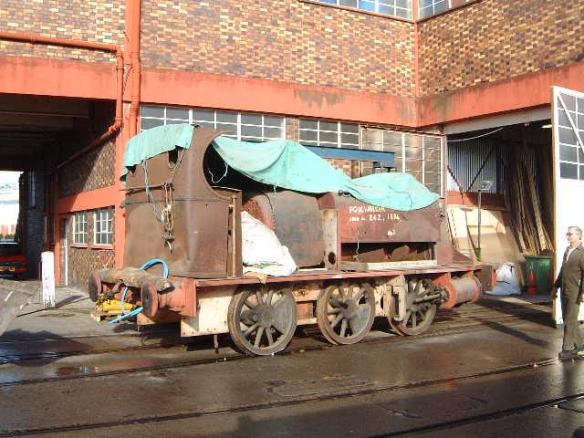
Larry the Loader tows 242 out of the workshop.
Photo courtesy Rob Skuse
Source: https://www.facebook.com/media/set/?set=oa.198379386934483&type=1
As for the future, at nearly 140 years old, there are no current plans to return 242 to steam. Her current storage space may be repurposed due to planned development, so a move might be on the cards. Watch this space…
 Bristol Harbour Railway Blog
Another nice blog Corwin :-). One minor correction, the loco on the left in the photos inside Radstock shed isn’t Henbury, I’m almost certain it’s Kilmersdon instead. It’s certainly none of the other locos listed here: http://www.sdrt.org/trust/history/radstock_images/index.htm.
Cheers
Richard
Thank you! I think you are right, the running plate is red whereas Henbury’s is green. I’ll amend the mistake 🙂
I would very much appreciate a look into trying to restore a Fox, Walker and Coy locomotive, particularly to provide a relief for Portbury and Henbury. Hopefully this can be achieved.
Hi James, whilst a cosmetic restoration may happen, the sheer cost of restoration to working order would probably be prohibitive. The loco is much older than the other two, has been out of service for nearly over 40 years, and restoration would likely require many new components to be made. Currently the duties on the harbour railway are ably covered by Portbury and Henbury, with each loco’s 10-yearly overhaul being offset so there is always a loco in traffic.
What will be important is to conserve this vintage Bristol-built engine for future generations, showing people a real-life example of Victorian locomotive design in its own right as a museum exhibit.
Thanks for the comment and I hope you enjoy the blog!
Corwin
Although you don’t mention them by name am I correct in thinking that the other two Fox Walker locomotives you refer to are the one in store at Mangapps Railway Museum at Burnham-on-Crouch and “Margaret”, ex Maenclochog Railway then Kidwelly Tinplate works and currently under an external cover and owned by Pembrokeshire Count Council?
Does M Shed museum hold and drawings for these locomotives?
Hello Alan, thanks for the comment. I have asked and sorry that the museum does not hold any Fox, Walker drawings. They are possibly with the Peckett files that got shipped off to the National Railway Museum, so it might be worth asking there?
You are correct about the two others in the UK although some do exist overseas, the oldest of which is ‘Karlskoga’ in Sweden (built 1873). I believe there is one extant in Argentina.
Thank you for your very intersting reply. Despite a lot of past searching I have never been able to locate any other Fox Walker locomotives. ‘Karlskoga’, per Google, seems to be a Swedish town that speaks Finnish rather than a locomotive. (Karlskoga was also the home of Alfred Nobel of Nobel prize fame). I’m sorry but I must ask about the source of your information about both the locomotives you mentioned. I have been trying to research the history of Fox Walker for years but even Graces Guide can get lost in the mire of the two names.
I asked about drawings as Margaret, the F.W. locomotive at Scolton Manor, appears to have a different boiler, one that might possibly be a GWR standard number 5 or a small variation thereof. It will be interesting to see the original design.
Thank you for you in advance for your patience.
Hi Alan – if you search for ‘Fox Walker Karlskoga’ you should be able to bring up photos of the rather nice loco. It’s based at the Nora-Bernslags Railway (although it is not currently in working order).


In steam in 2008:
The only reference I have found to the Argentinian one is here:
https://www.steamlocomotive.info/locobrowse.cfm?bn=Fox%20Walker
I wonder if, like the impressive Porta 4-8-0 ‘Argentina’, it was broken up by scrap metal thieves?