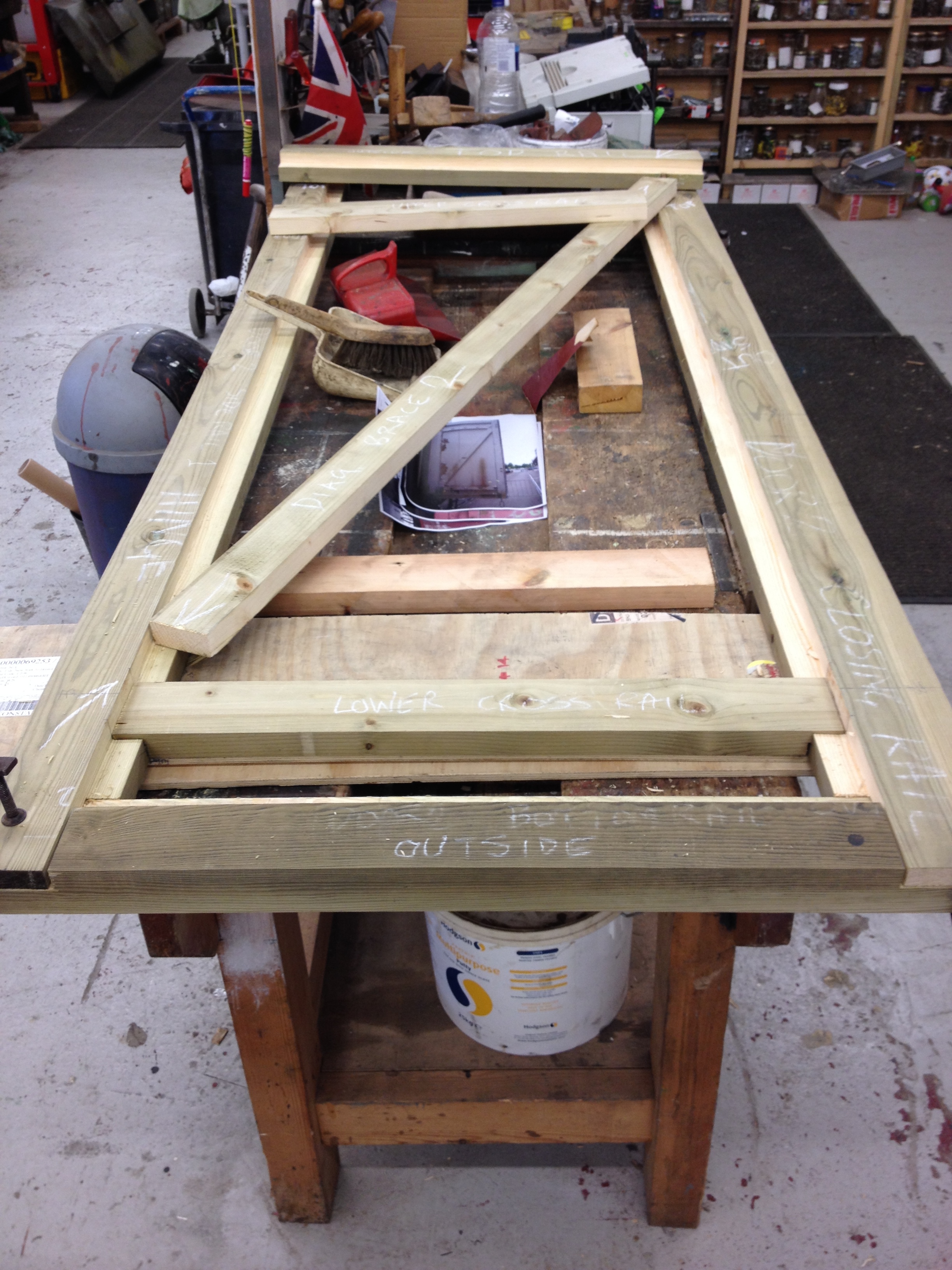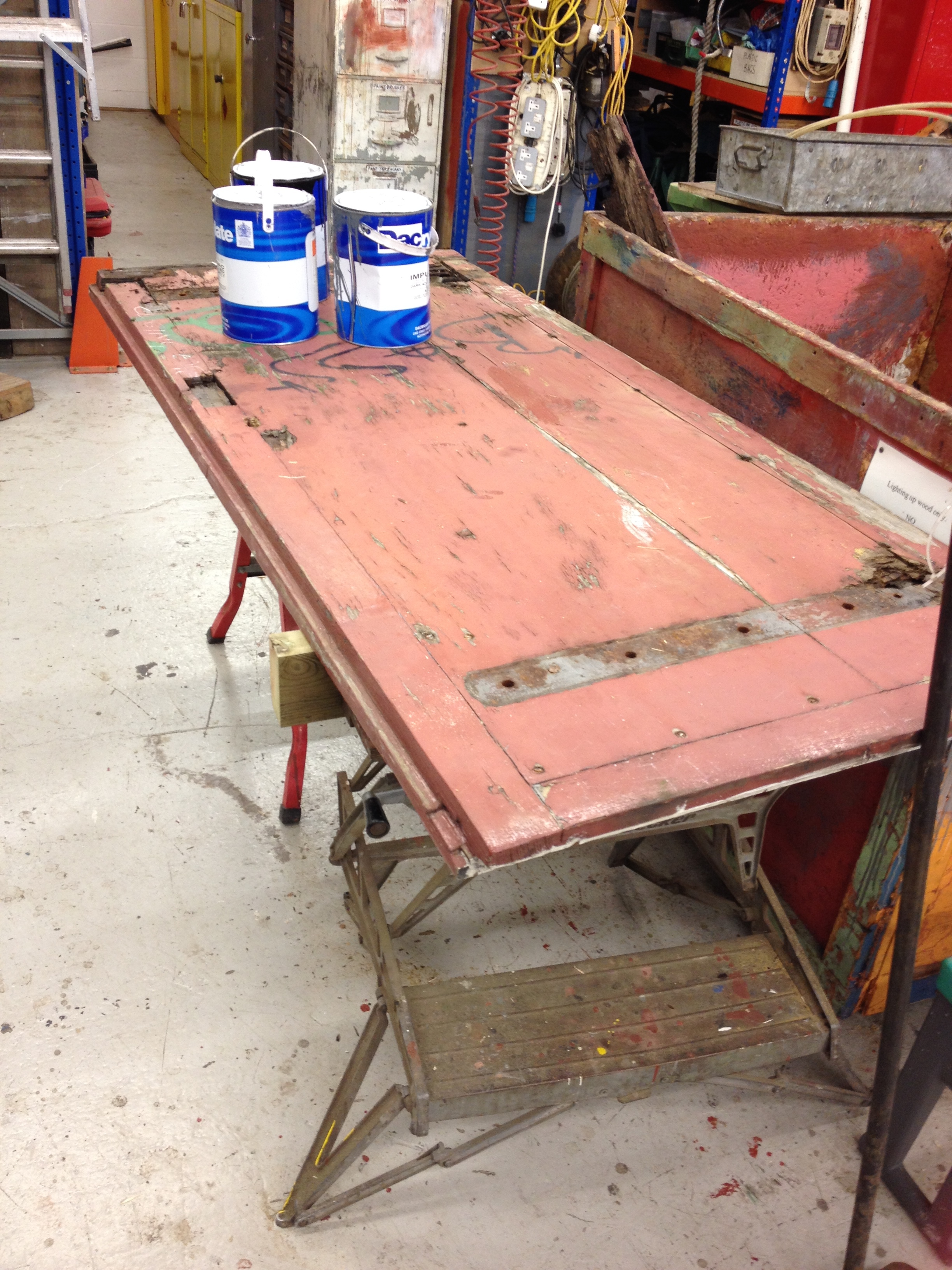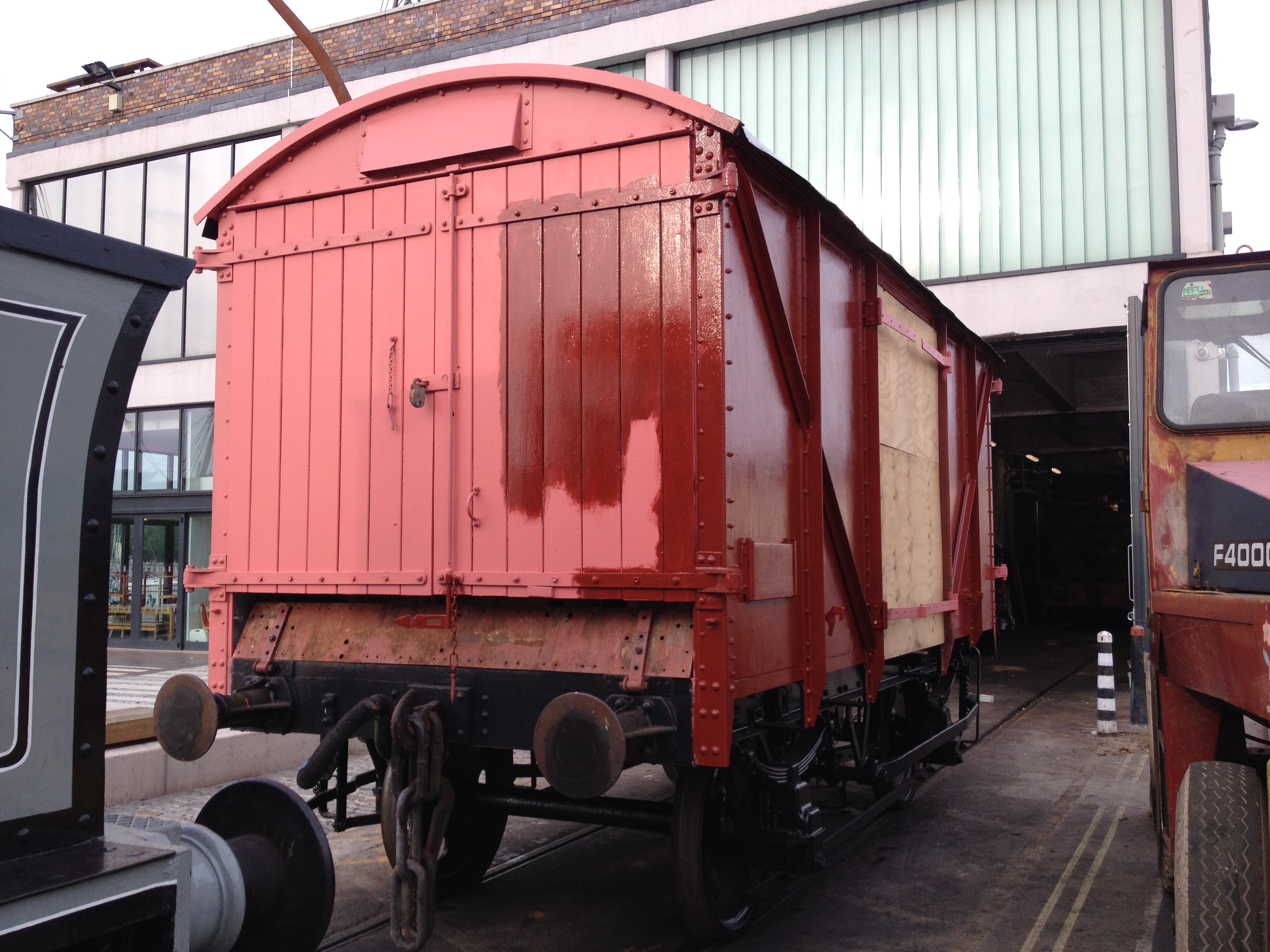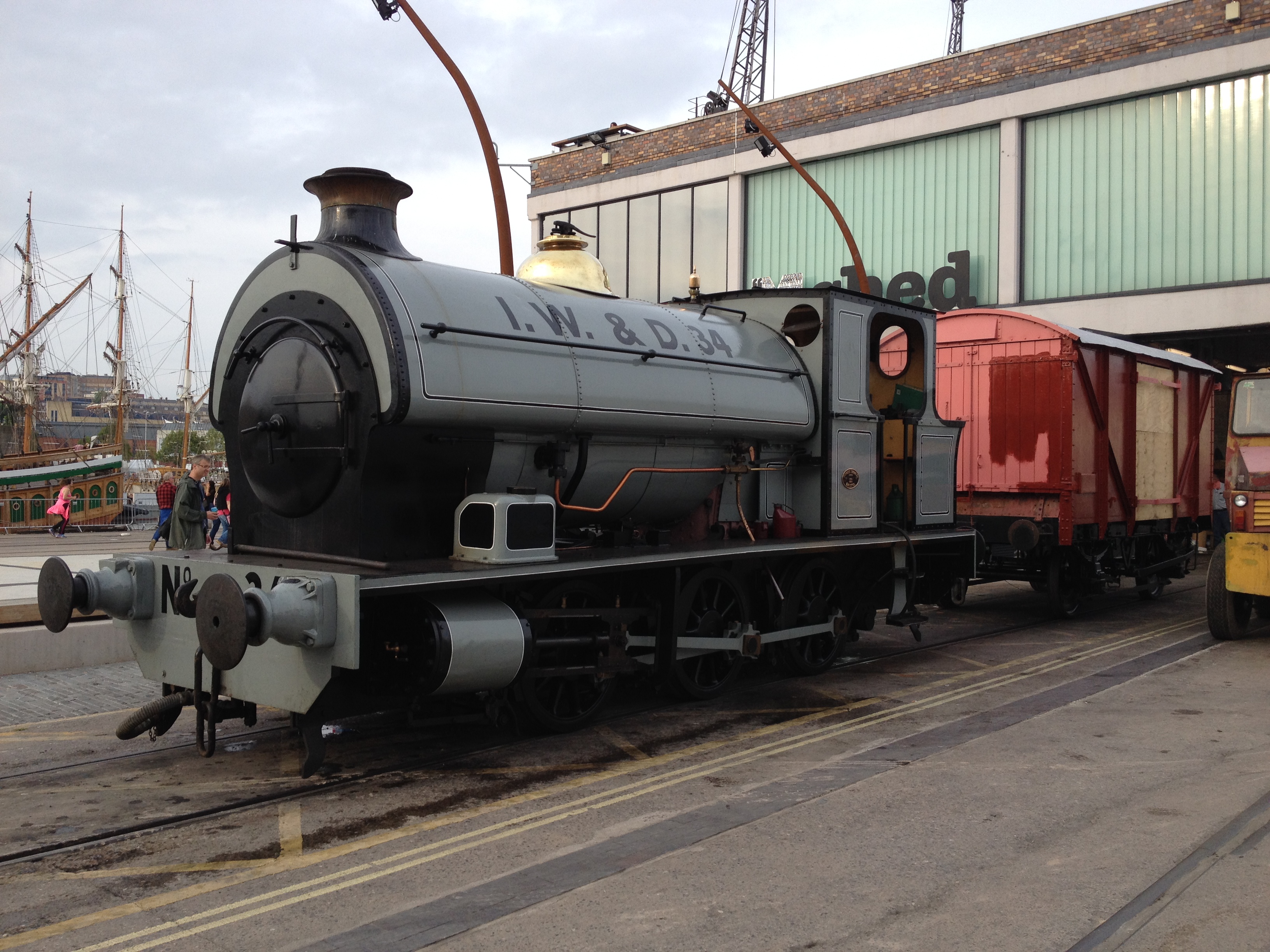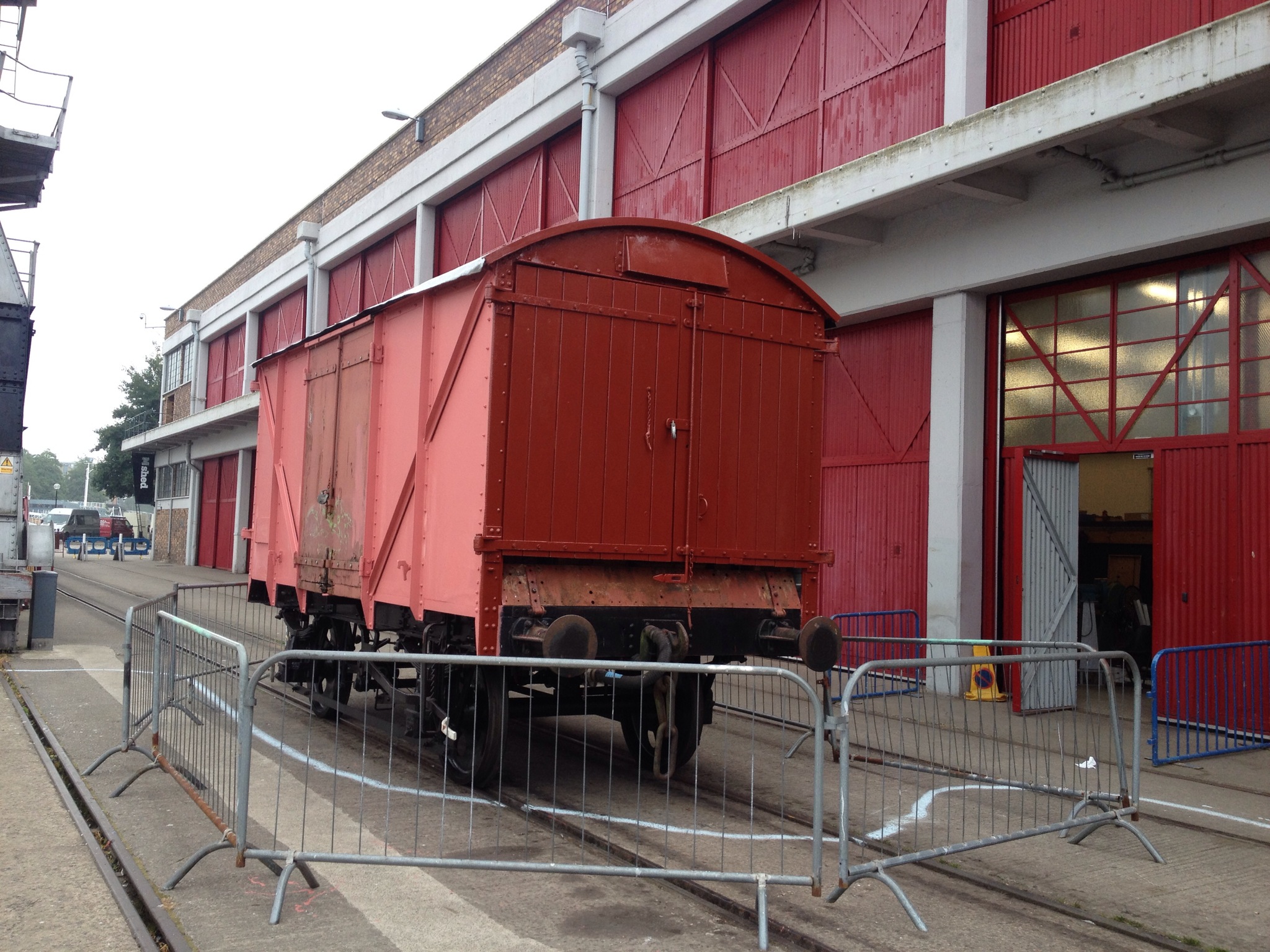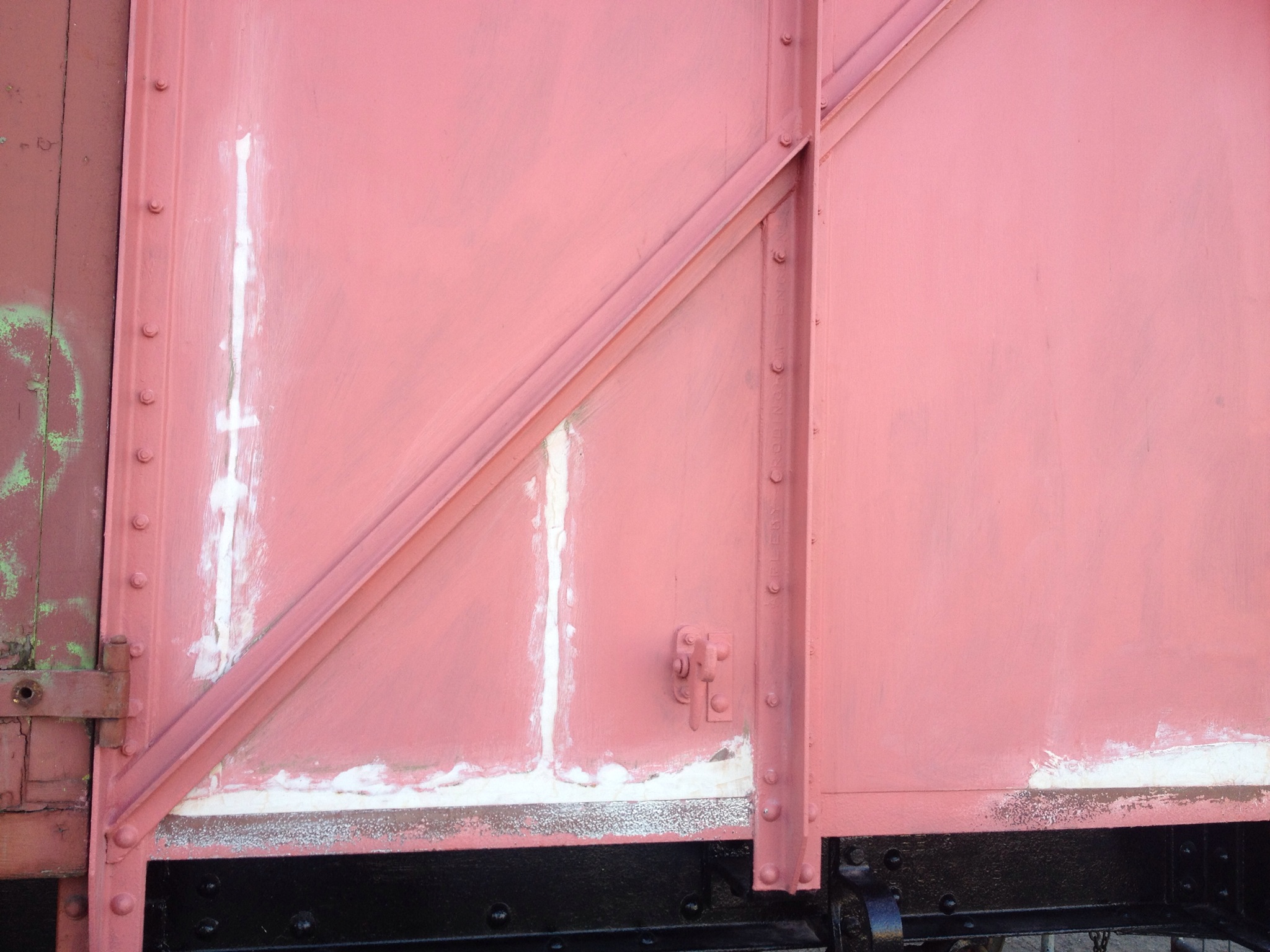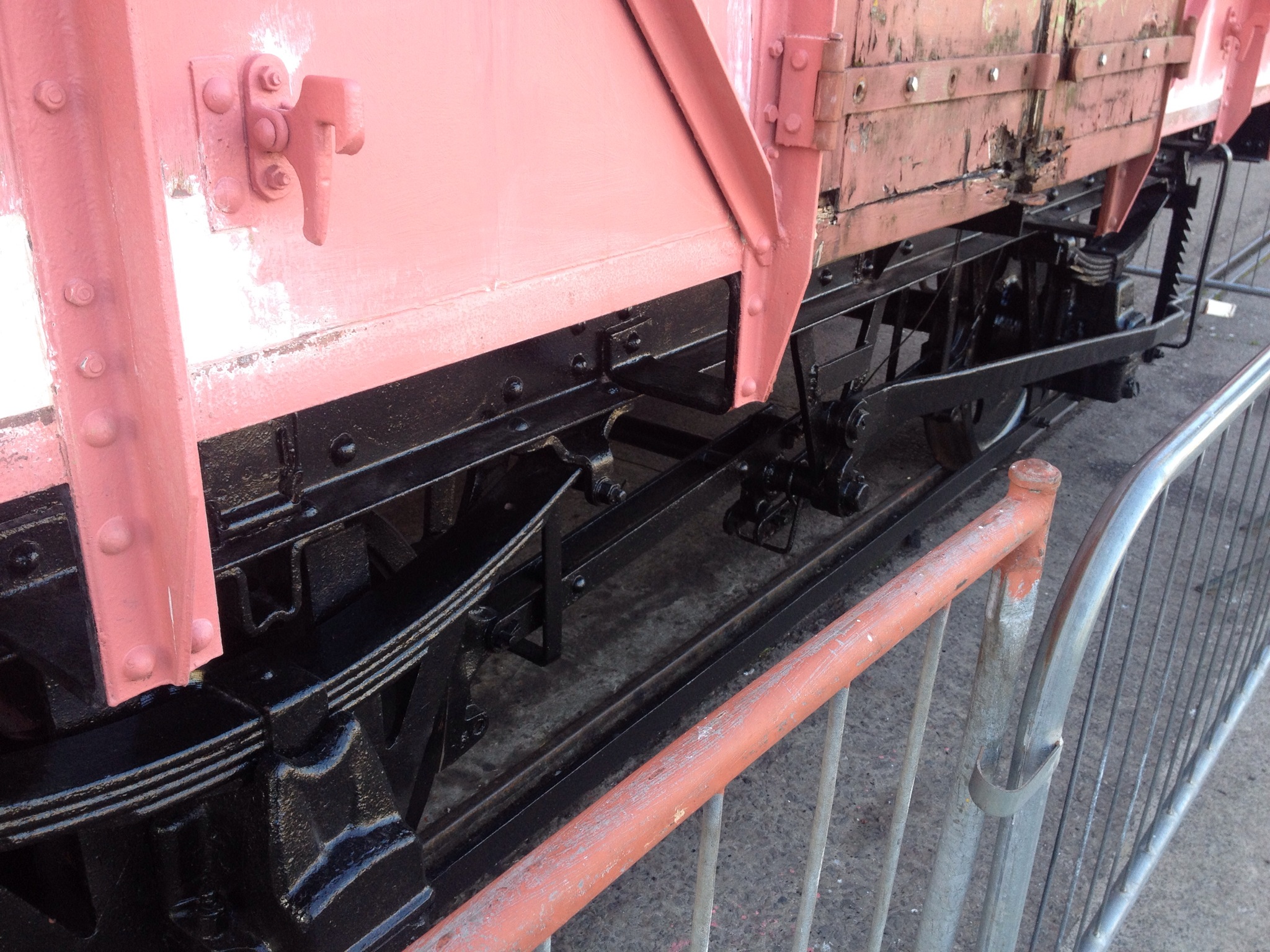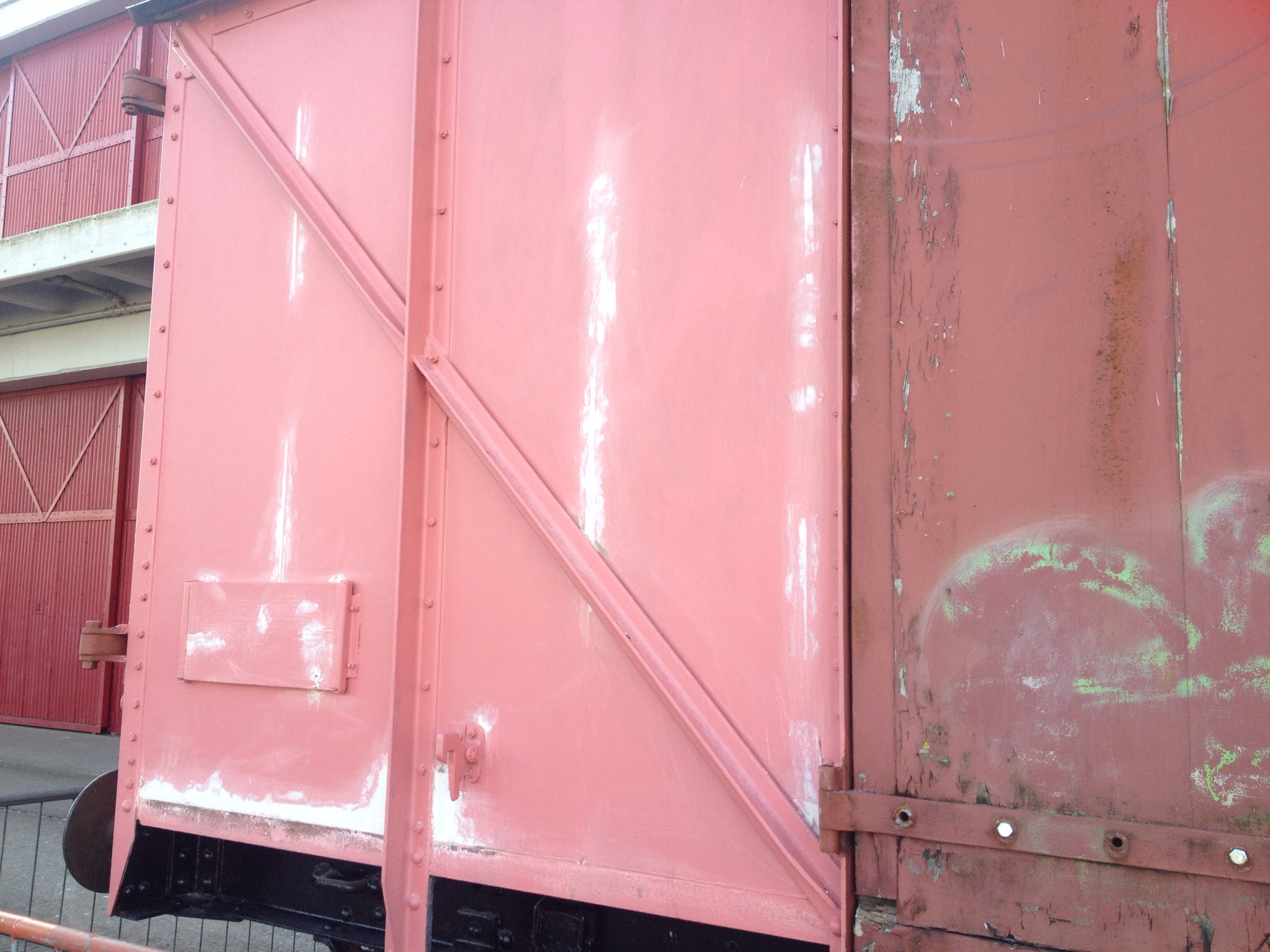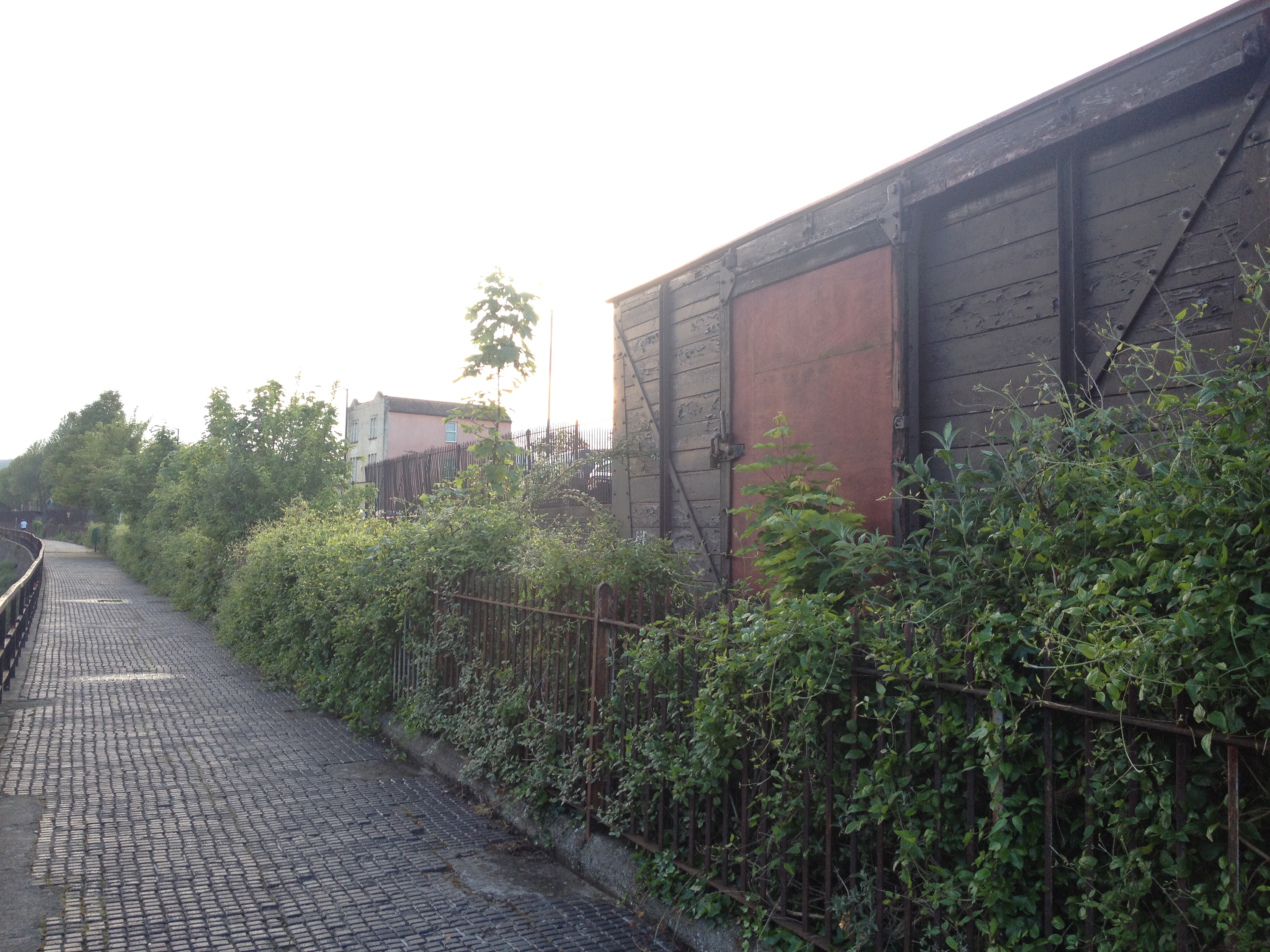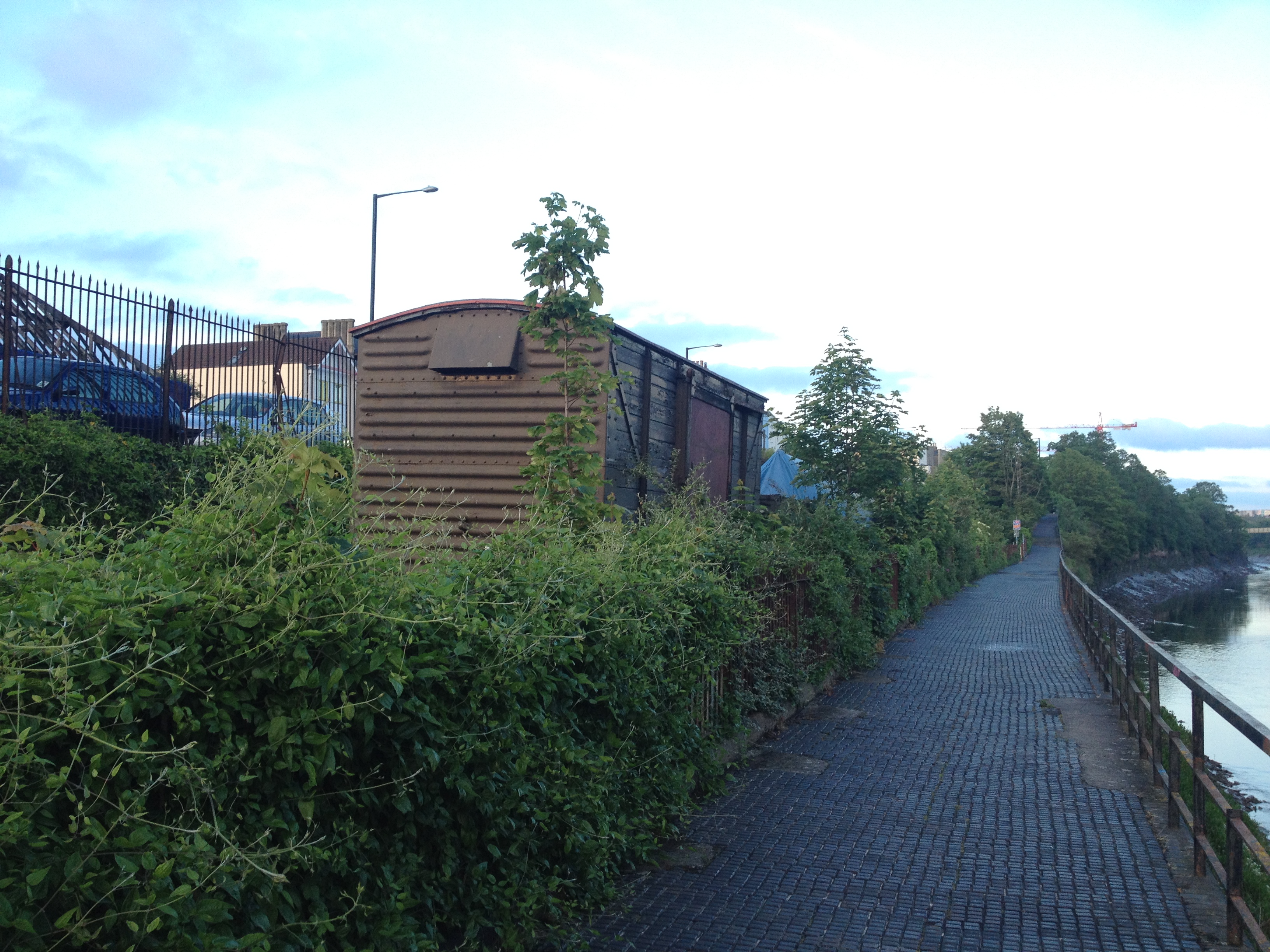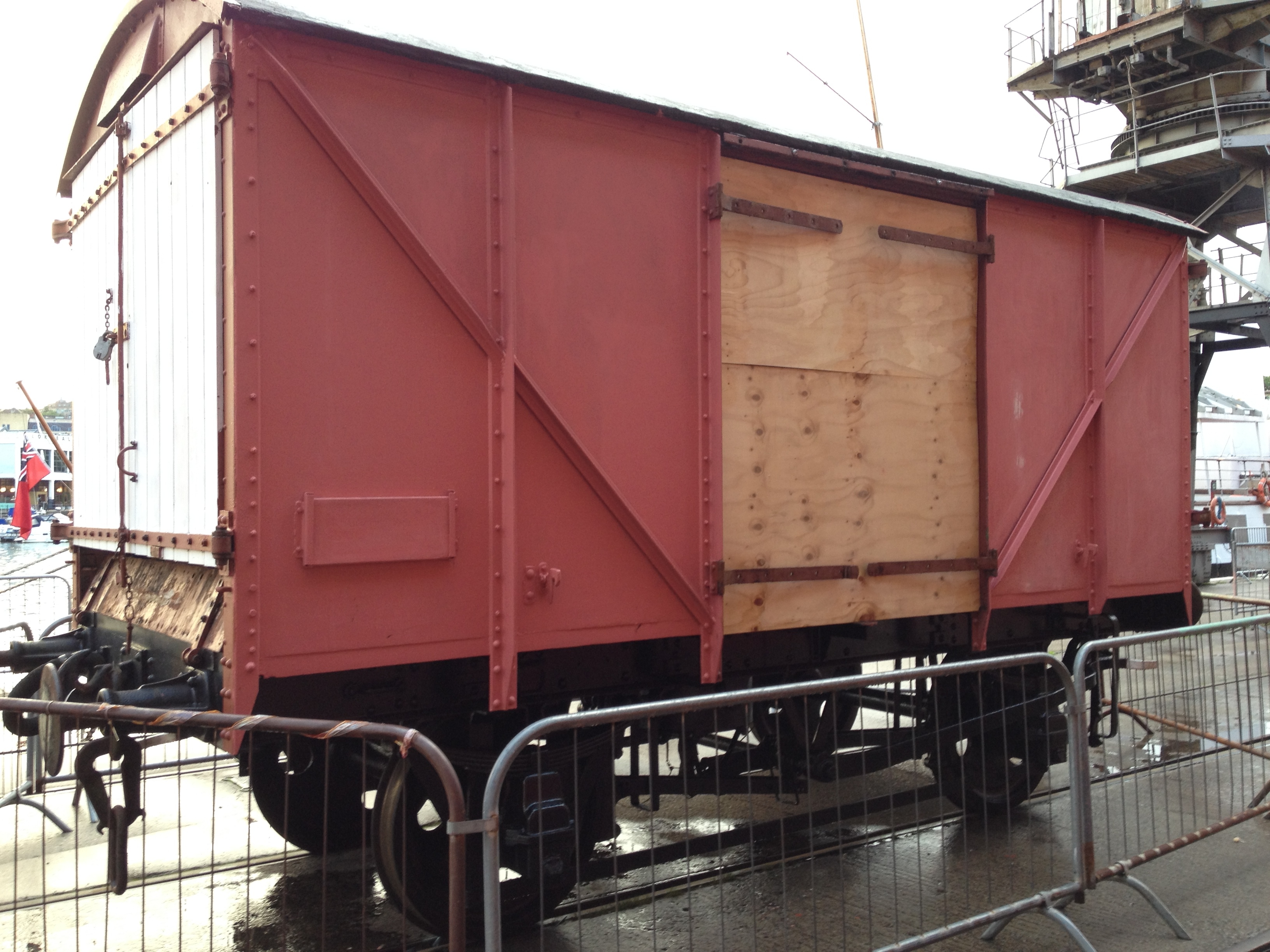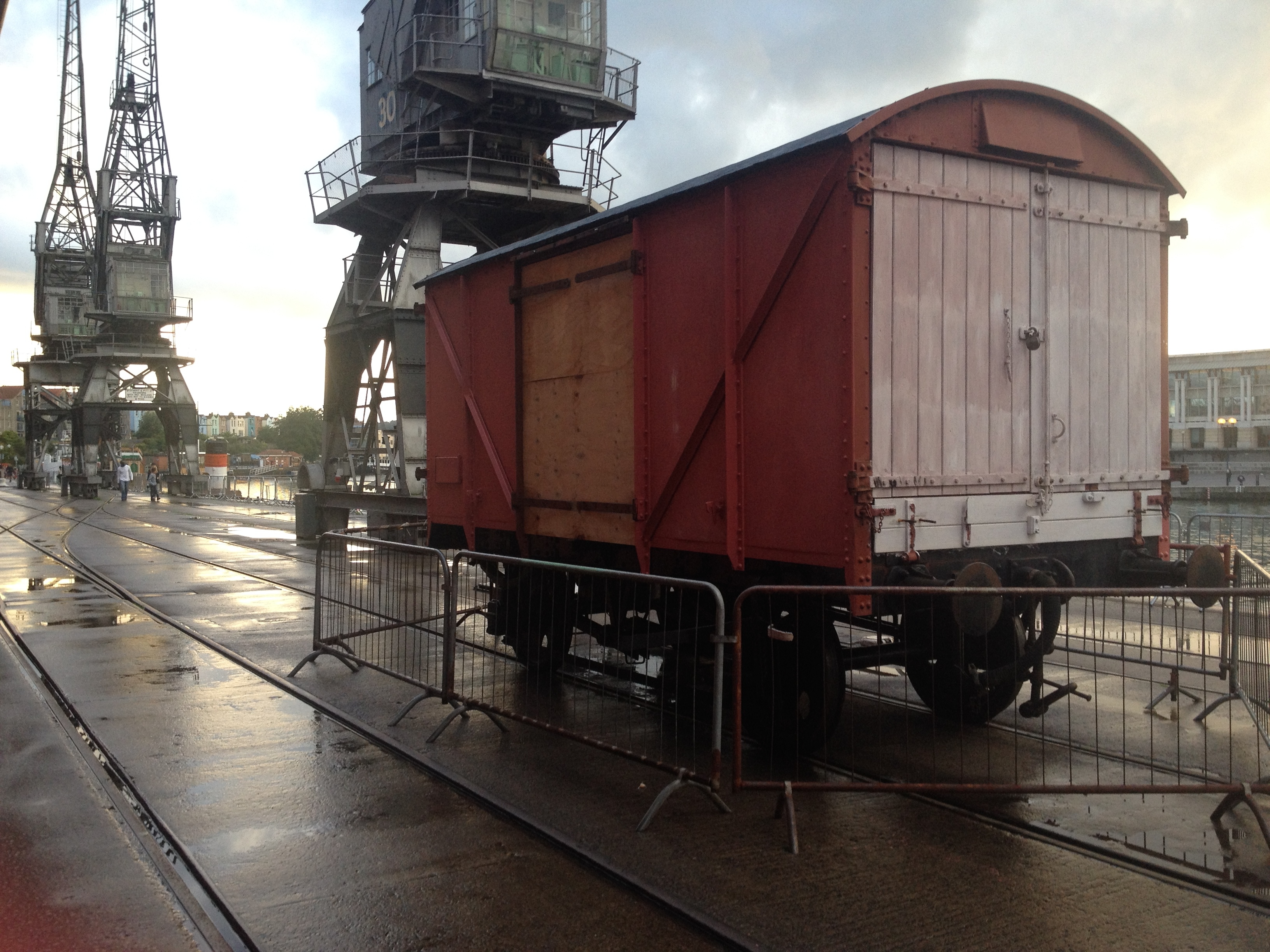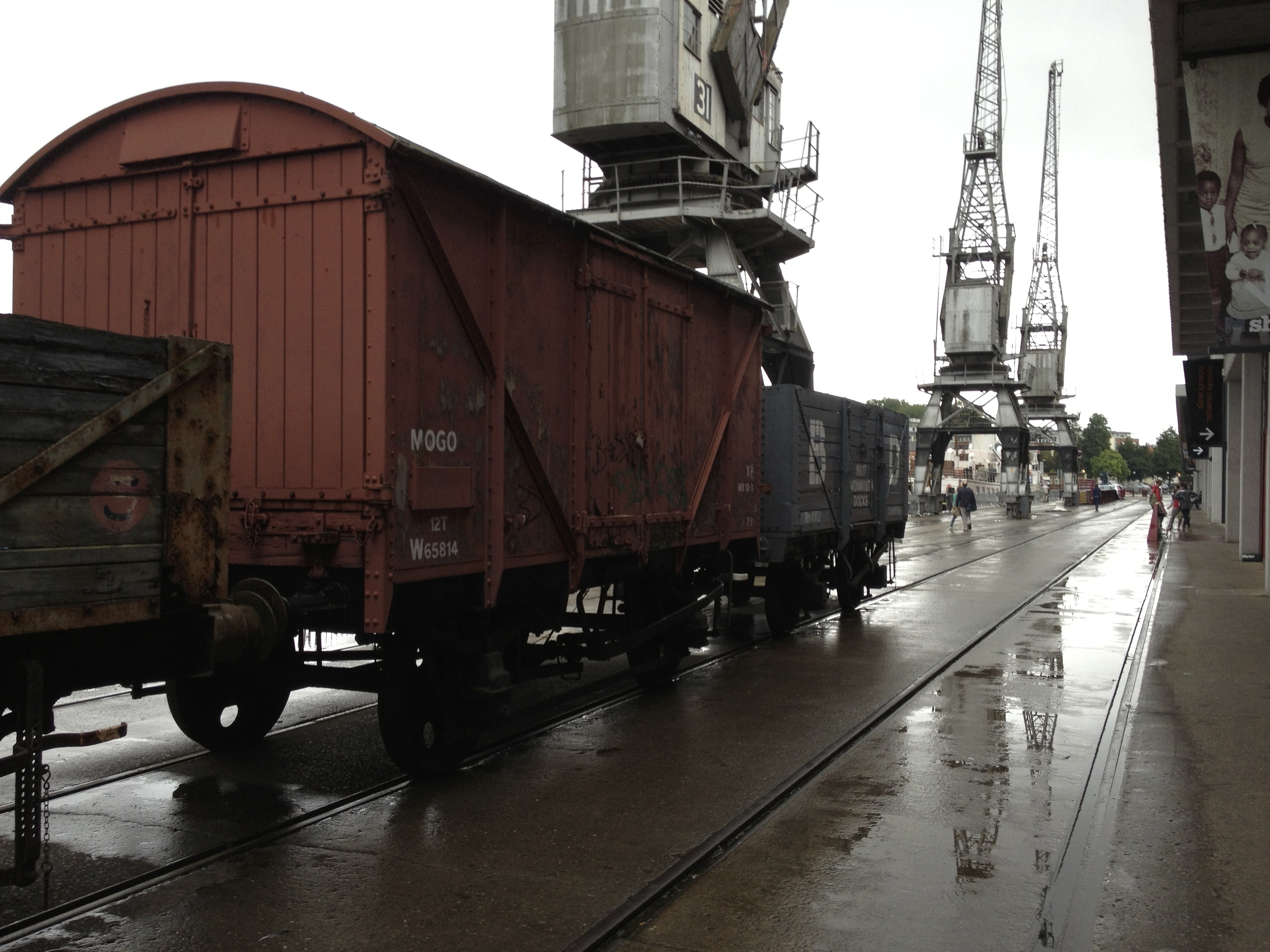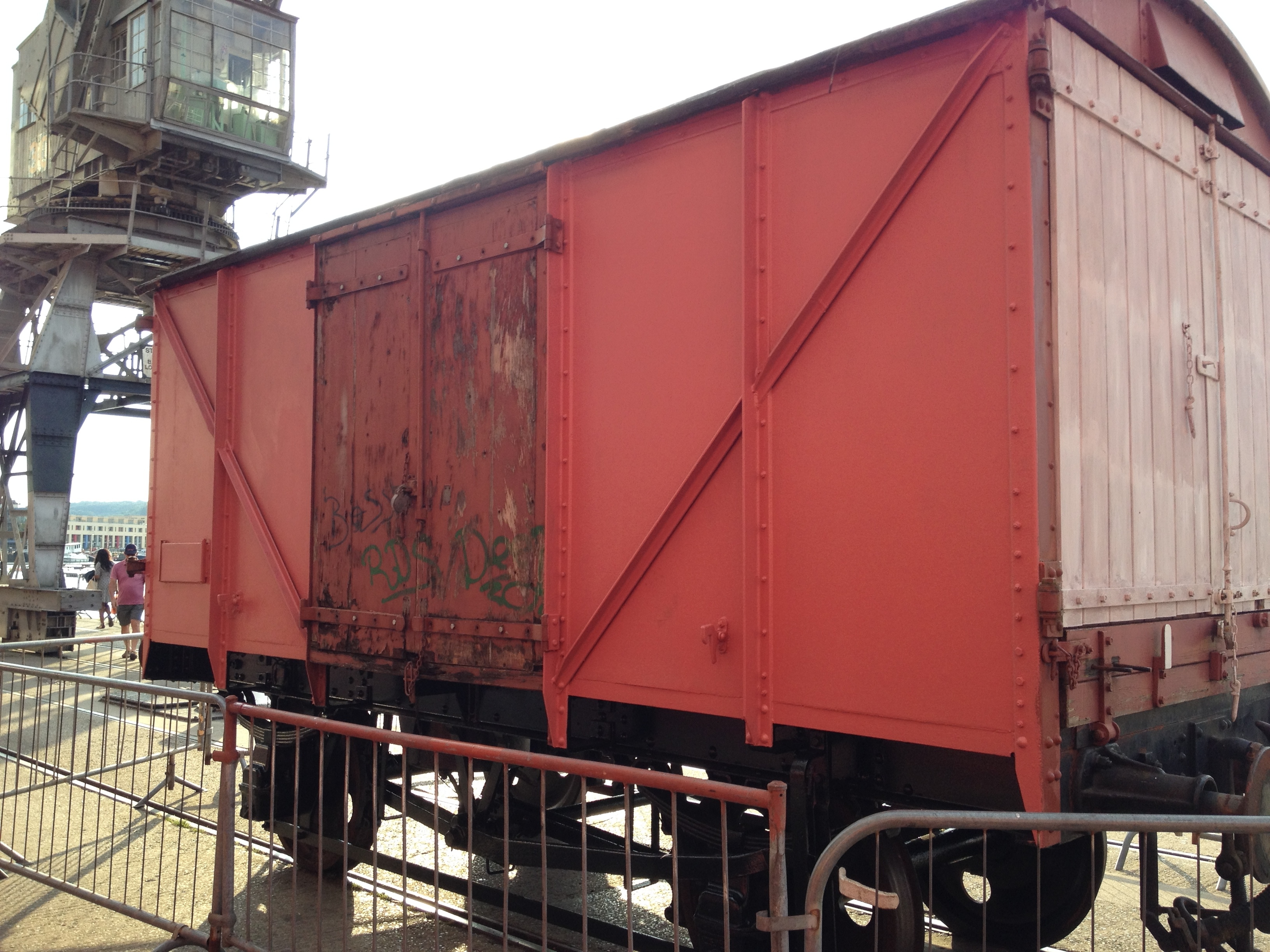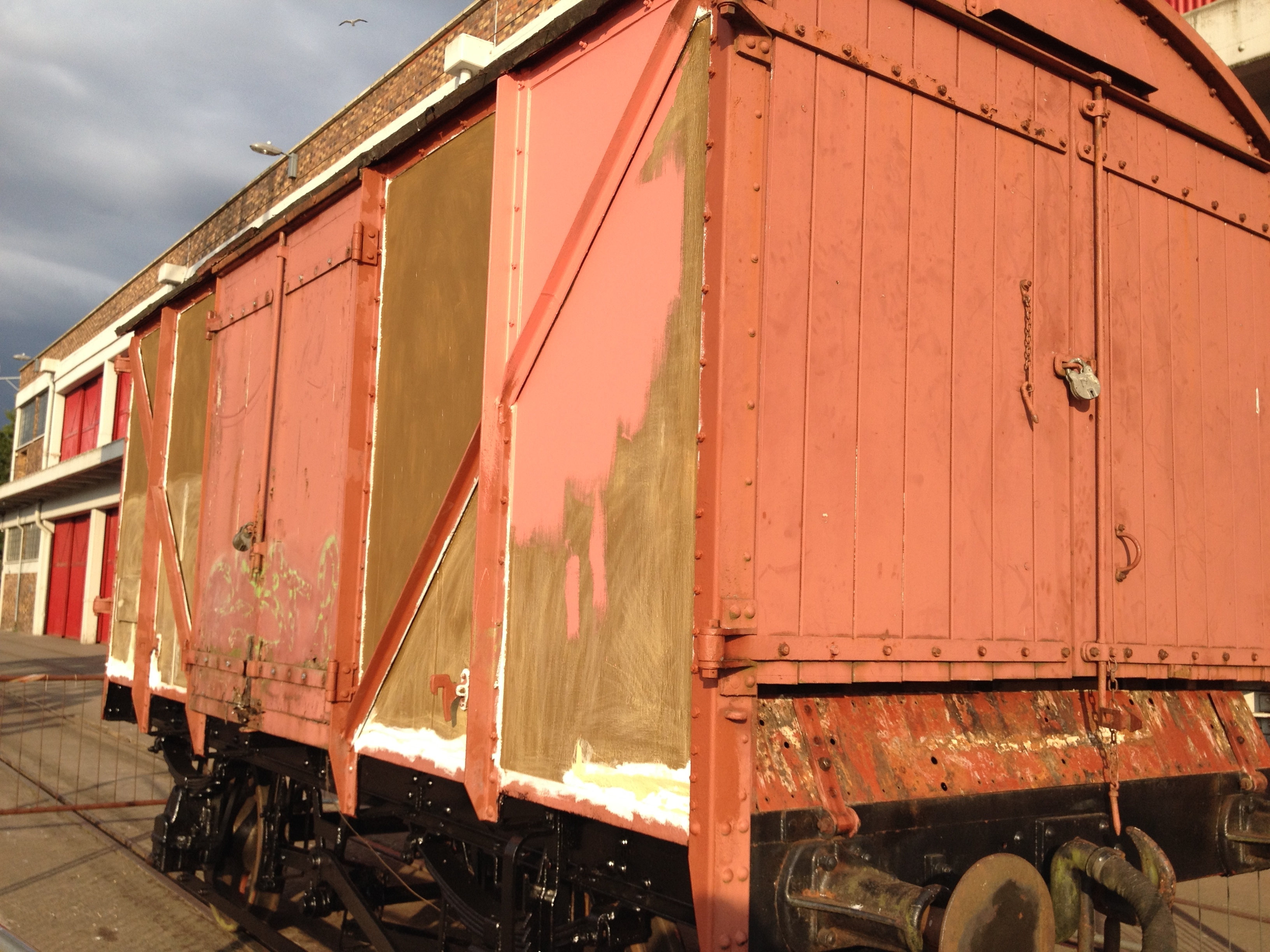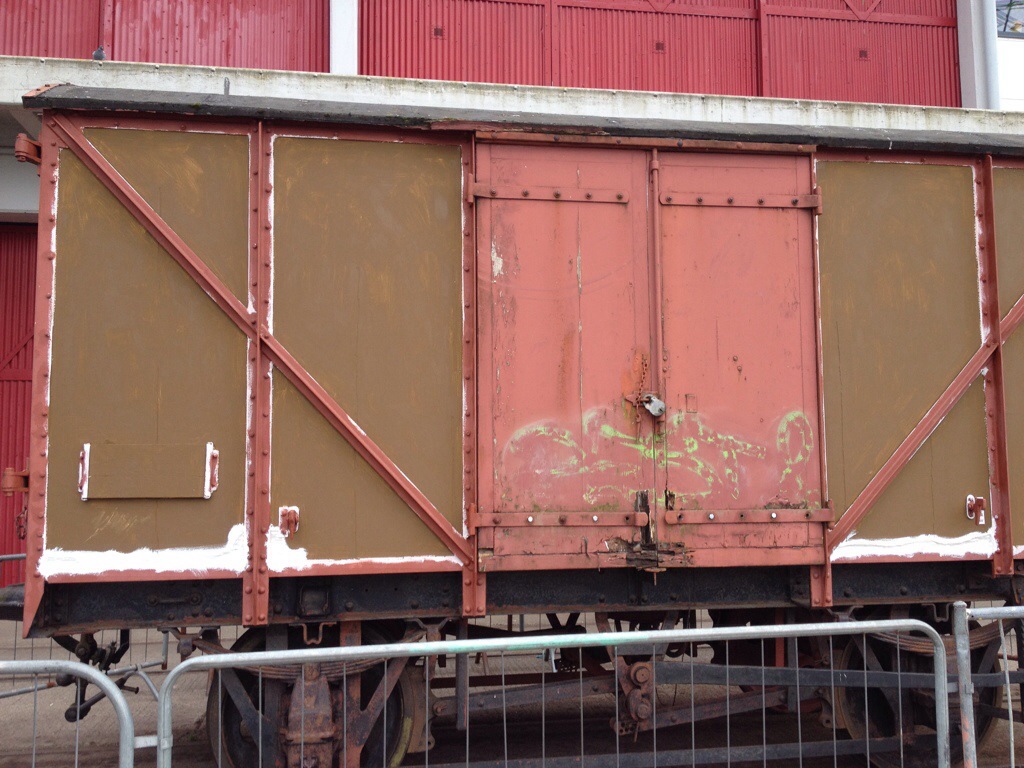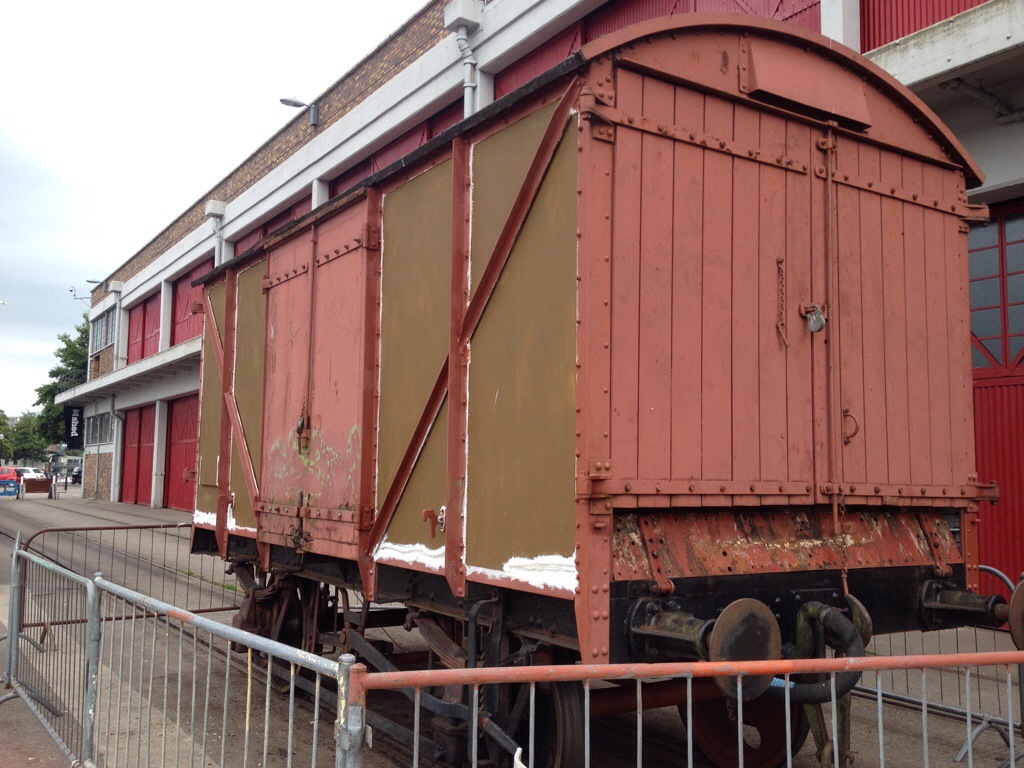
The first coat of gloss is going on the van, while the new doors are being made in the workshop.
Tag Archives: restoration
‘MOGO’ Van Restoration – 4
A Clean Railway
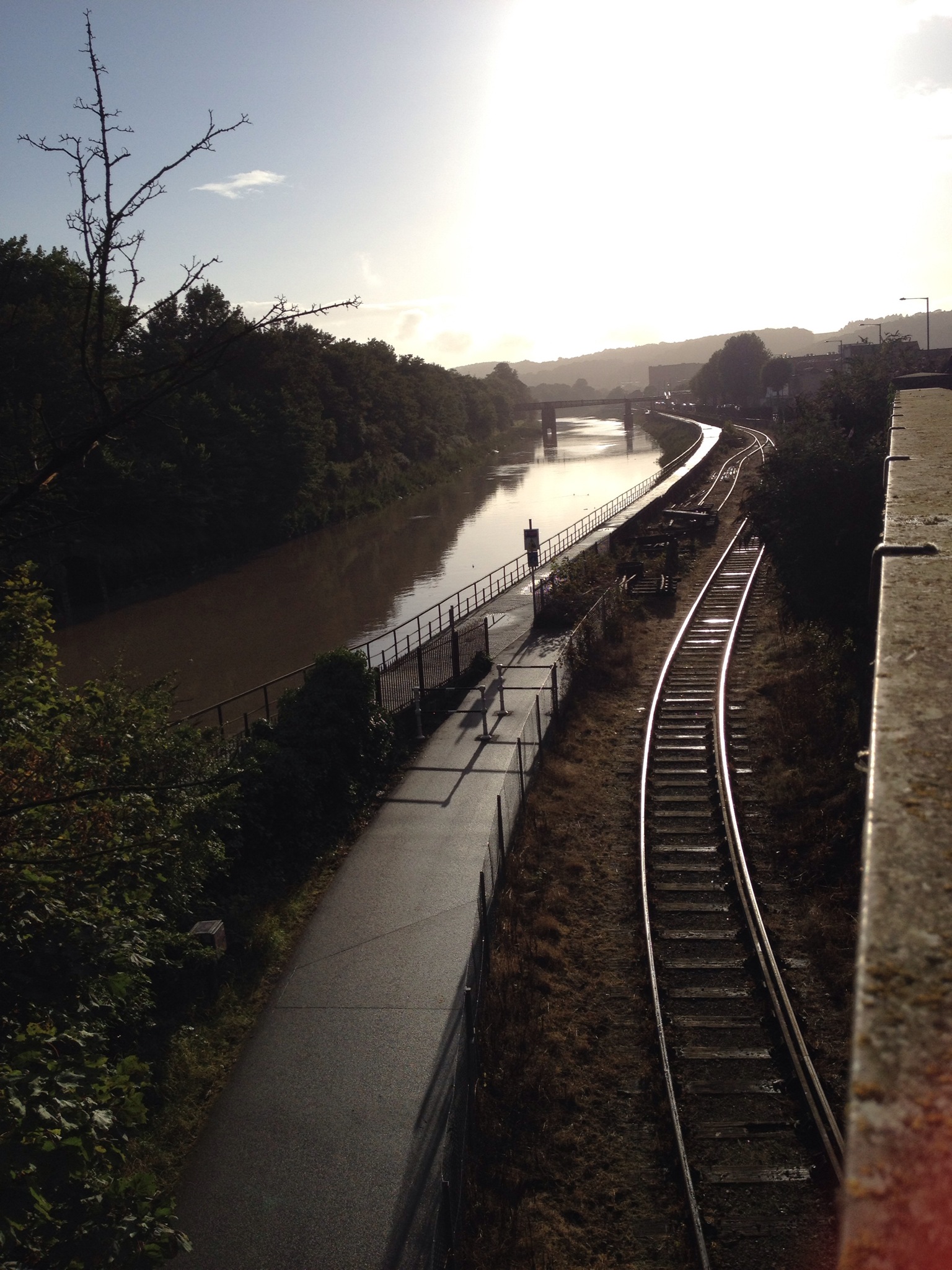
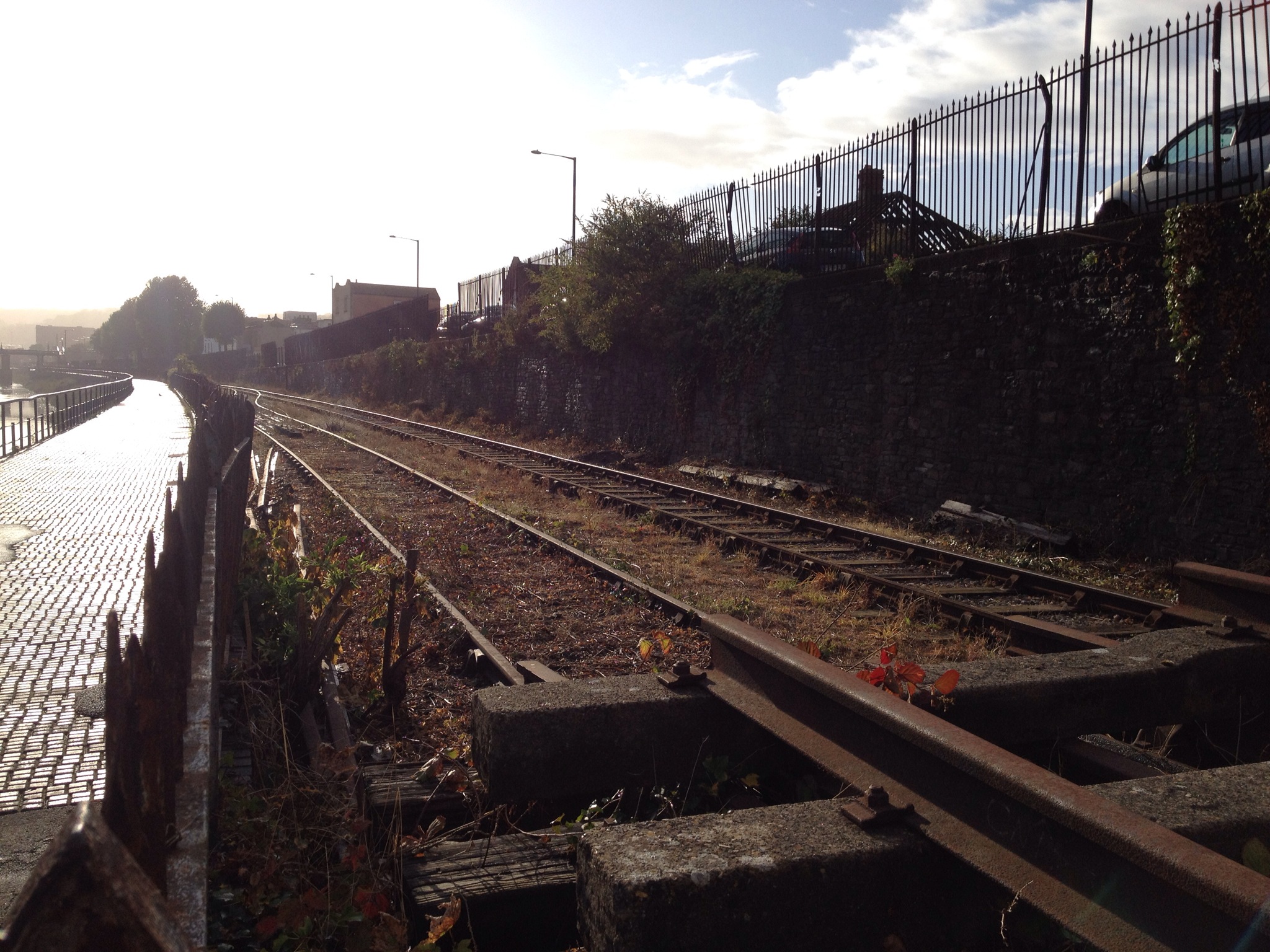
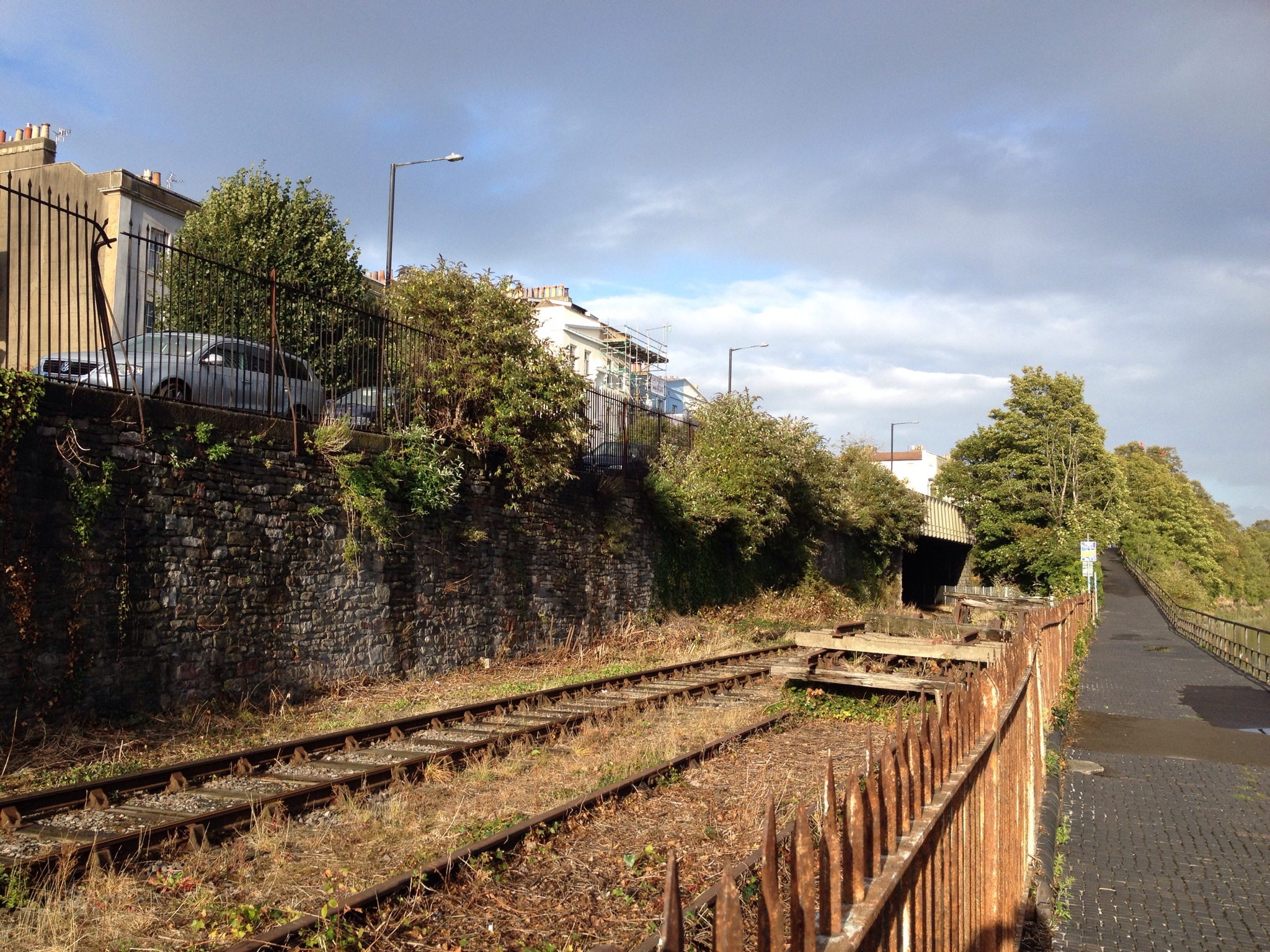
One of the main aims of 2014 has been to tidy up the overall look of the railway. This has ranged from the restoration of the MOGO van, to weedkilling and cutting back branches.
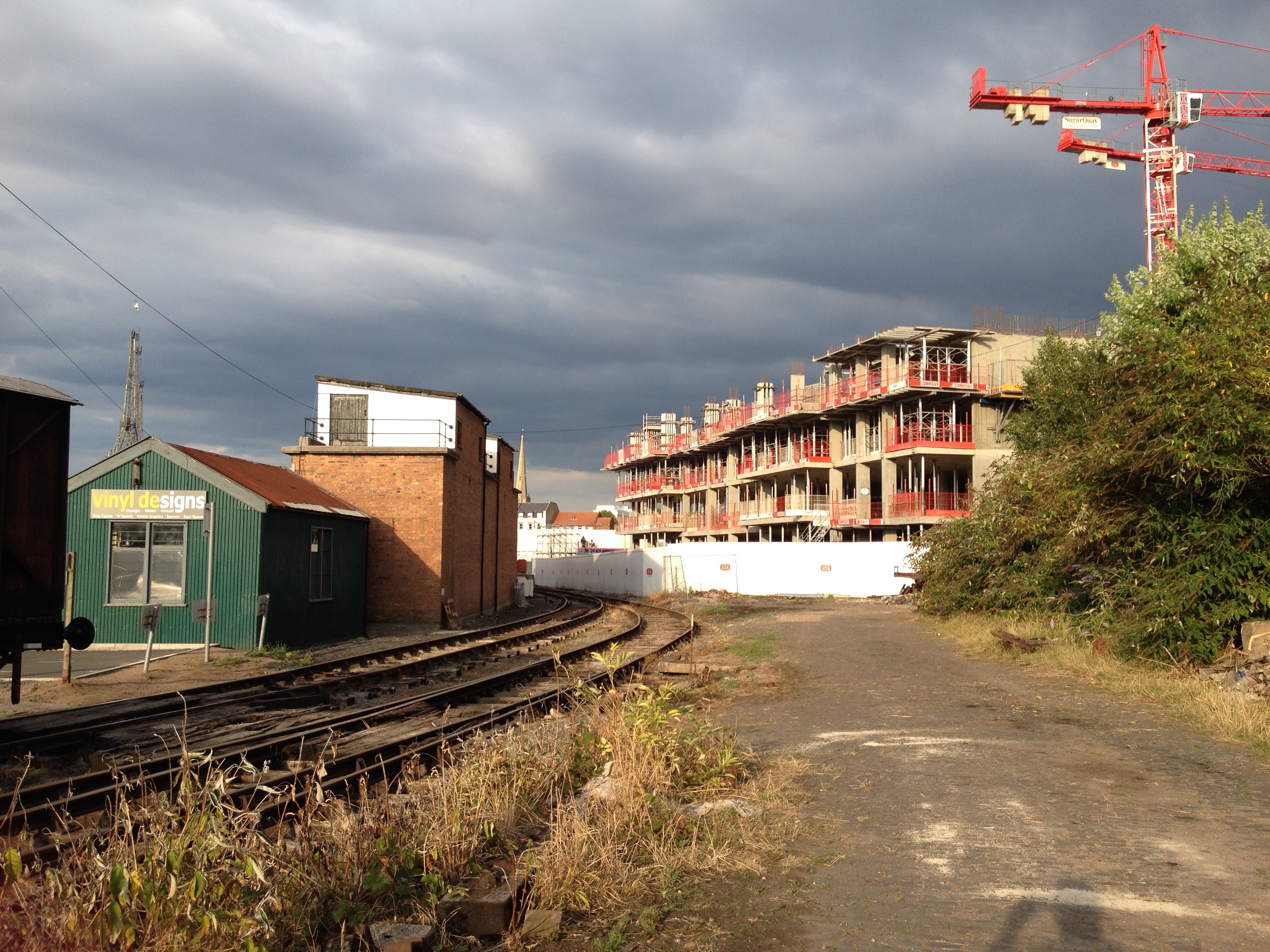
Even the simple things such as picking up litter can make a huge difference. From the small area next to the river siding came enough rubbish to fill 2 large sacks.
Here is the river siding earlier this year:


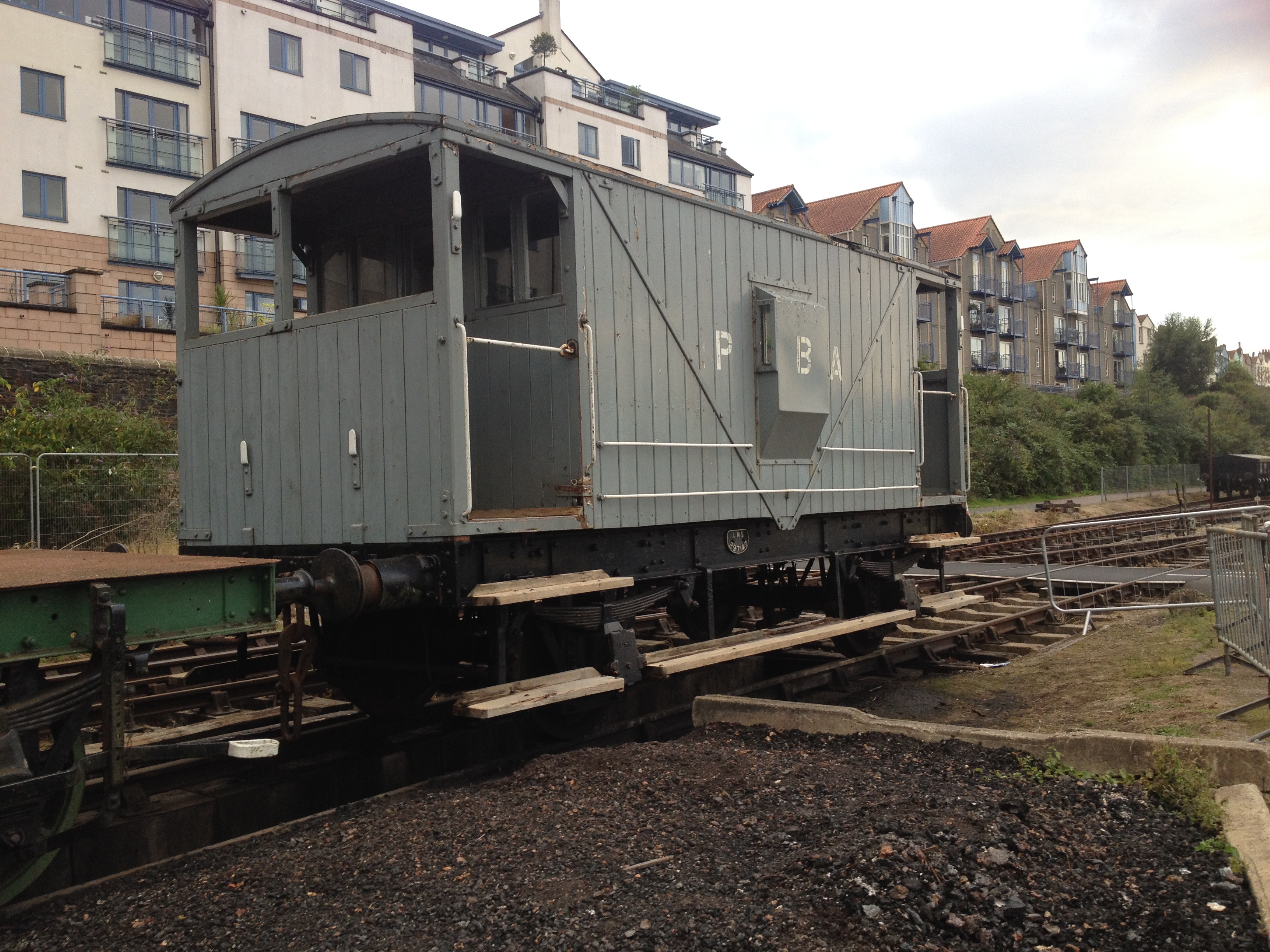
Today:

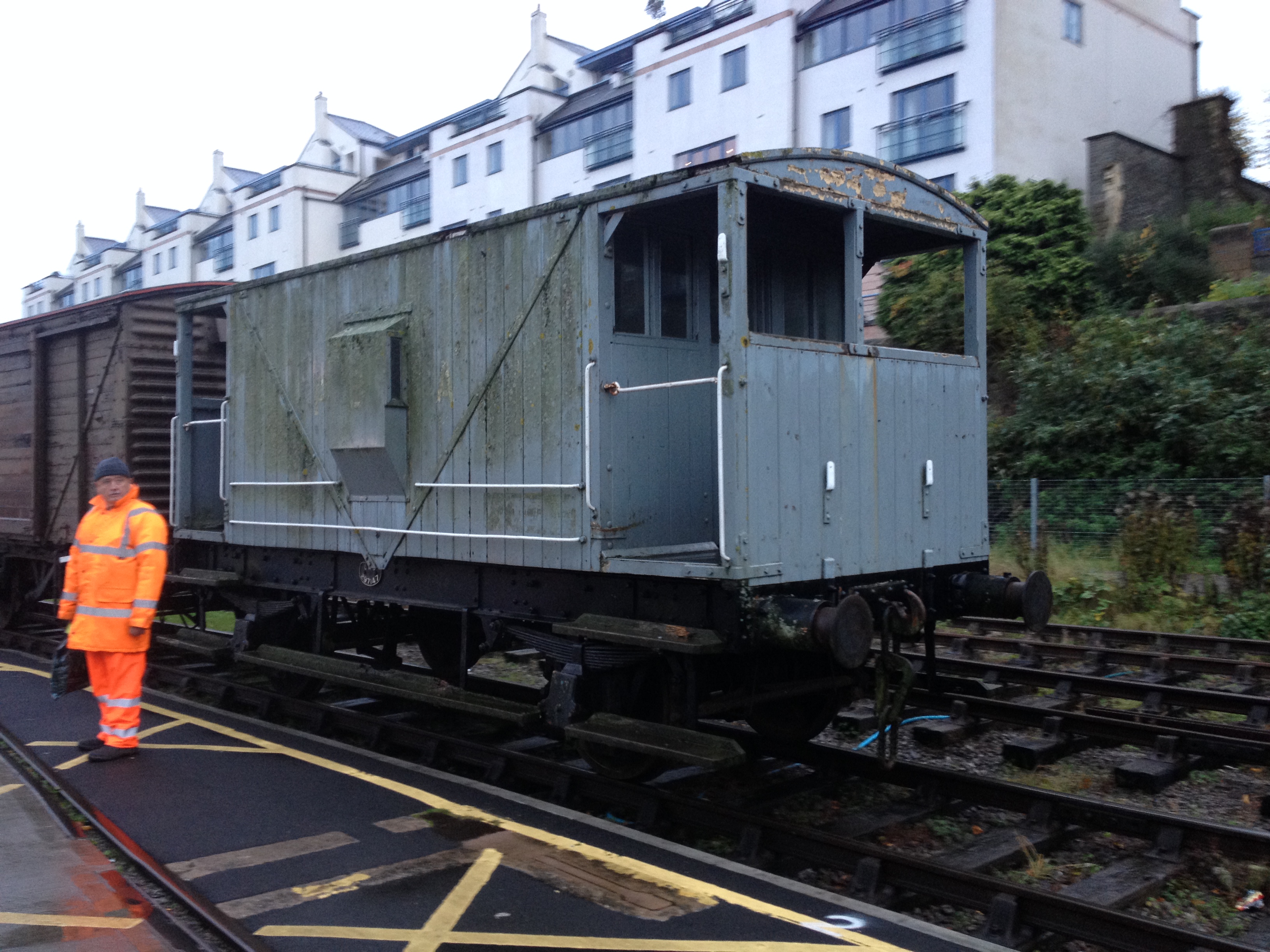
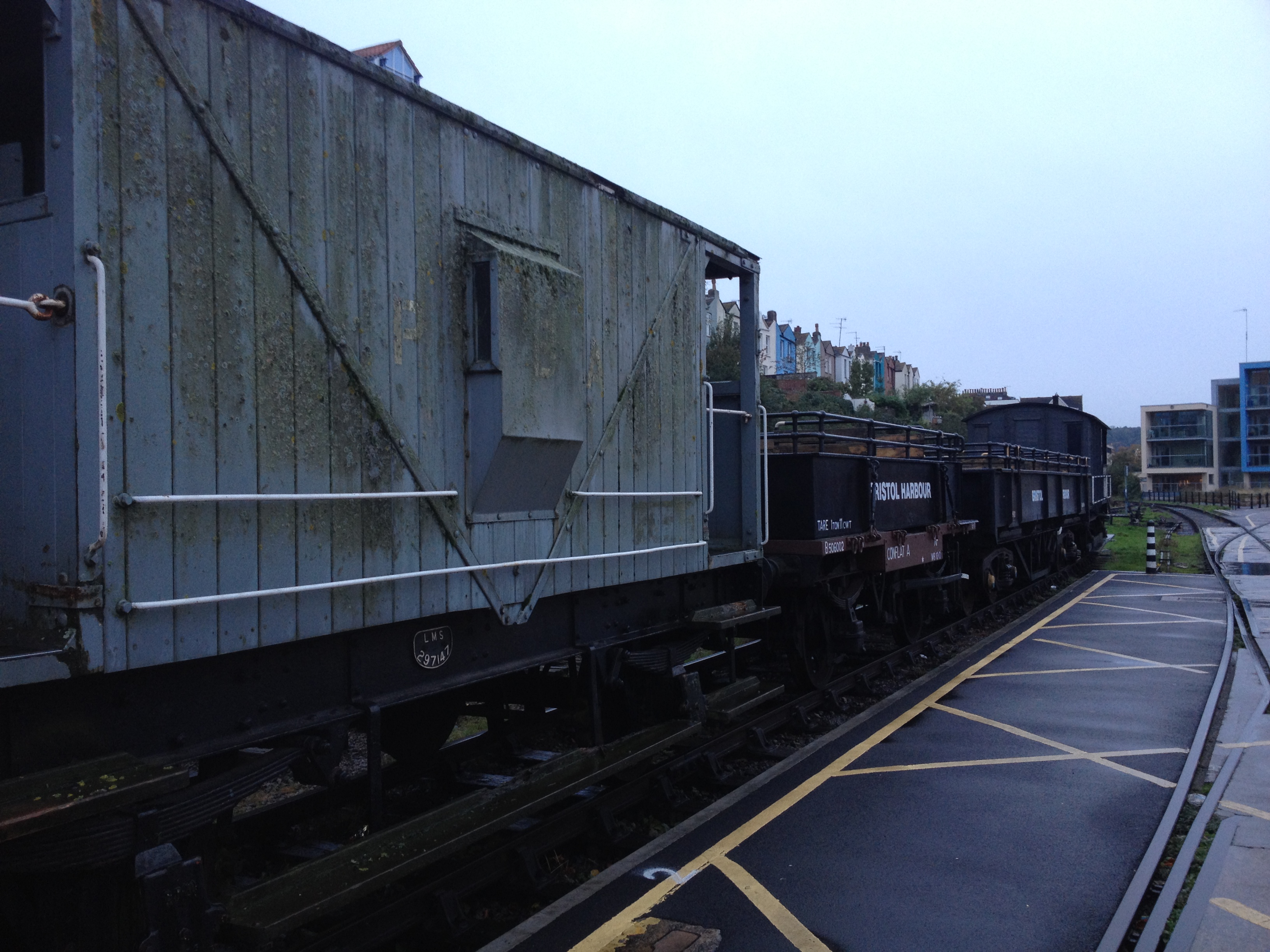
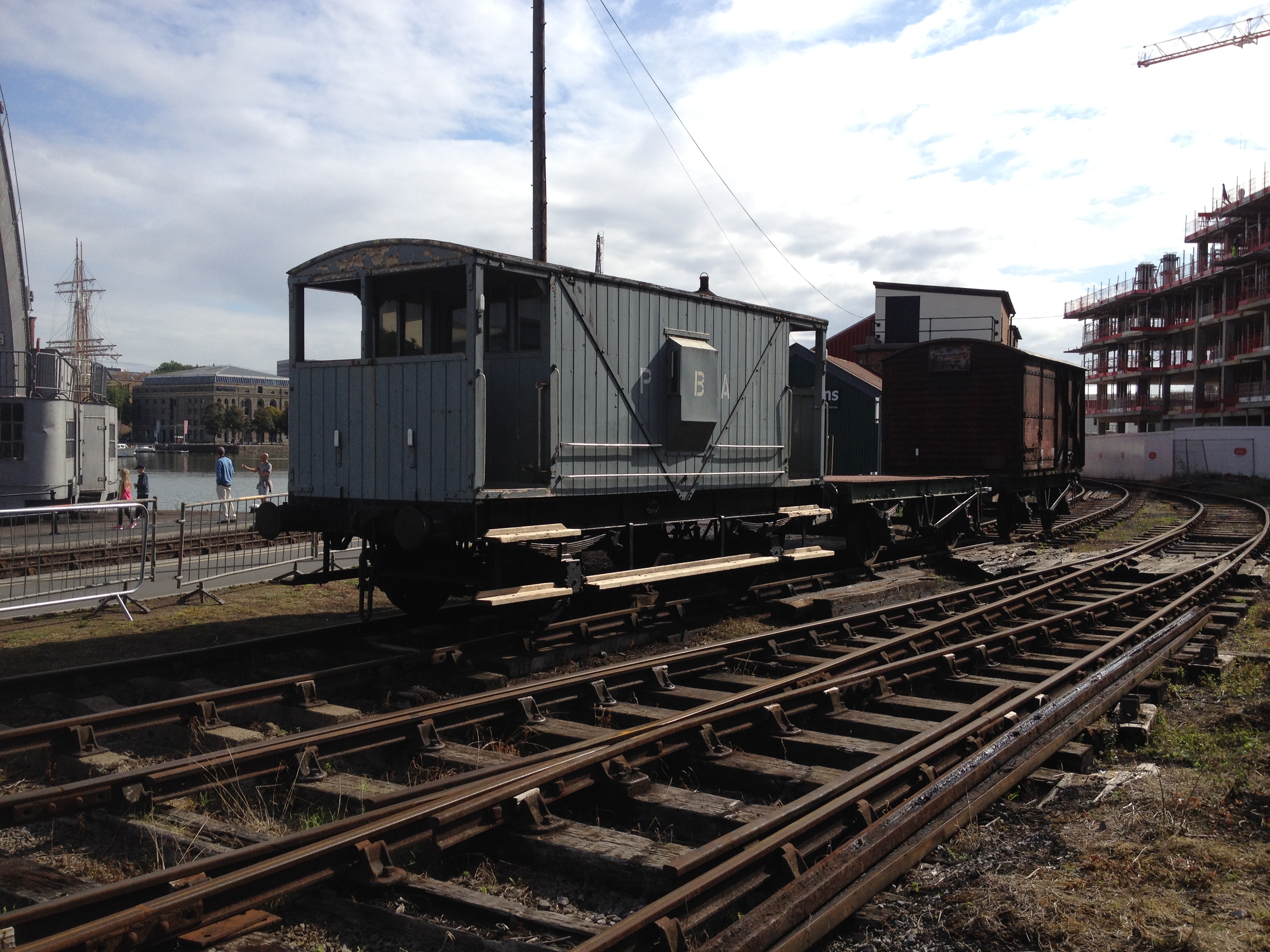
The PBA brake van has also had a clean. The North side of the wagons, facing away from sunlight, can get very dirty and covered in moss.
Before:


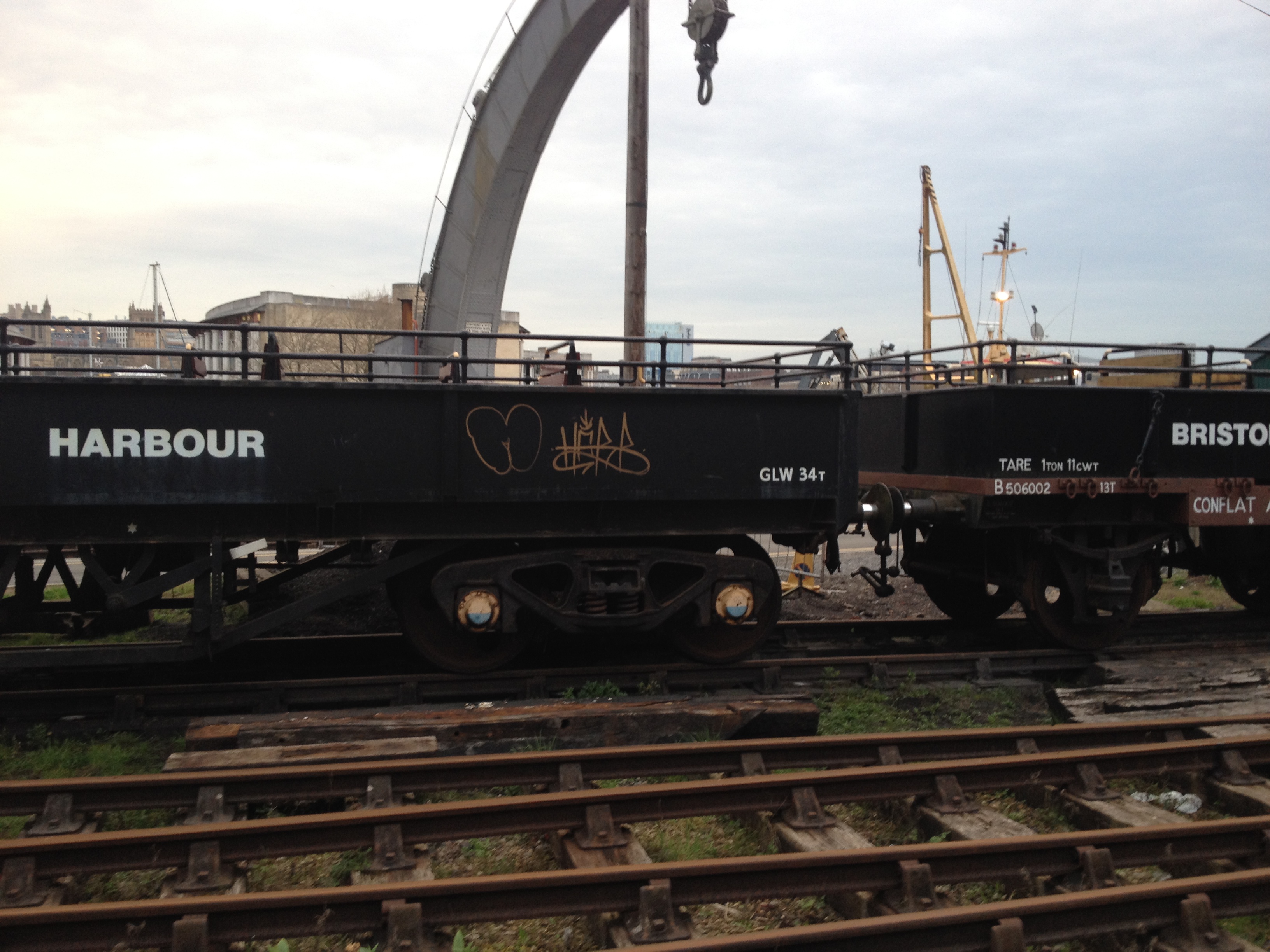
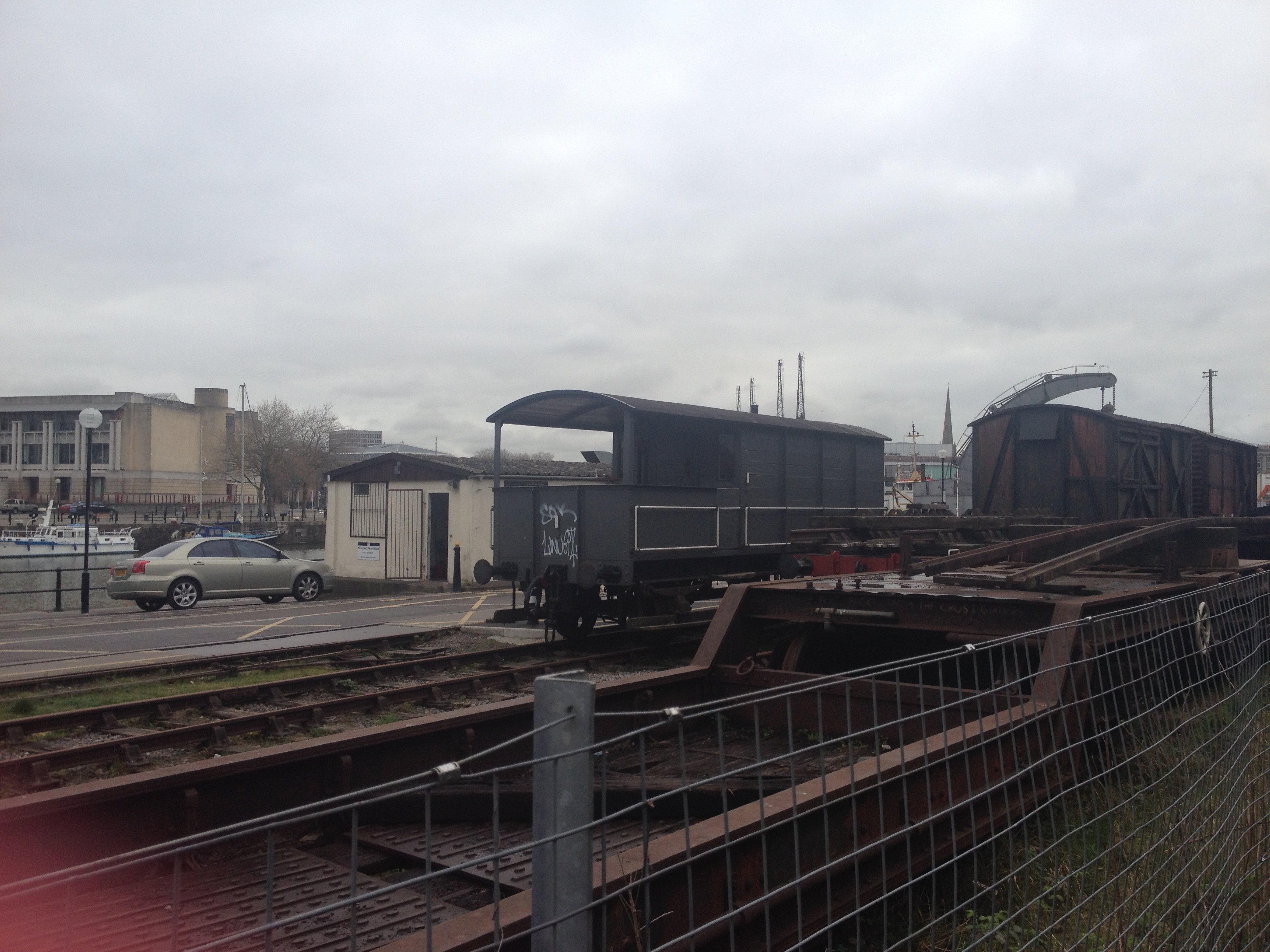
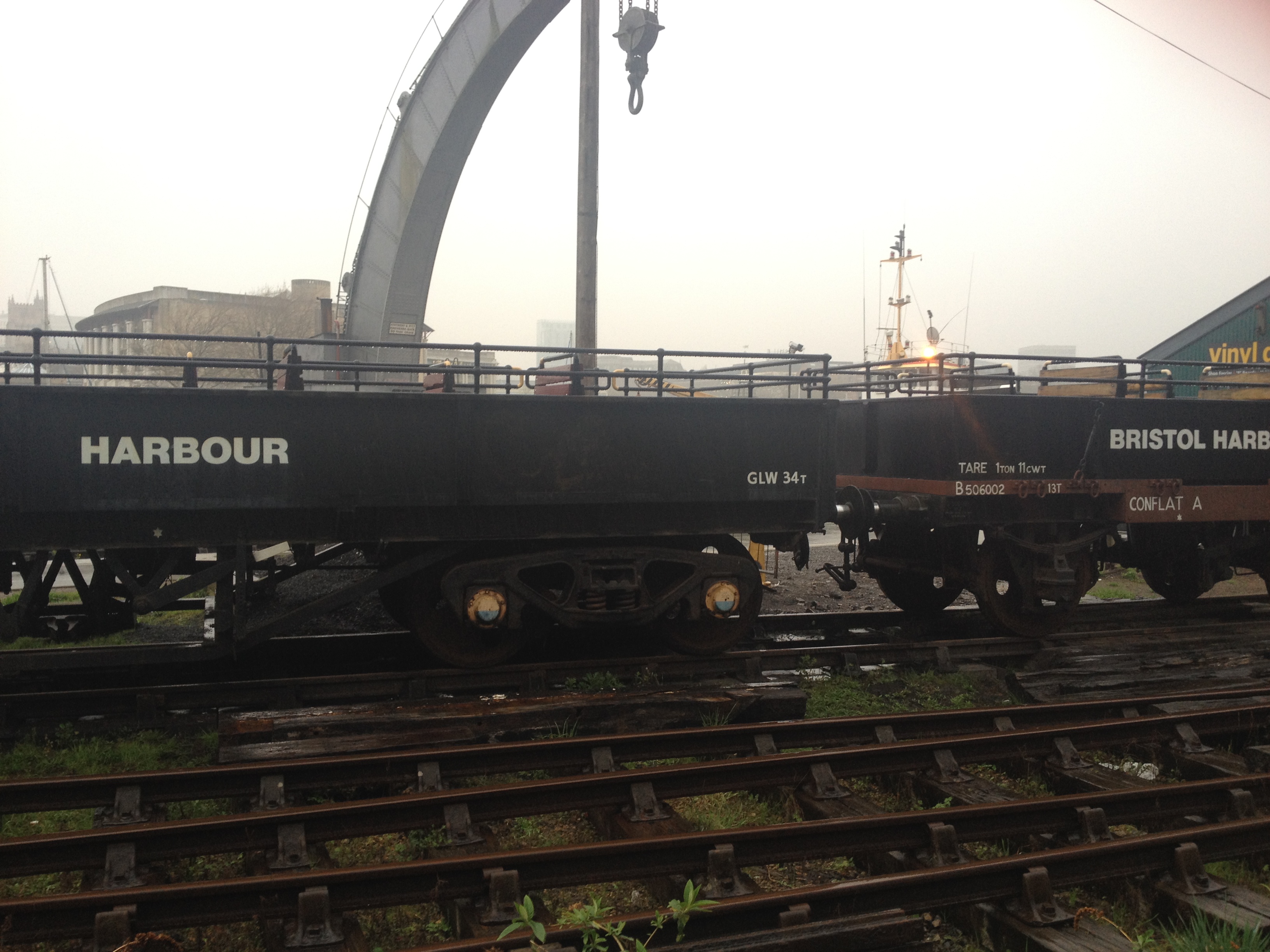
One of the biggest challenges of having a railway in the inner city is graffiti. Bristol has a proud history of famous graffiti and street artists, such as Banksy, 3D and Inkie, however it is less helpful when someone puts their tag on museum stock. Sometimes this could be due to the perception that the stock is out of use, or more generally, trains are daubed so that particular tag can be seen all around the country.
Regardless of the reasoning, the best response is to clean it off quickly, showing that the trains are in fact in use by the museum and that people care about their appearance.
The passenger train was tagged in April this year. This was cleared off almost straight away.

‘MOGO’ Van Restoration – 3
‘MOGO’ Van Restoration – 2
‘MOGO’ Van Restoration – 1
One of the railway’s goods wagons is currently having a bit of TLC. This van has previously been the victim of graffiti tagging, and while the worst was quickly cleaned off, the remnants were still visible.
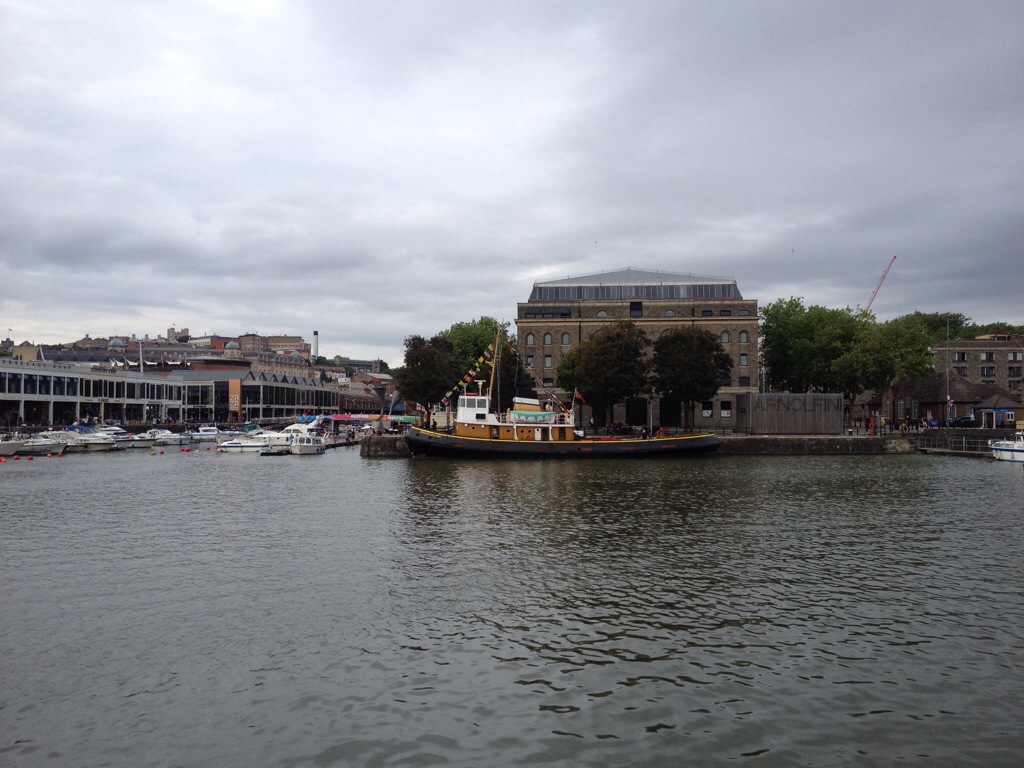
It’s Bristol Harbour Festival this weekend! The railway will be in operation both days. Various ships are arriving at the docks, including this tugboat.
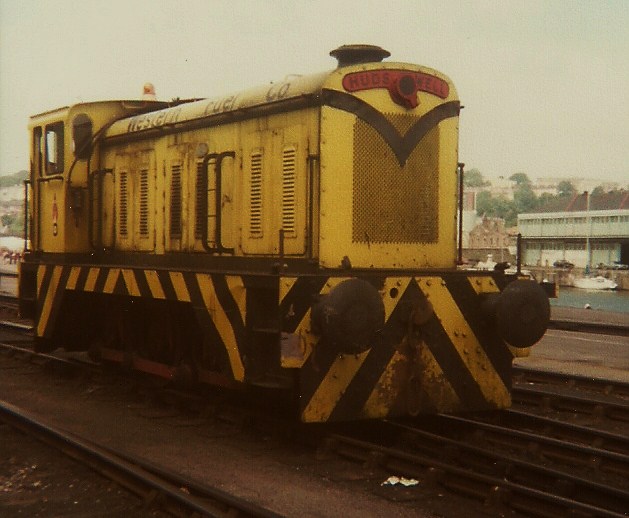
Hudswell Clarke D1171 ‘Western Pride’
‘Western Pride’ was a former Port of Bristol Authority loco, and from the 1970s to 1987, it took loaded coal wagons from Ashton Meadows to Wapping Wharf sidings and the Coal Depot (Western Fuels) there, and returned empty wagons to the sidings.
As loaded coal wagons left overnight had a tendency to get vandalised, there was a secure storage compound at the coal depot, where the loco and wagons were stored overnight.

Western Fuels ex PBA 0-6-0 D1171 standing at Wapping Wharf, July 1979 (Courtesy Kevin Redwood)
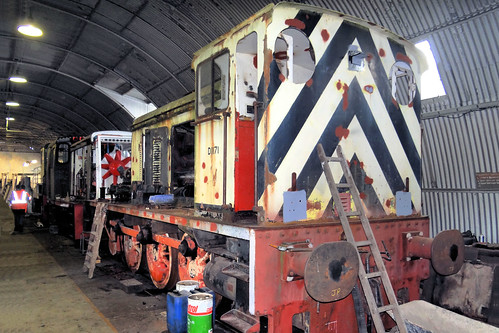
D.1171 made her last trip along the BHR in May 1987, on an overnight move to the coal depot at Filton. She has since been sold into preservation, and after a period in store outside at MOD Long Marston (As seen in this picture by Cliff Jones Photography), restoration has begun, as seen here (March 2013):

Image is property of Mike Cottam and appears here as a direct link to his flickr page
Locomotive No.3 – (Fox, Walker and Company No. 242)
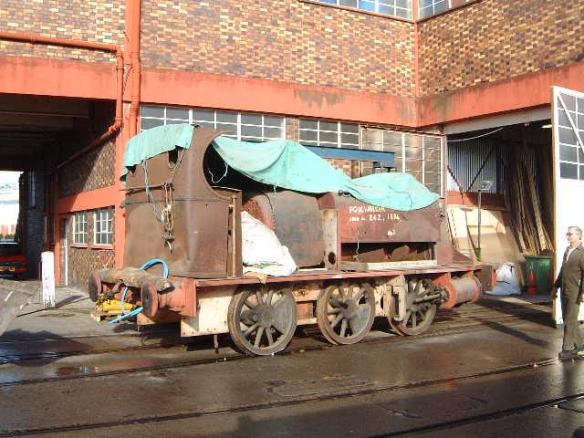
A little known and lesser-spotted member of the M Shed Collection is Fox, Walker and Company 0-6-0ST Locomotive Number 242.
Built in 1874, it is the oldest of the three steam locomotives, being 43 years older than ‘Portbury’ (and 63 years older than ‘Henbury’!) and enables the museum to represent all the major engine builders in the Bristol area.
Fox, Walker and Company was taken over by Thomas Peckett in 1880 and became Peckett and Sons, the builders of ‘Henbury’ and her sisters.
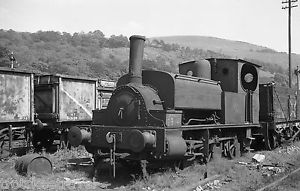
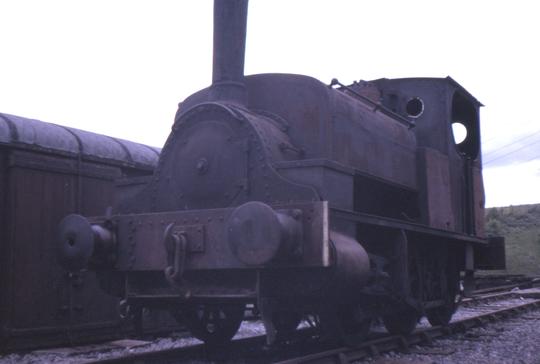
242 was the first locomotive to arrive in the museum’s collection. It was donated by the National Coal Board in 1962, having previously worked at Mountain Ash Colliery in Wales, where it was No.3.
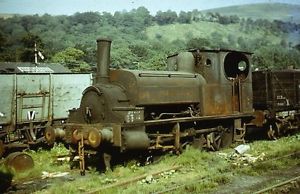
These two photographs were spotted for sale on ebay, unfortunately only the thumbnails were available to view online. They show 242 while still at Mountain Ash.


This photo is copyright Malcolm Williams and was found on steamlocomotive.info
It shows NCB Mountain Ash No.3 in detail before departing for Preservation.
Prior to the preserved BHR opening in 1978, she, along with ‘Henbury’ and ‘Portbury’, was to be found at Radstock Station. This was the hub of the initiative to re-open a section of the famous S and D route, spearheaded by the Somerset and Dorset Railway Trust. As previously mentioned, the SDRT moved to Washford station on the WSR in 1976.
Geoff Cryer took these pictures of 242 in the shed at Radstock in September 1975.
- Copyright Geoff Cryer
Source: http://www.geoffspages.co.uk/raildiary/radstock.htm and http://www.geoffspages.co.uk/monorail/gc01.htm
When the Radstock project was disbanded, Number 242 went to Bitton (on what is now the Avon Valley Railway) between 1977 and 1986, when she returned to Bristol and was stored in L Shed.
As preparations were made for Bristol Industrial Museum’s conversion into M Shed Museum, the locomotive was made ready to move to another secure location.

Larry the Loader tows 242 out of the workshop.
Photo courtesy Rob Skuse
Source: https://www.facebook.com/media/set/?set=oa.198379386934483&type=1
As for the future, at nearly 140 years old, there are no current plans to return 242 to steam. Her current storage space may be repurposed due to planned development, so a move might be on the cards. Watch this space…