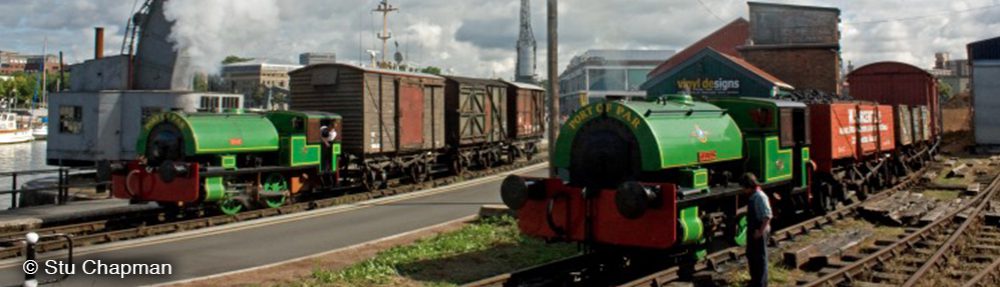
Metrobus and Ashton Avenue Bridge

Metrobus, the guided busway project in Bristol, has now been given financial backing and construction is due to start in 2015.
The busway scheme is set to use sections of the former BHR, joining at Ashton Junction (Going ‘up and over’ the Portishead Railway line on a bridge), then across the old sidings at Ashton Meadows, under the Cumberland bypass, then crossing the New Cut at Ashton Avenue Bridge. From here, it is intended that the buses take the route of the current BHR, joining onto Cumberland Road itself adjacent to the ‘West Yard’ throat.

The Metrobus Website has published the aims for the refurbishment of Ashton Avenue bridge, the deteriorating condition of which was one of the factors in the BHR ceasing operations South of the river in the 1990s.

The full webpage is here, but here are some excerpts:

Ashton Avenue Bridge is on Bristol City Council’s Listed Building At Risk Register.

The register describes the bridge as being in a very bad condition with clear signs of structural instability and says the bridge in its current state is at “immediate risk of further rapid deterioration”.

The MetroBus project will restore the Victorian bridge and return it to its original role as a public transport corridor

English Heritage have been consulted on our plans for the bridge and support the works to conserve it.

Restoring the bridge

Pedestrians and cyclists will still to be able to use the bridge after it has been restored. The restoration works include a lane for the MetroBus and a 3.5 metre pedestrian and cycle path that is wider, smoother and a safer environment than the current path.

Lighting will also be provided on the bridge, making it a much safer environment for pedestrians and cyclists using the bridge at night. 

The proposed restoration works also include:

– Repair of corrosion damage which would otherwise compromise the long term durability of the bridge.

– Removal of graffiti.

– Removal of vegetation from piers and the bridge deck.

– Removal of temporary repair measures including metal mesh fencing.

– Removal of guardrail separating pedestrian walkway from rail line.

– Replacement of badly corroded deck plates.

– Repairs to trusses to allow drainage modification works which will reduce future corrosion.
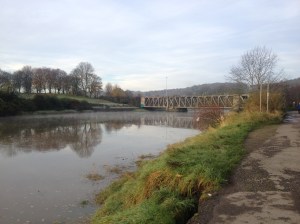
Ashton Avenue Bridge, with the morning mist rising off the New Cut, November 2014
Ashton Avenue Bridge, with the morning mist rising off the New Cut, November 2014
TBT – Southern E1 at the Festival of the Sea

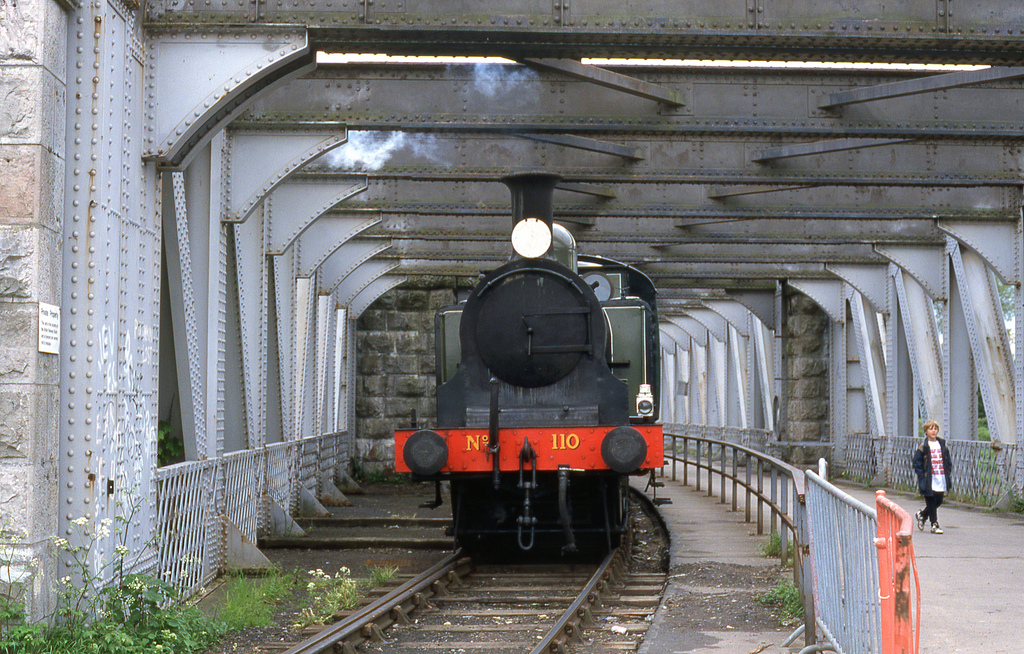
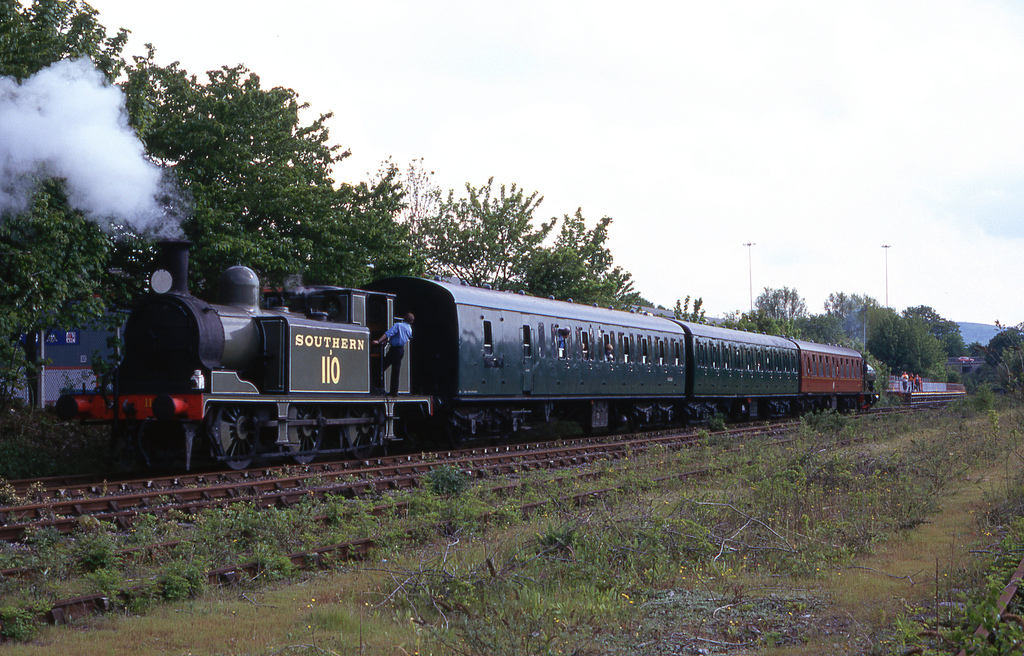
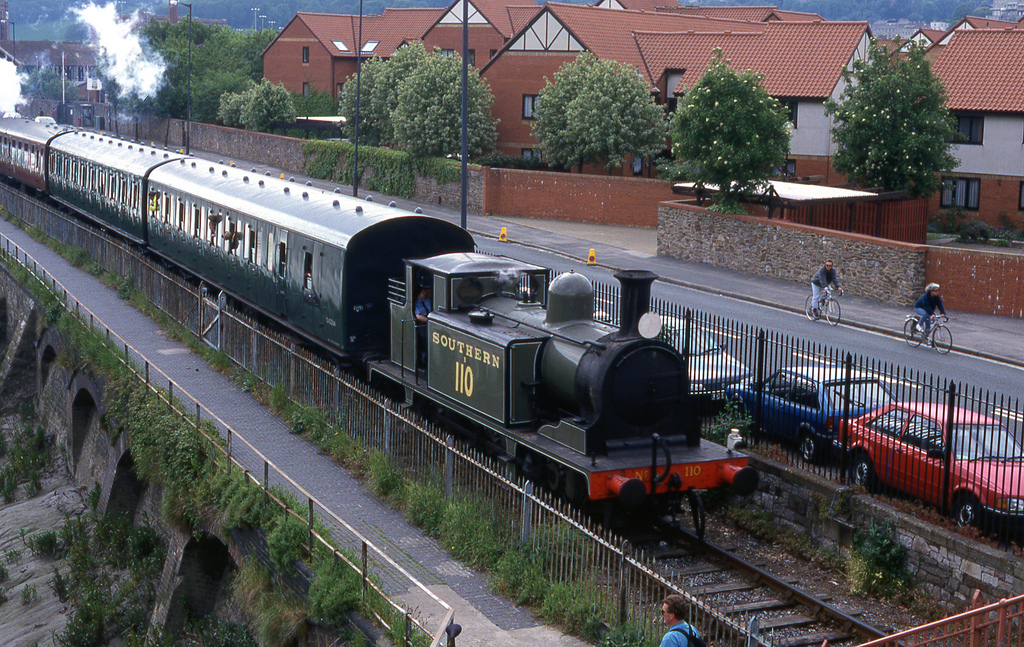
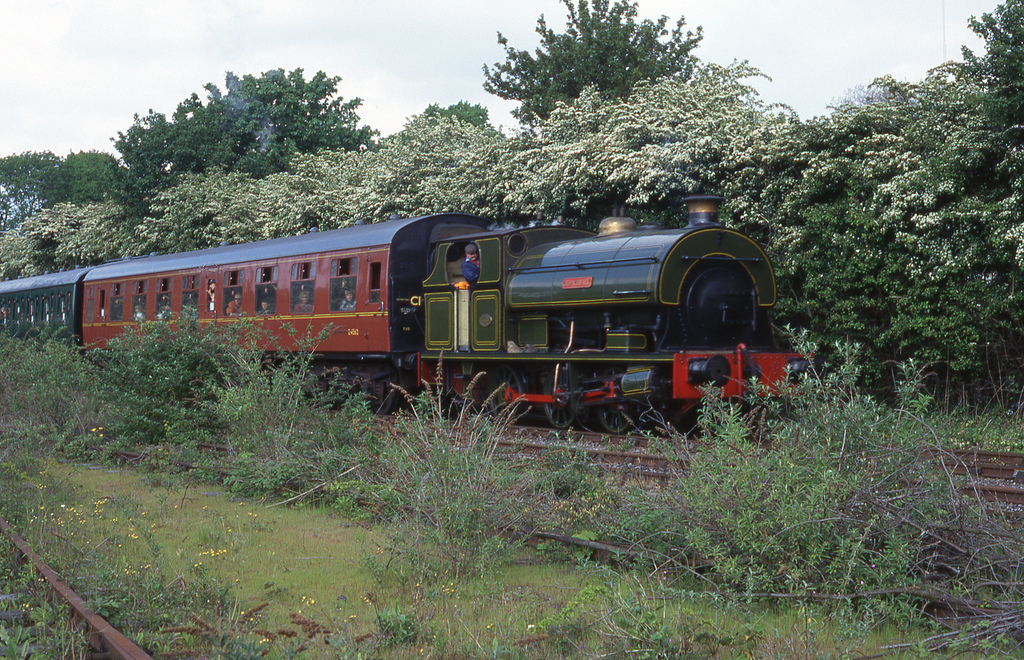
From the 24-27th May 1996, Bristol Harbour was host to the International Festival of the Sea. This was a huge event featuring many guest ships and attractions, and of course the BHR played a part. A shining and fully-lined out ‘Henbury’ was joined by LB&SCR E1 class 0-6-0T No.B110, then based at the East Somerset Railway (Now being restored to service on the Isle of Wight as No.W2 ‘Yarmouth’). The two locos operated a shuttle service between the station at Ashton Meadows and the Bristol Industrial Museum with 3 loaned coaches.
The following pictures appear with the kind permission of Geoff Hartland.

11090872625_7325697da6_b

11090873575_dc9f0d3290_b

11090965126_556f5b687a_b

11090977424_b3c8457deb_b

Number 110 was built at Brighton Works in 1877 and named ‘Burgundy’. It was withdrawn in 1927 and sold to a colliery in Rugeley, which resulted in it being the only member of its class to survive scrapping, being sold into preservation in 1963. It was in service on the ESR between 1993 and 1997, when it was withdrawn early due to firebox problems. She is now on display at the Isle of Wight Steam Railway’s ‘Train Story’ exhibition, and will be restored in due course.

TBT – Ashton Meadows Sidings

Today’s #throwbackthursday post is about Ashton Meadows sidings.
Ashton Meadows was formerly the exchange yard between the harbour branch and the line from Portishead to the main line at Parson Street junction. It was also the site of a civil engineers depot.

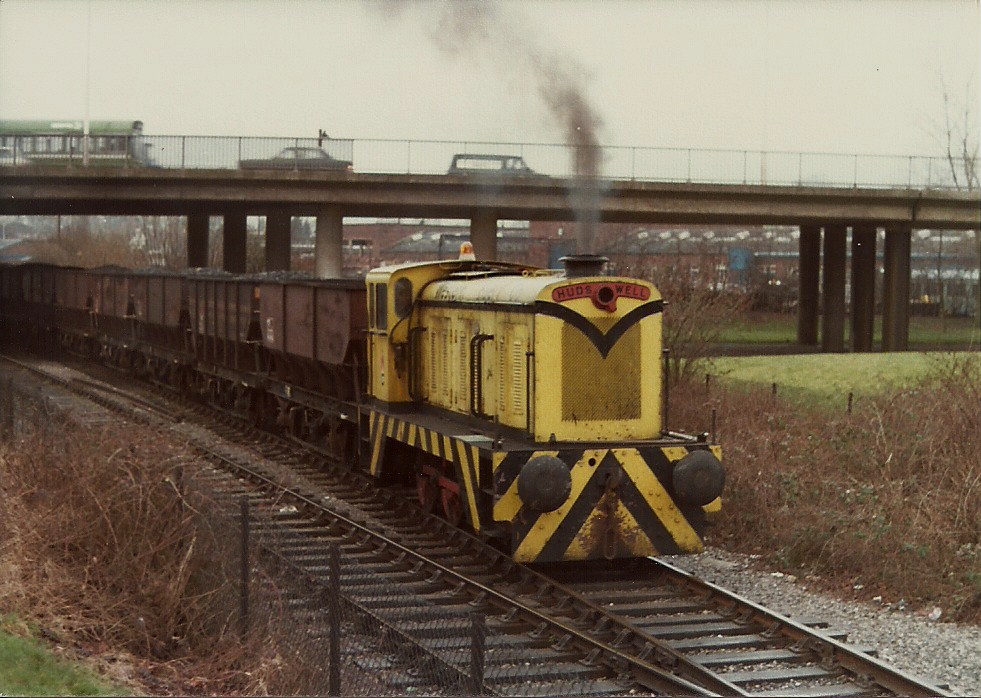
Until 1987, the 0-6-0 Hudswell Clarke diesel shunter ‘Western Pride’ would take loaded wagons from Ashton Meadows, up the New Cut, to the Western Fuel Depot (Behind M and L shed).

In 1983, ‘Western Pride’ broke down, and for 3 weeks, ‘Henbury’ was pressed into service, becoming the first preserved steam loco to haul freight for British Railways since the end of steam in 1968.

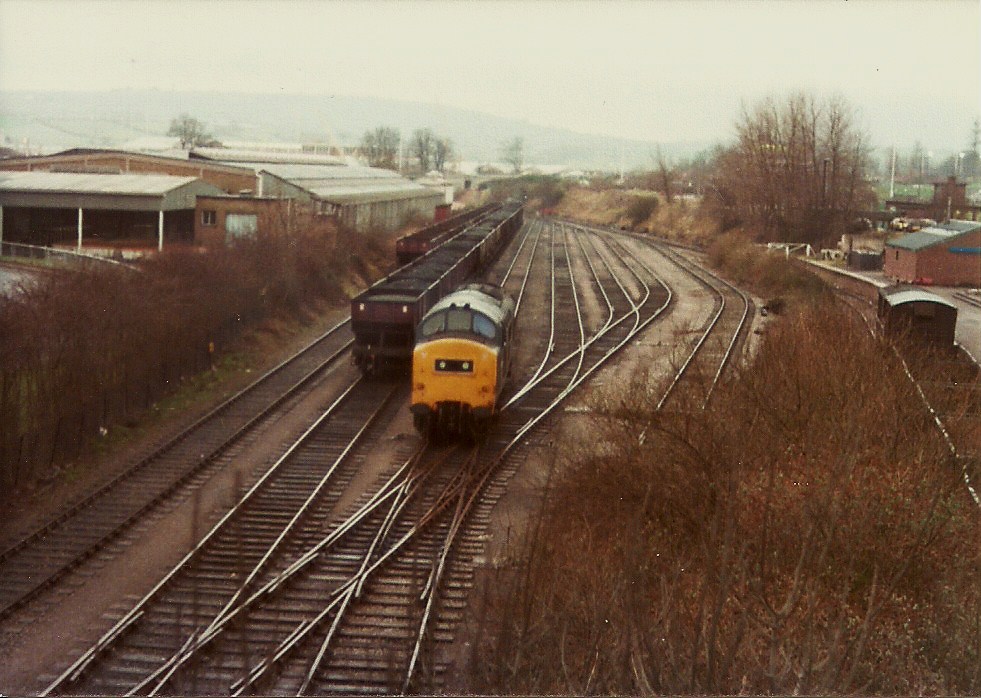
This was the view from the A3029 overbridge on a misty morning in February 1980. These pictures appear with the kind permission of Kevin Redwood.

37302 is running round the loaded 21t hoppers, the empties are ready for the return trip, 11:2:80
37302 is running round the loaded 21t hoppers, the empties are ready for the return trip. On the left is the building that later became ‘Megabowl’, and is now the site of Paxton Drive apartments. The area of the former sidings was levelled for the use of construction equipment and site offices.

The Western Fuel Company Hudswell pilot (ex PBA No. D1171) takes the loaded hoppers to Wapping Wharf, 11:2:80.
‘Western Pride’ takes the loaded hoppers out of Ashton Meadows and on toward the docks. This loco is now preserved and currently in storage in the midlands.

The trackbed here is now a foot and cycle path leading across Ashton Avenue Bridge, and the route of the proposed Metrobus guided busway.

A Pannier in the Port – 1996

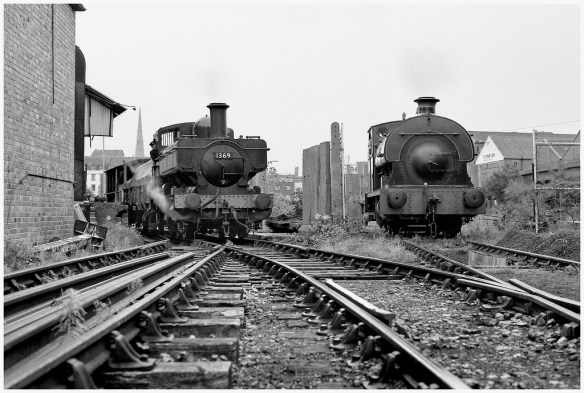
Back in 1996, ex-GWR pannier tank 1369 (Now based at the South Devon Railway) paid a visit to Bristol Harbour.
The Weymouth Docks shunter, last survivor of the 1366 class, was reminiscent of panniers formerly used on the harbour lines.

Here are a collection of photos from the visit. All photographs are copyright of their respective owners, a huge thank you goes out for allowing them to be reproduced here.

gordon-edgar-gwr-1369-1
1369 on the shed road while ‘Henbury’ stands by.
Source: http://www.flickr.com/photos/12a_kingmoor_klickr/5809563945/
Copyright Gordon Edgar


Performing a runpast with the goods.
Source: http://www.flickr.com/photos/dorneyphoto/10691844086/in/photostream/
Copyright Ian Silvester ( http://www.dorneyphoto.com/ )


Source: http://www.flickr.com/photos/8523292@N03/4081645814/sizes/z/in/photostream/

Source: http://www.flickr.com/photos/8523292@N03/4081645892/sizes/z/in/photostream/

Source: http://www.flickr.com/photos/8523292@N03/11090871735/in/photostream/

Source: http://www.flickr.com/photos/8523292@N03/4080884331/sizes/z/in/photostream/

Source: http://www.flickr.com/photos/8523292@N03/11090975914/in/photostream/
Above images are all Copyright Geoff Hartland

The charter featured Ashton Avenue Swing Bridge, still available for use at the time. The area behind the loco is the current site of Butterfly Junction Halt. In 1996 there was a run-around loop in place at Ashton Meadows.
The swing bridge’s deteriorating condition meant that it was taken out of use in the late 1990s, and the track on the South side of the New Cut was lifted to make way for new housing (The houses do not occupy the permanent way, but the trackbed was used for site offices and vehicle parking during construction).