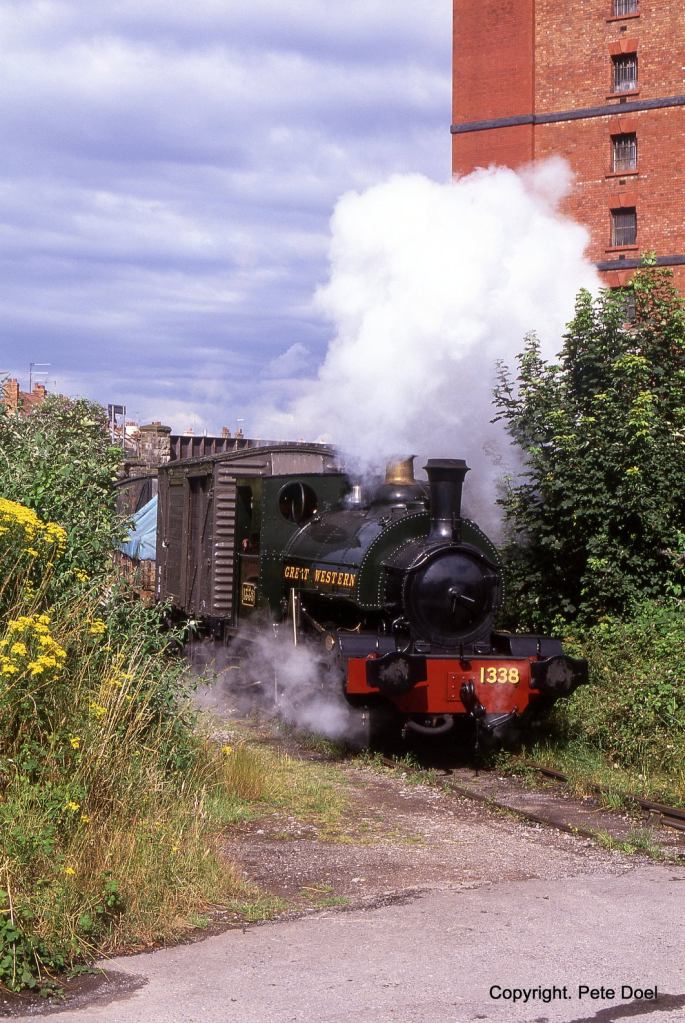
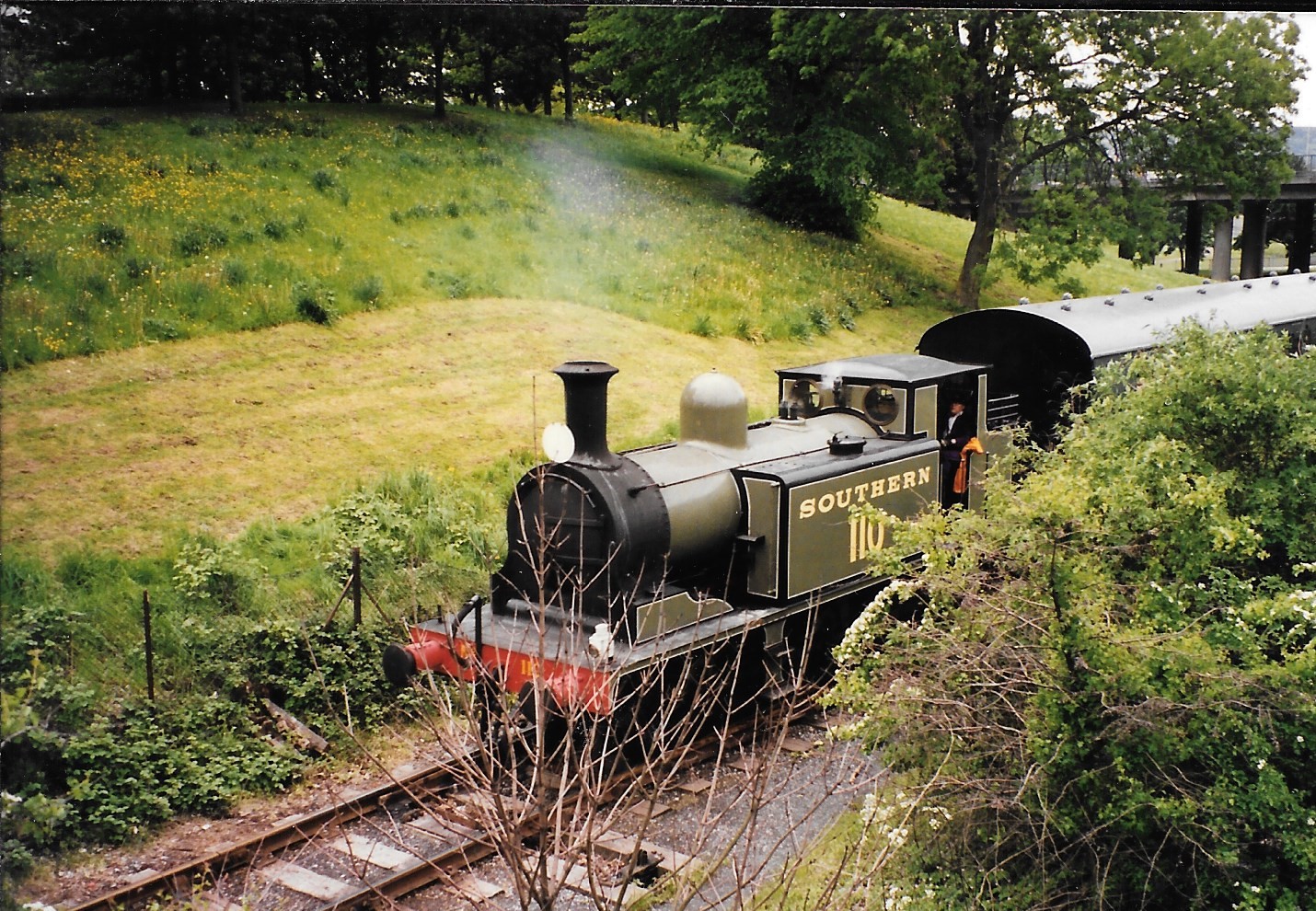
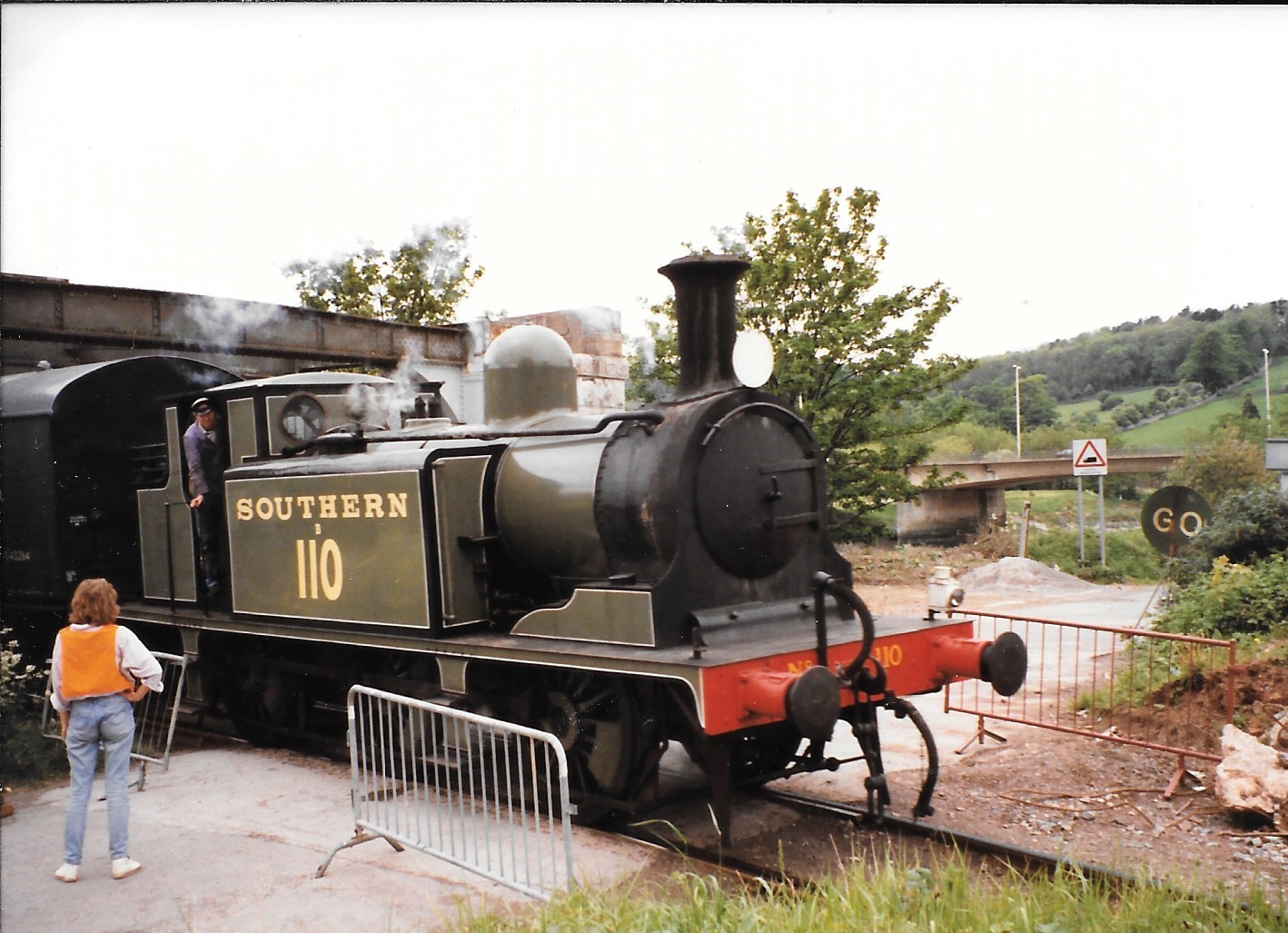
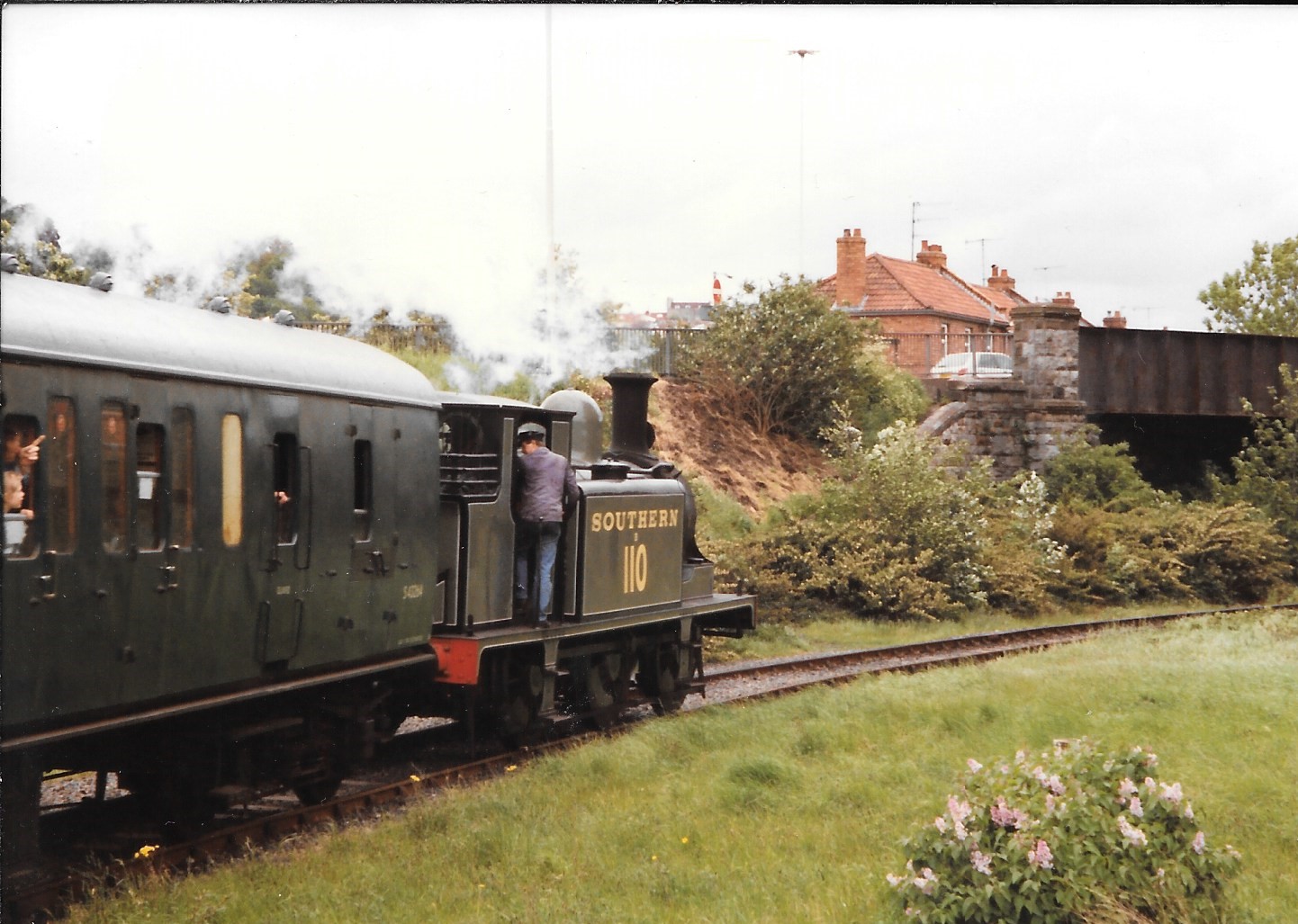
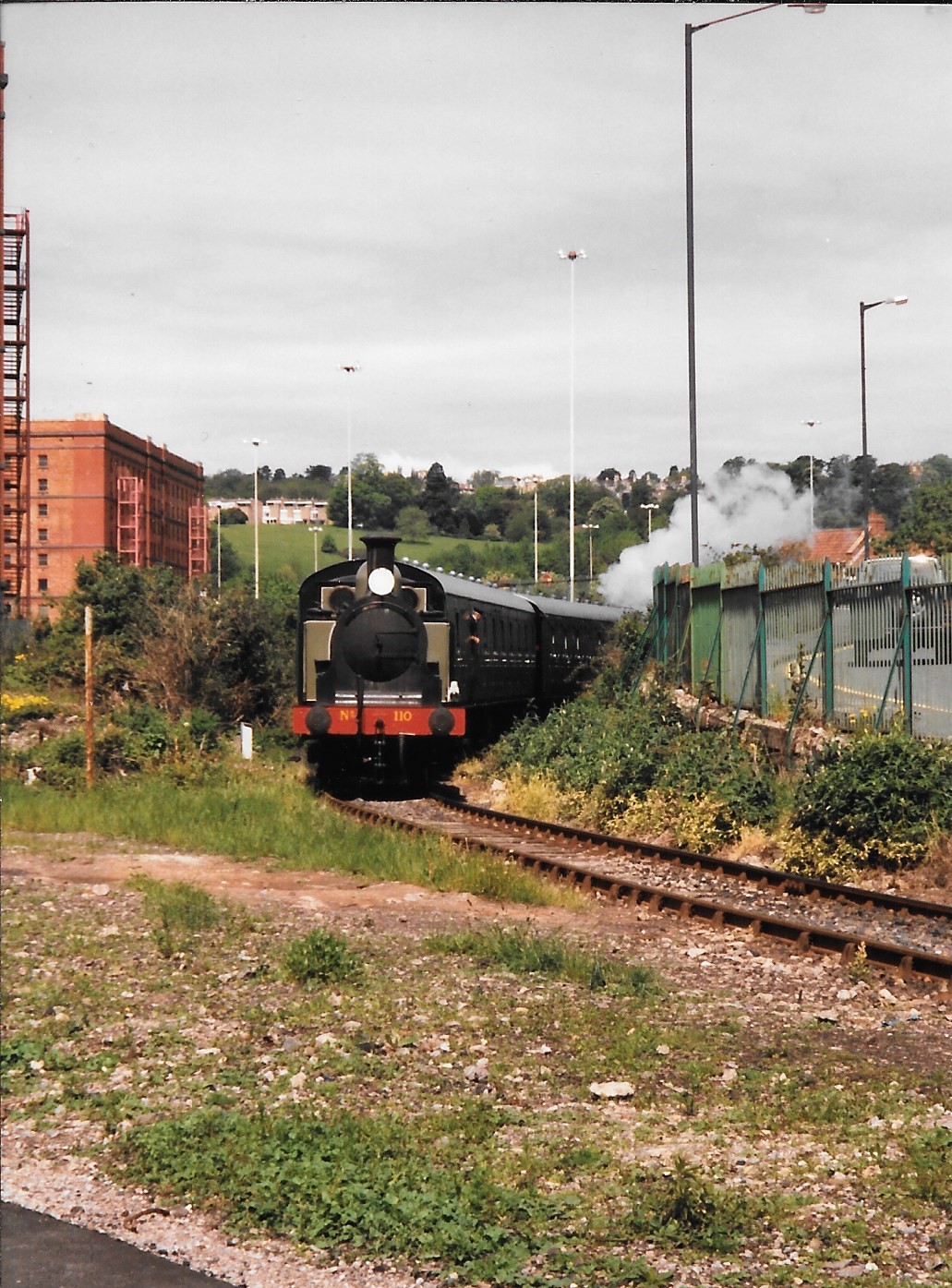
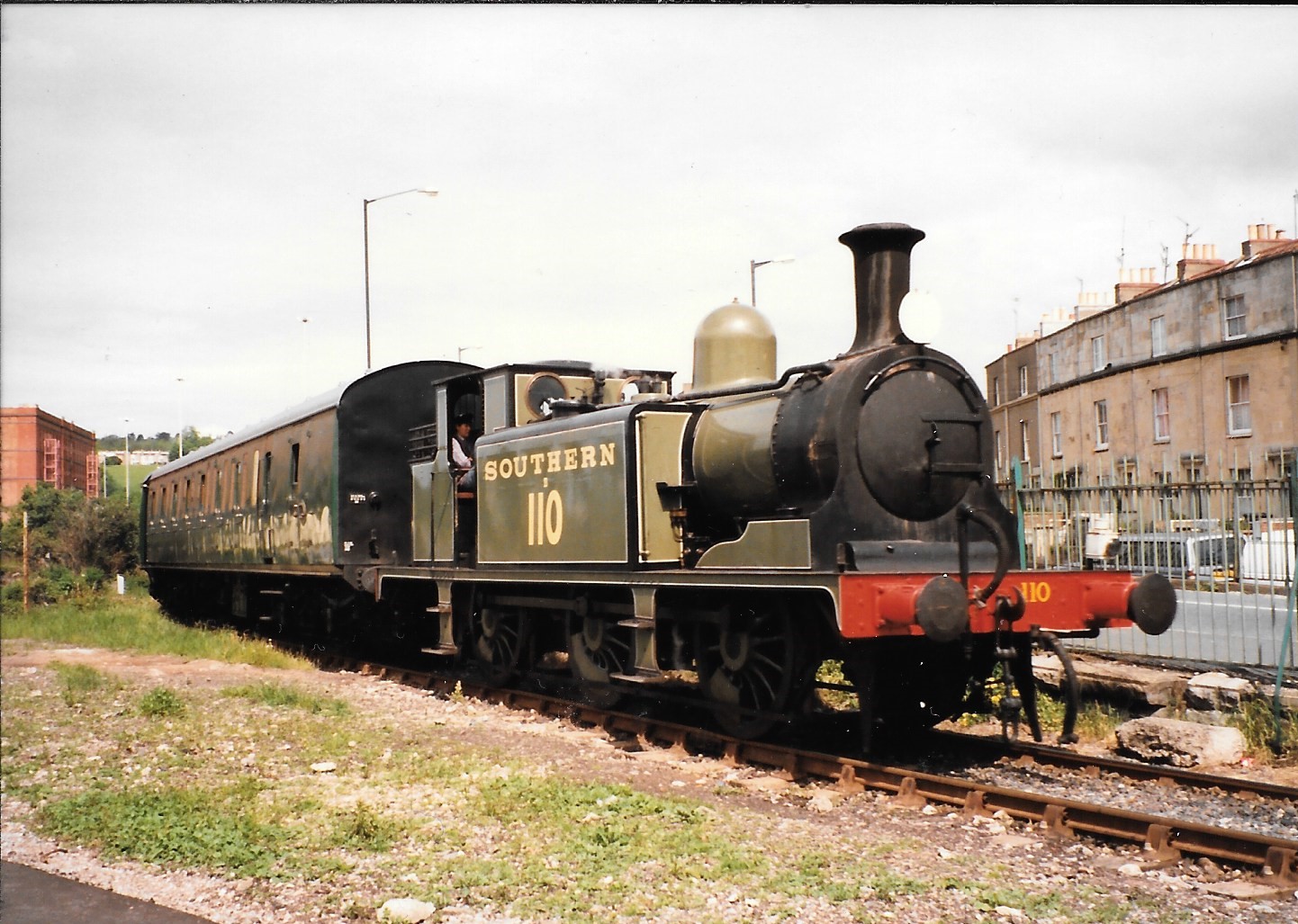
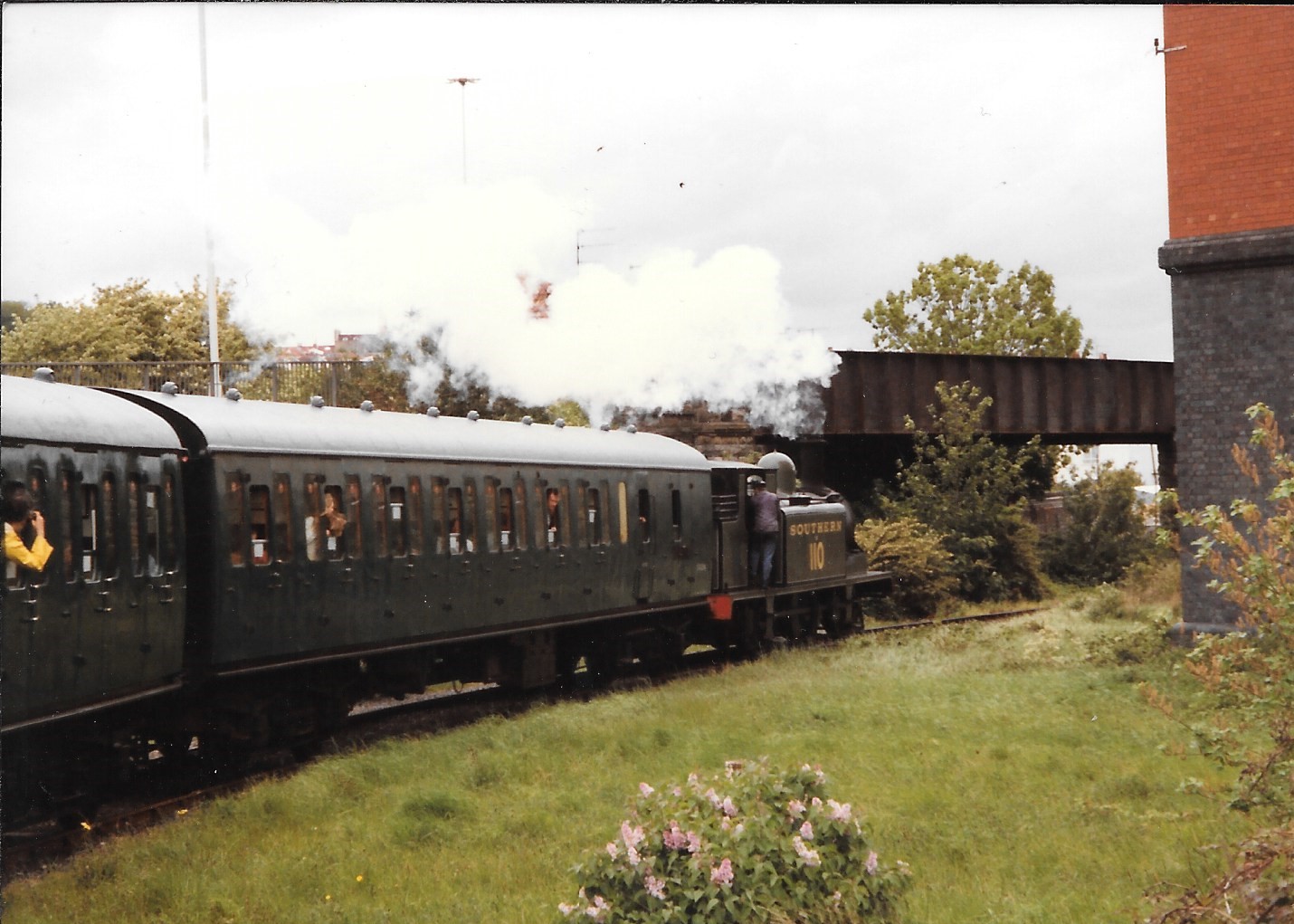
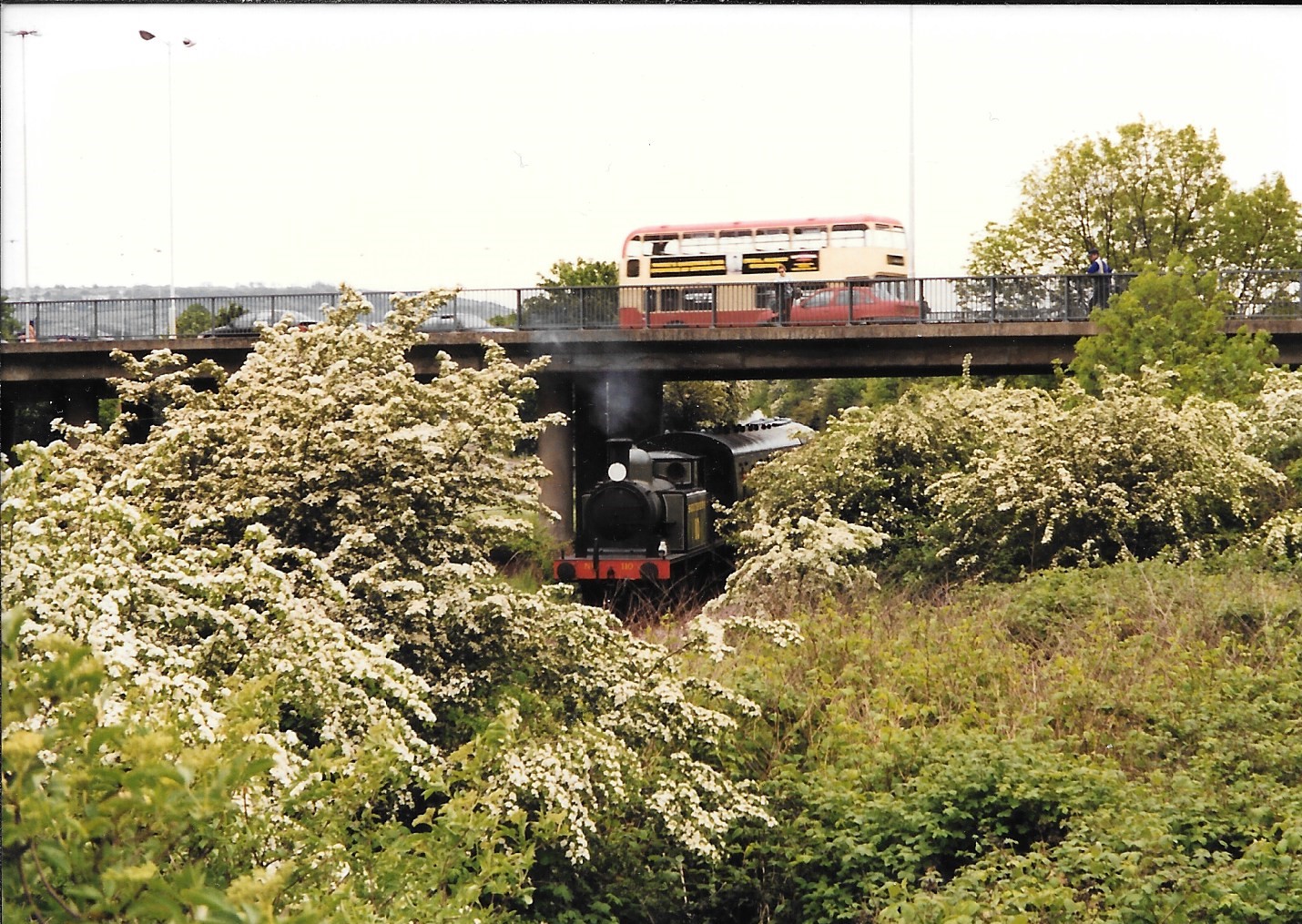
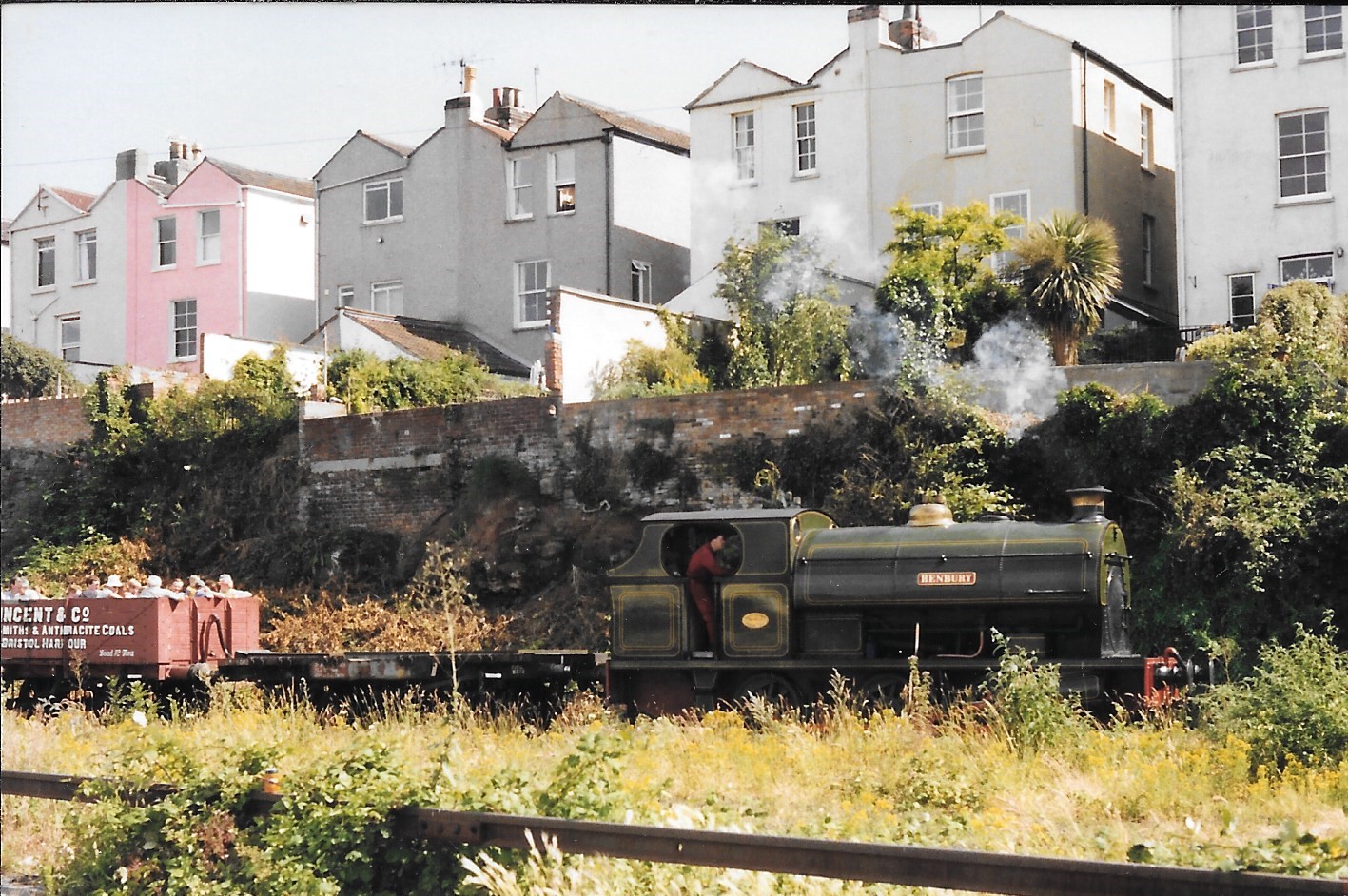
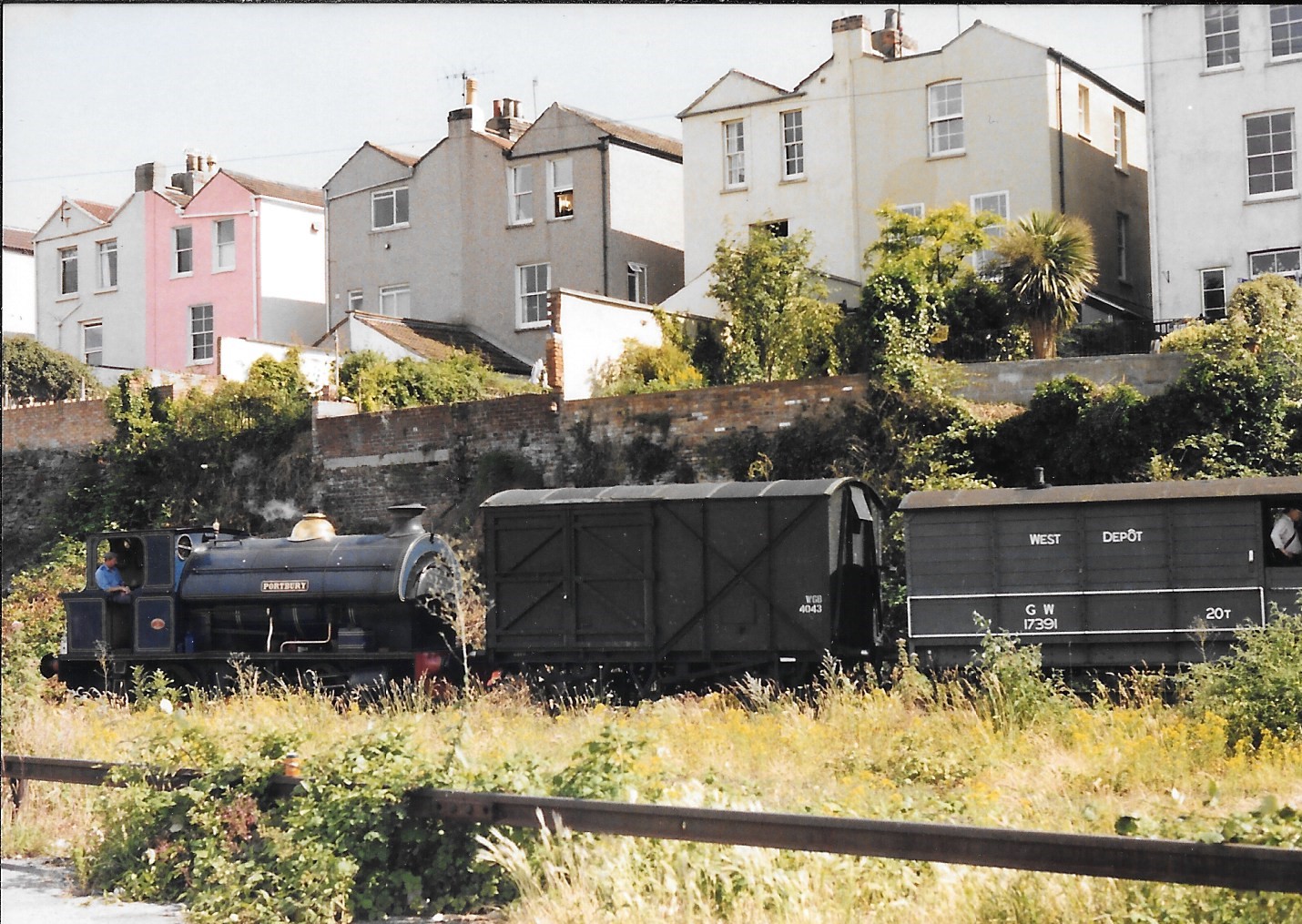
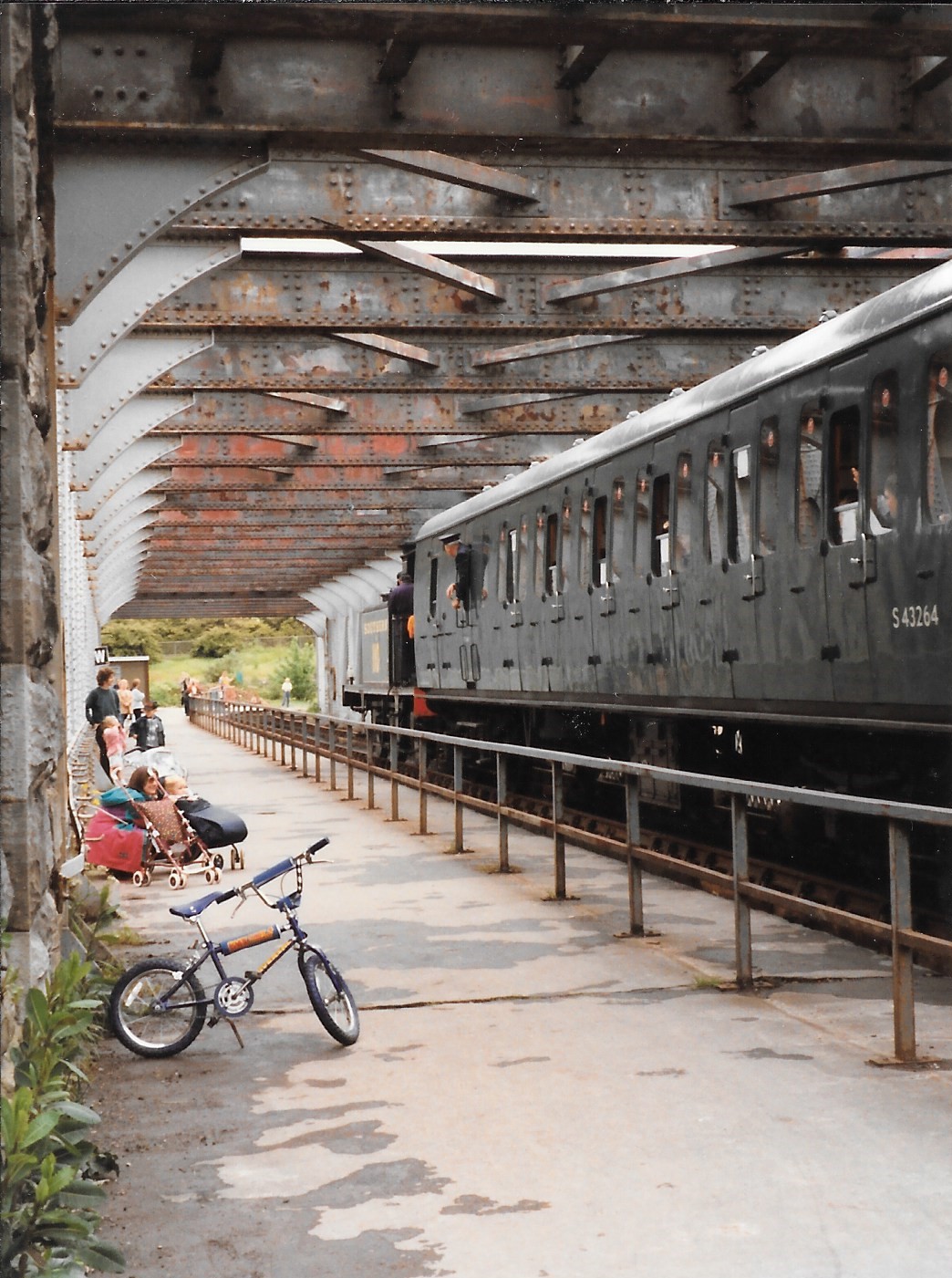
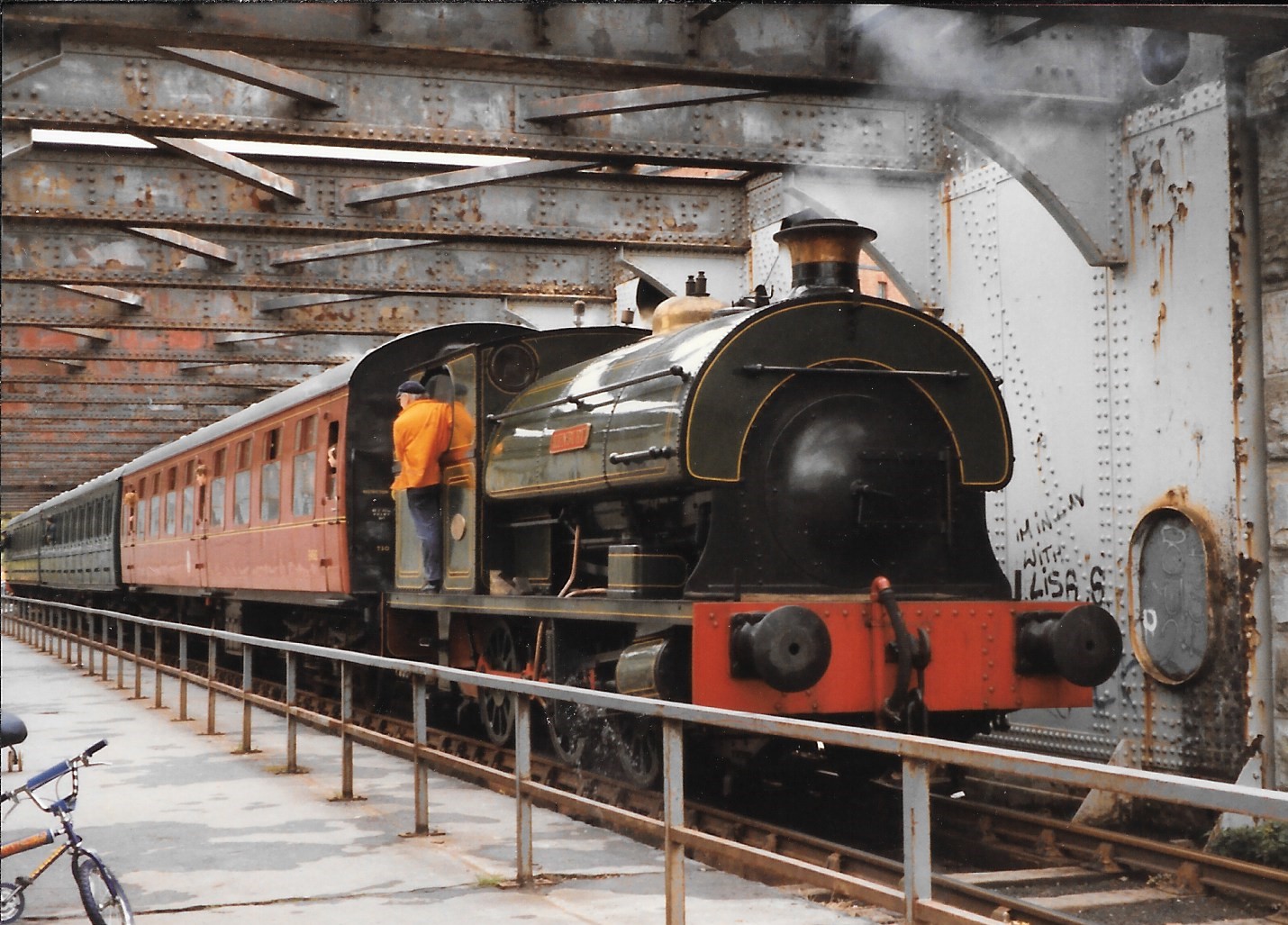
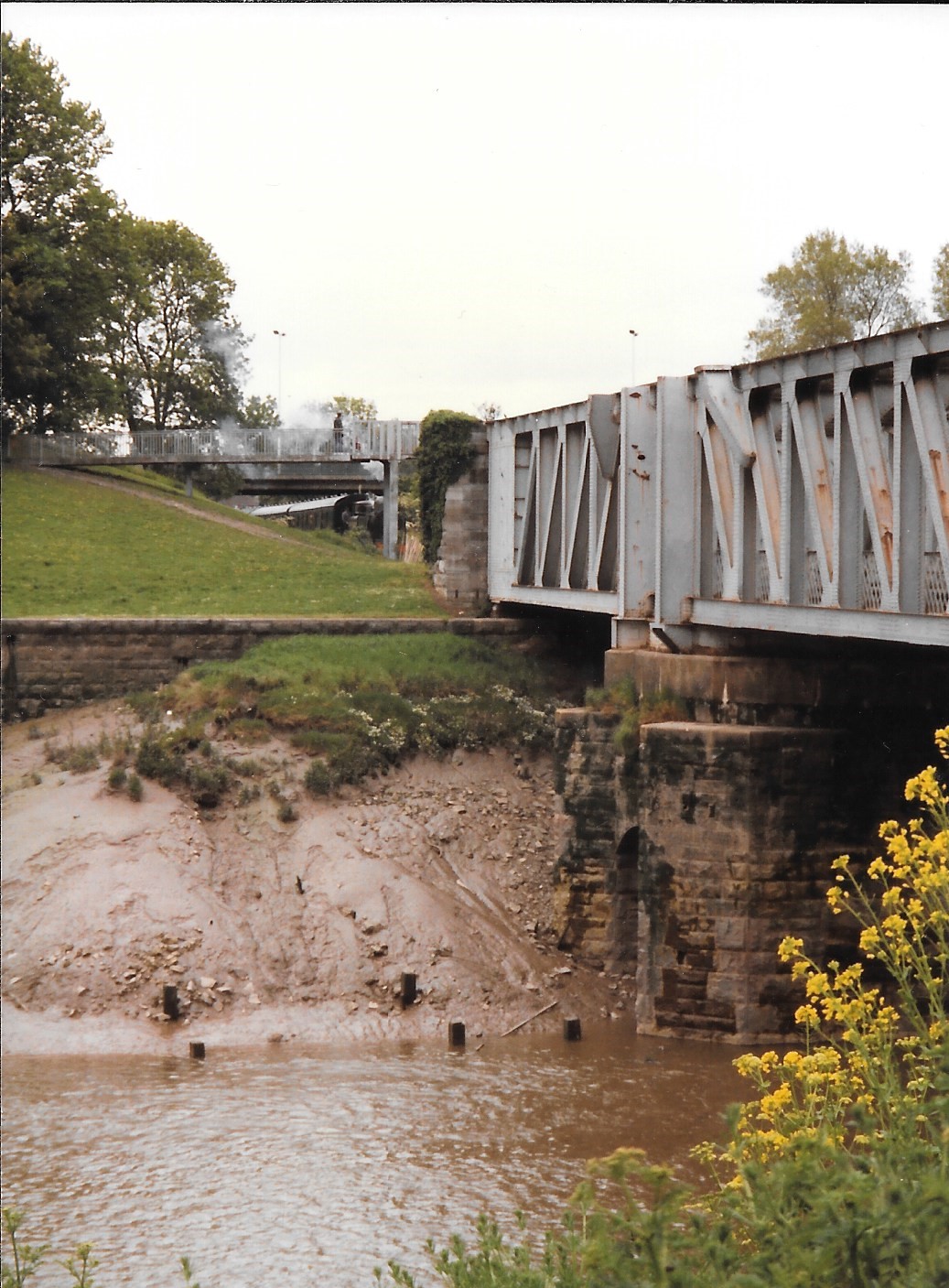
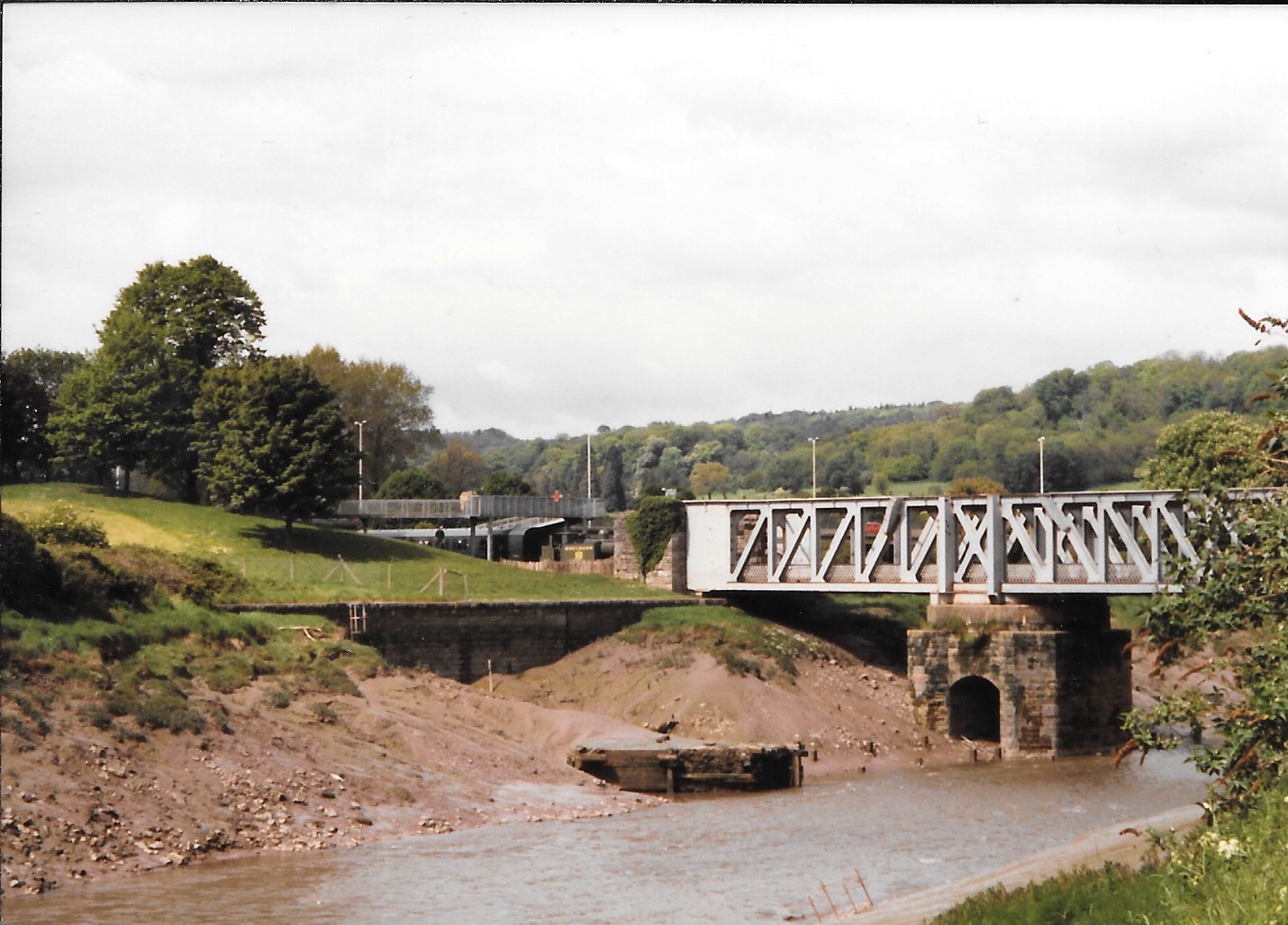
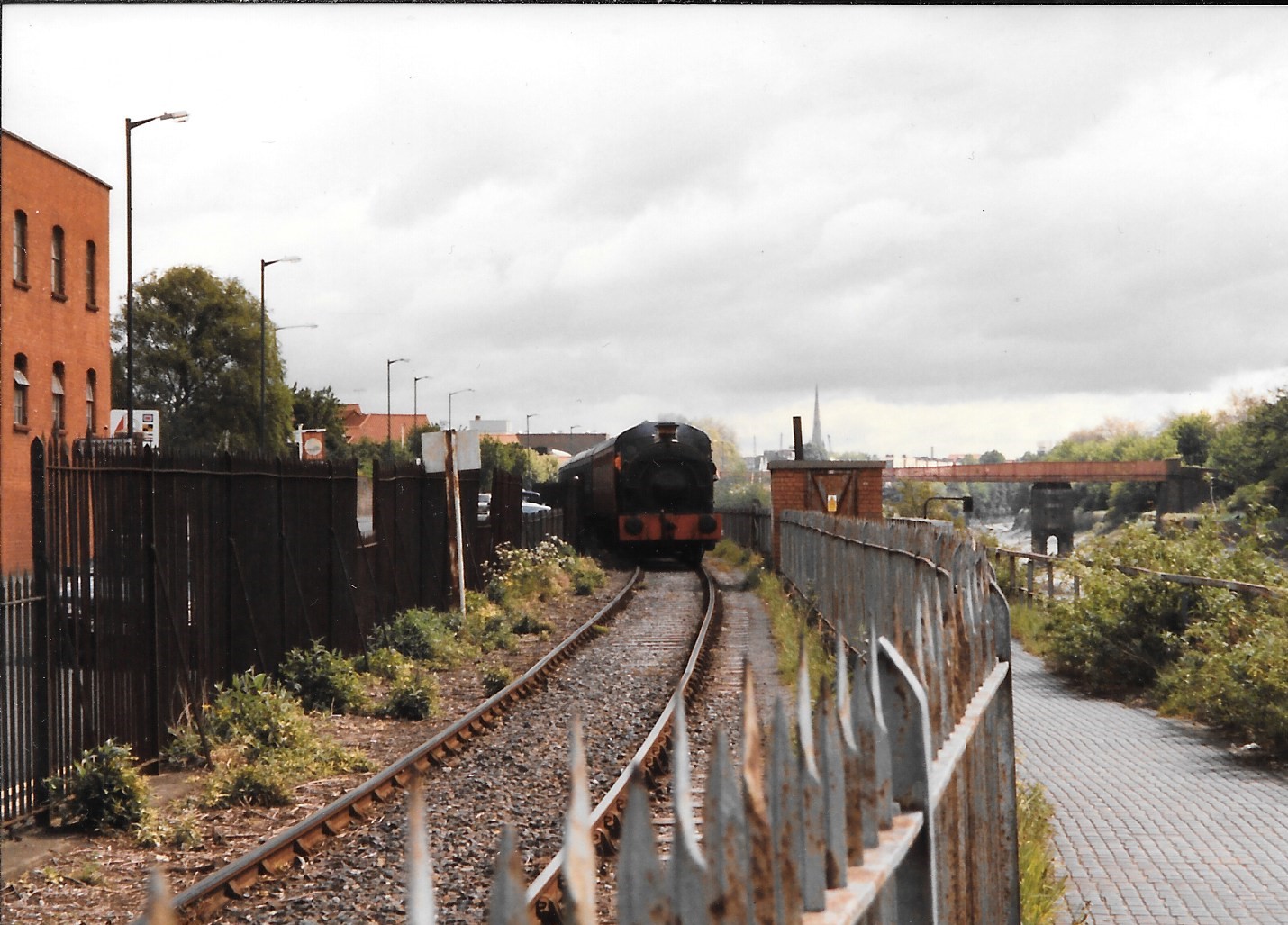
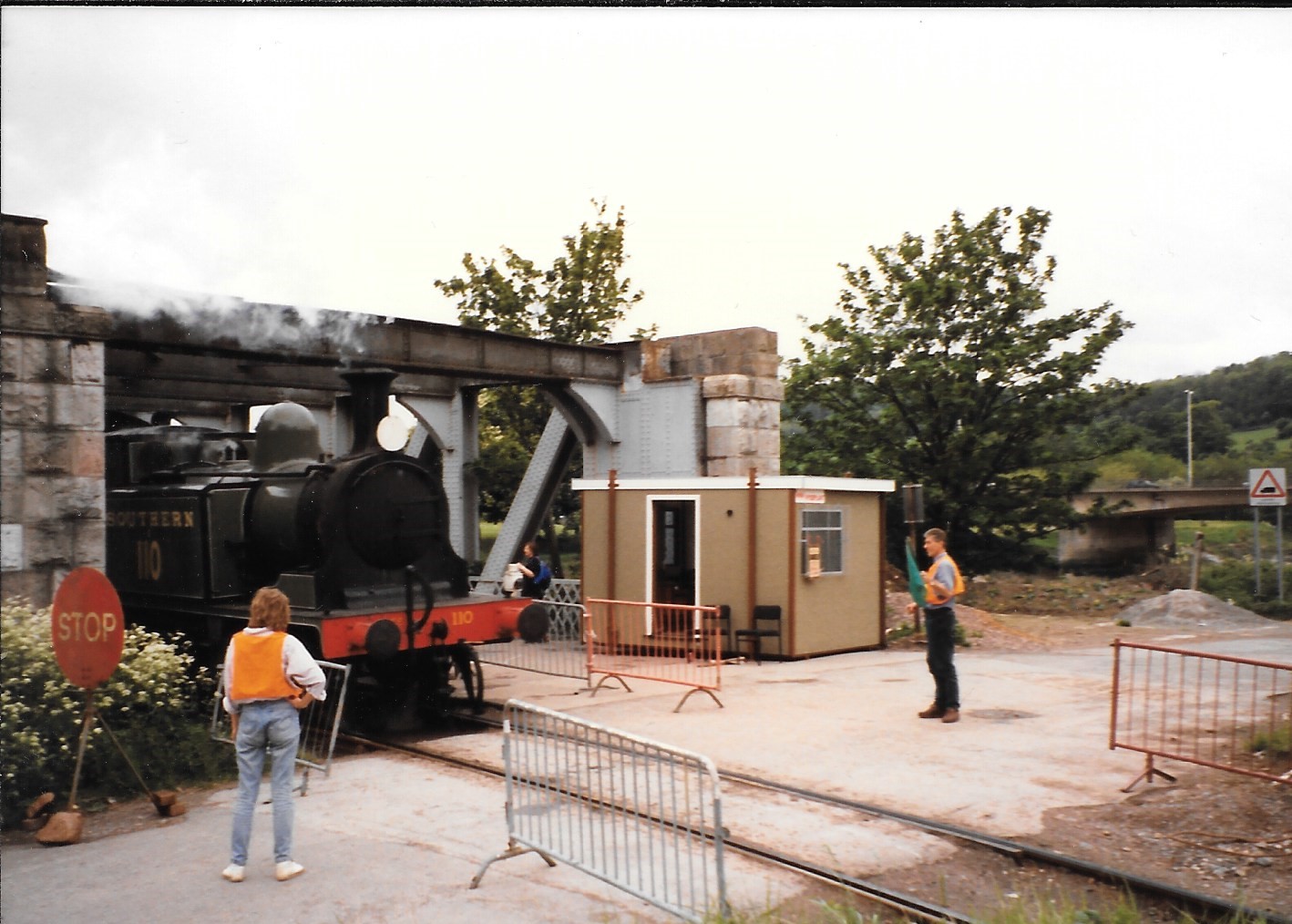
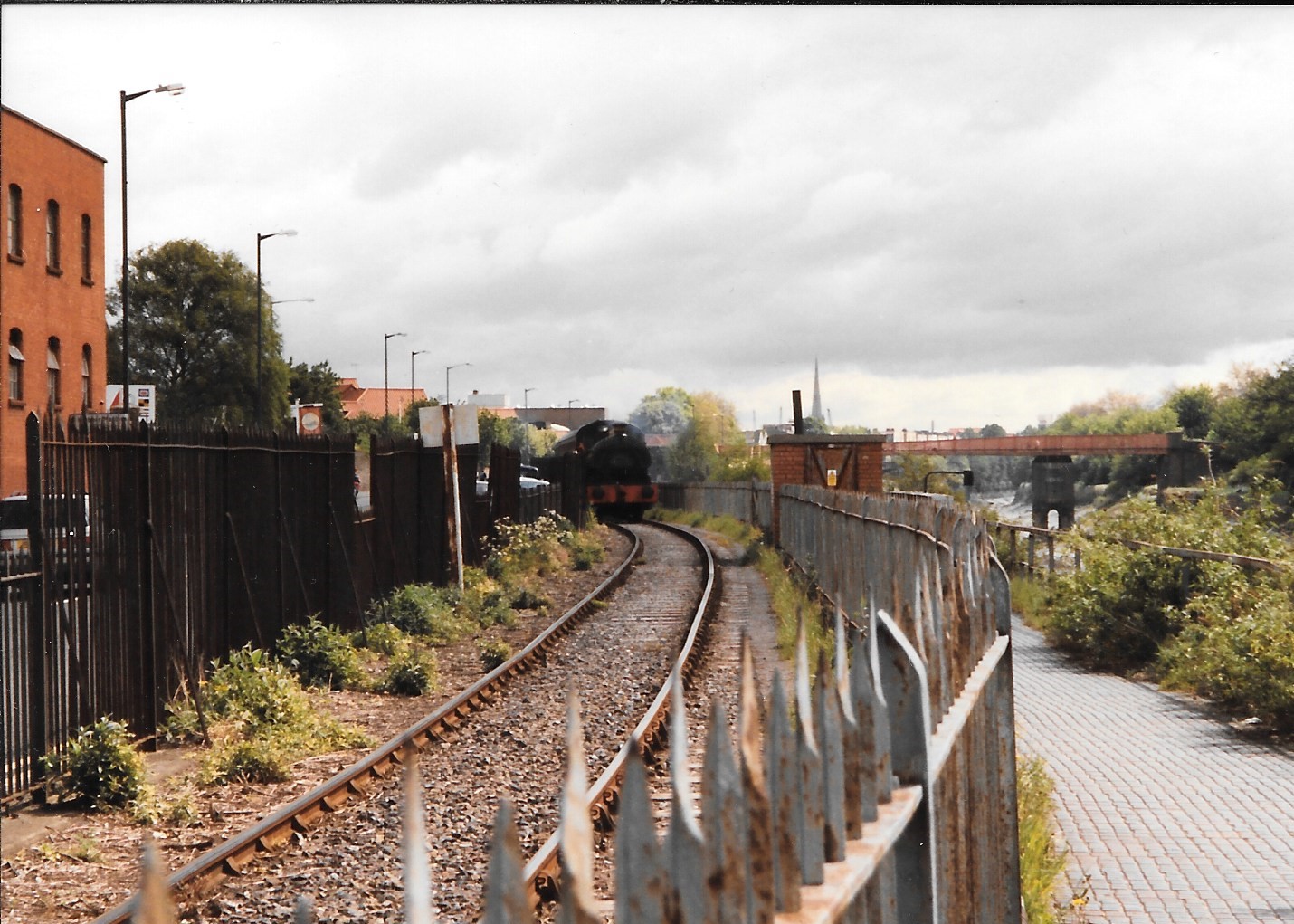
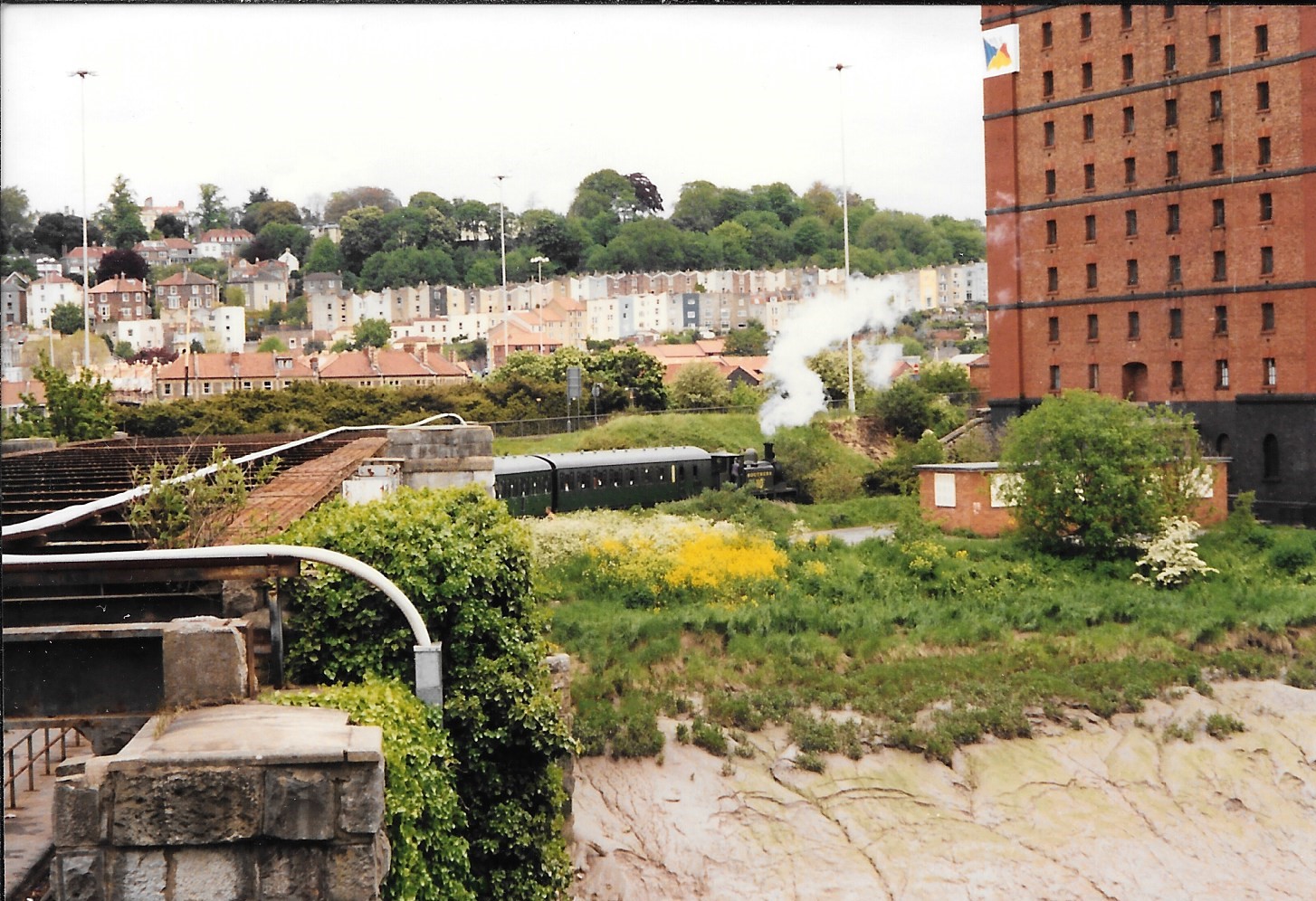
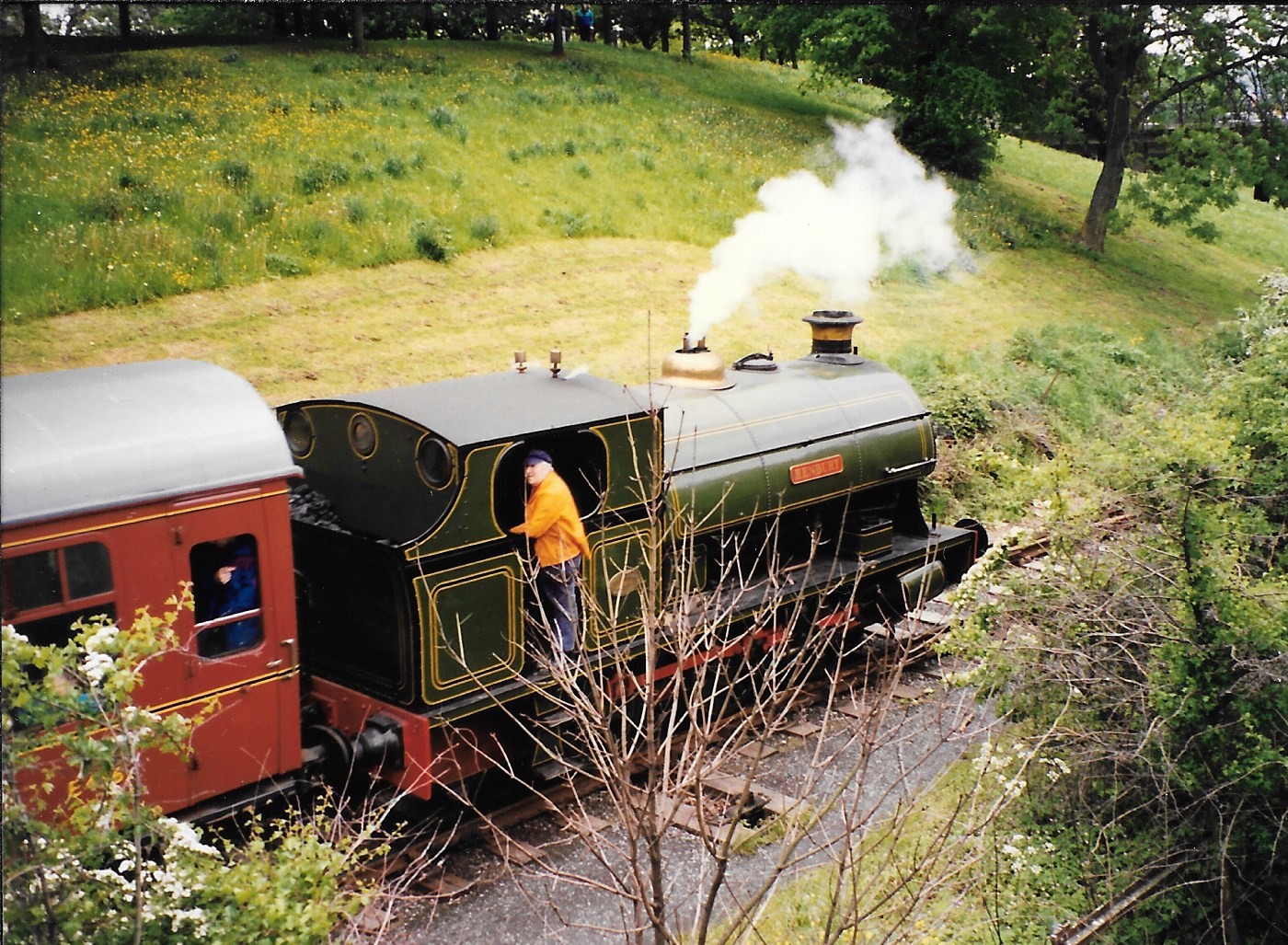
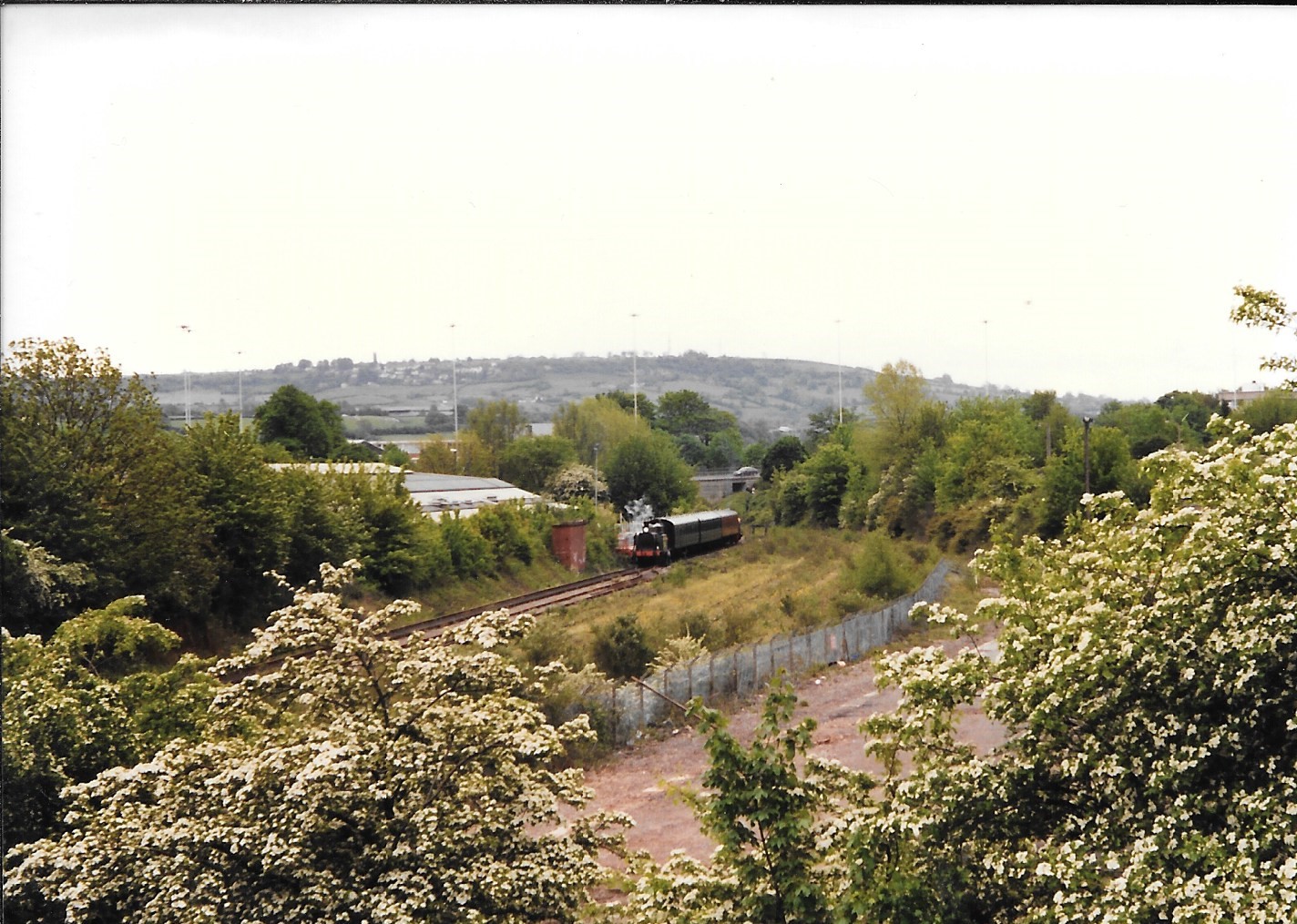
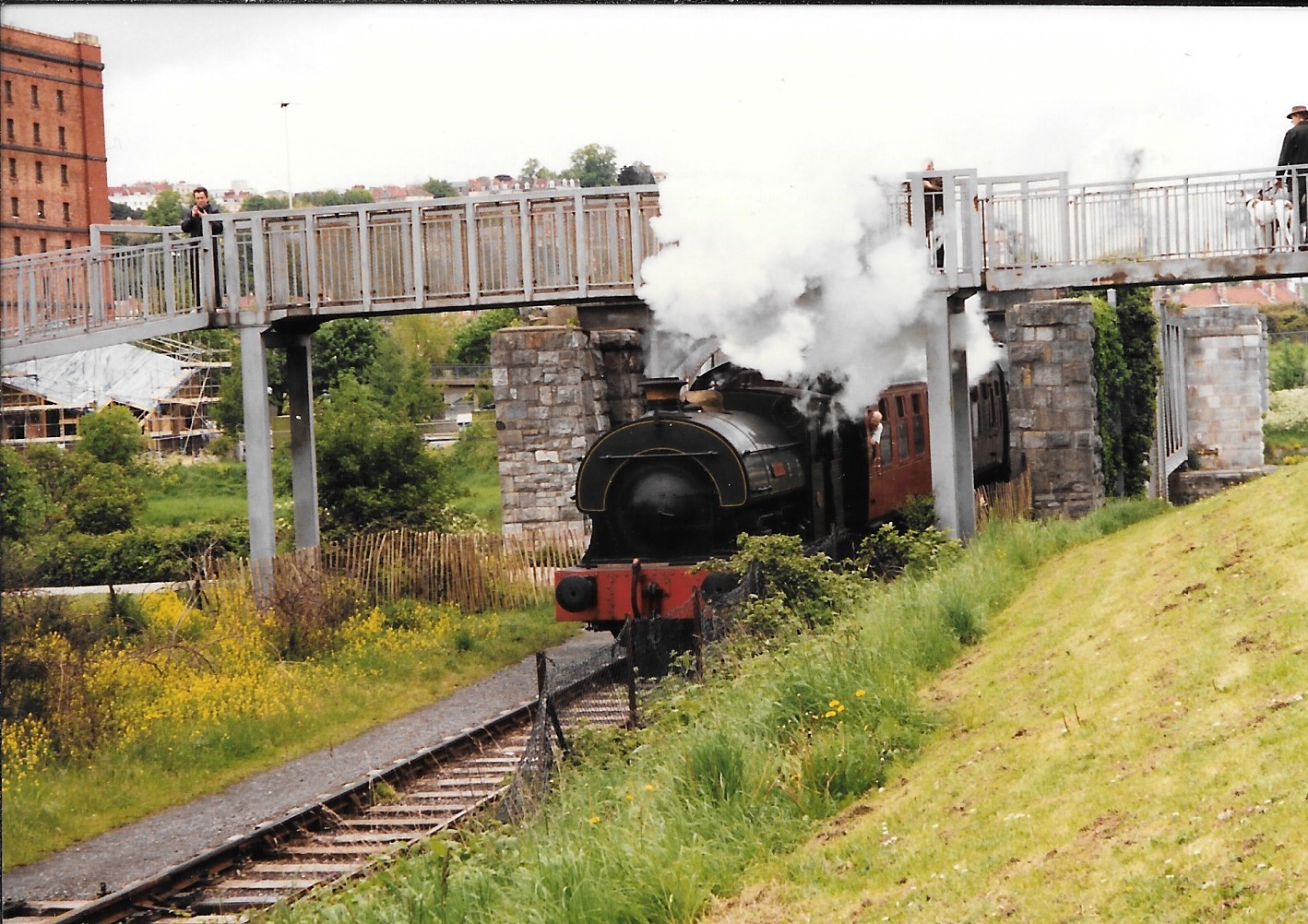
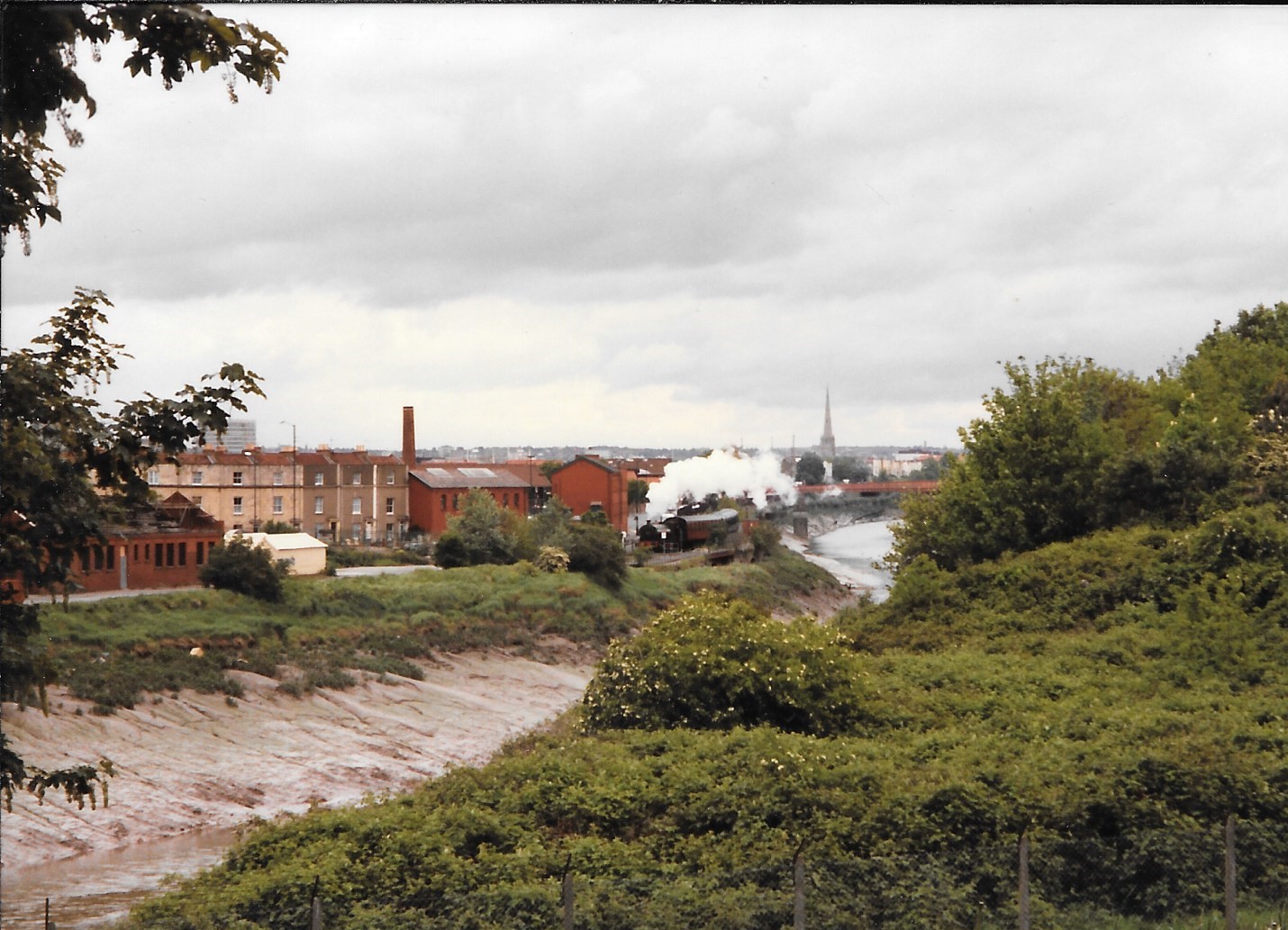
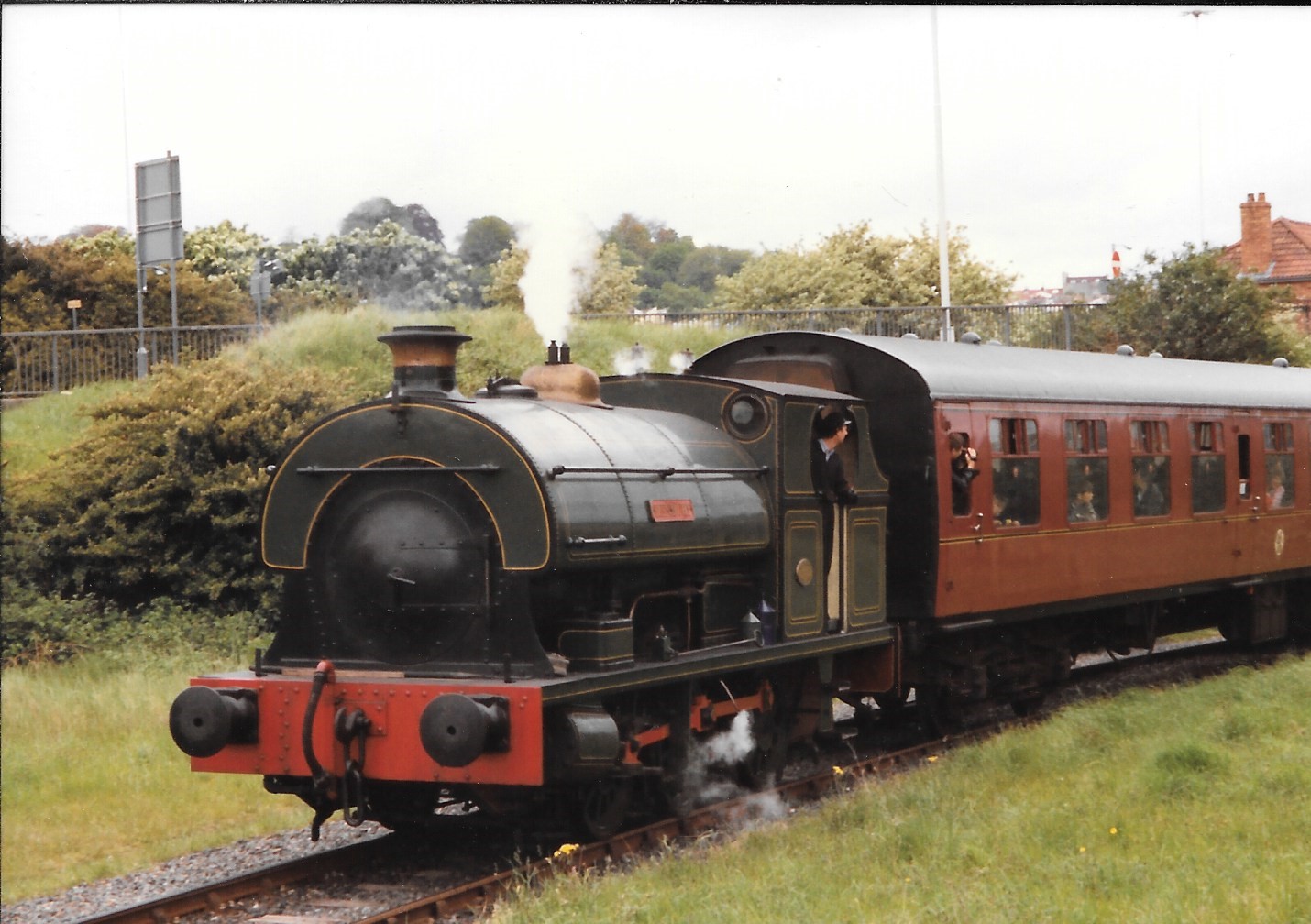
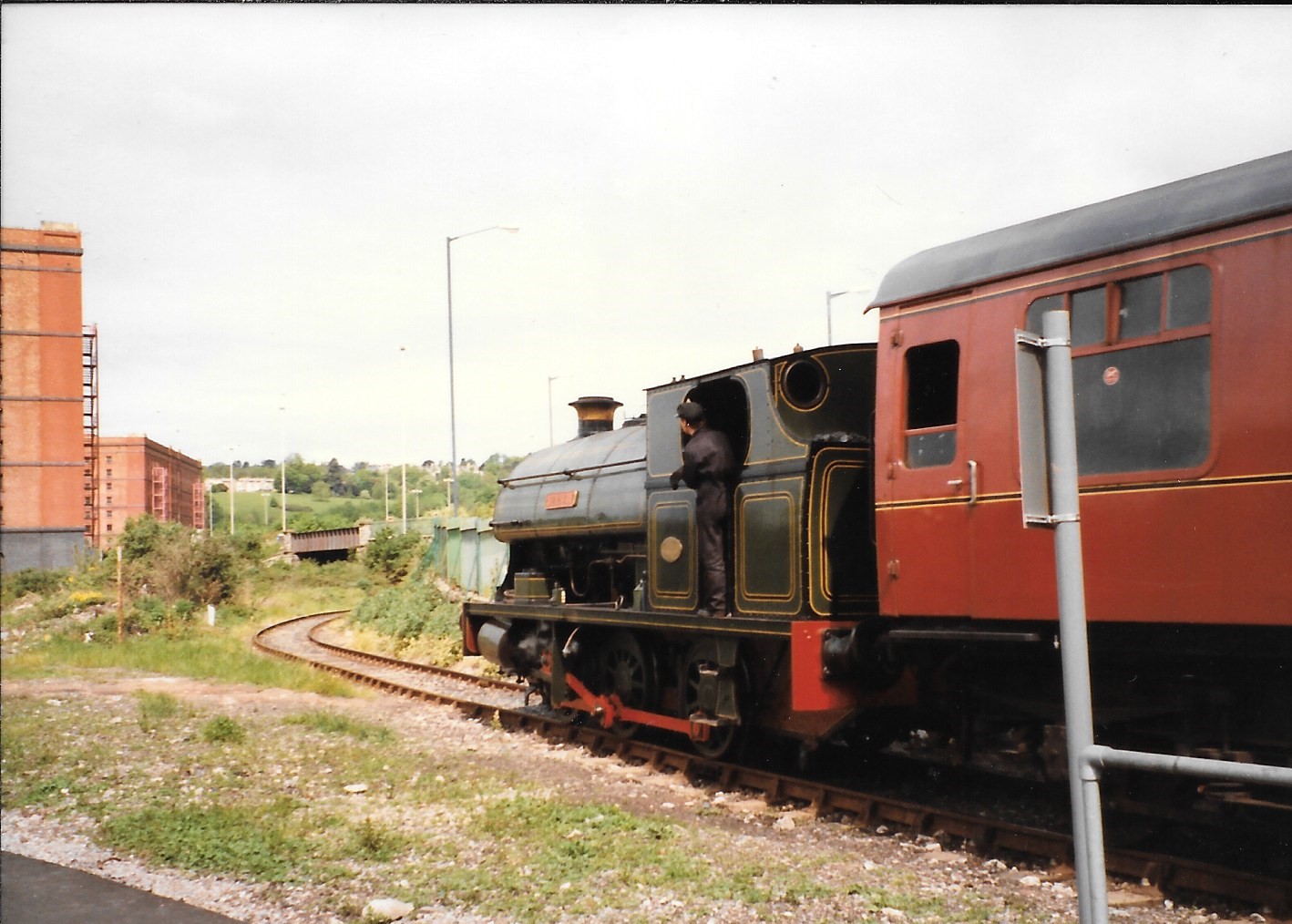
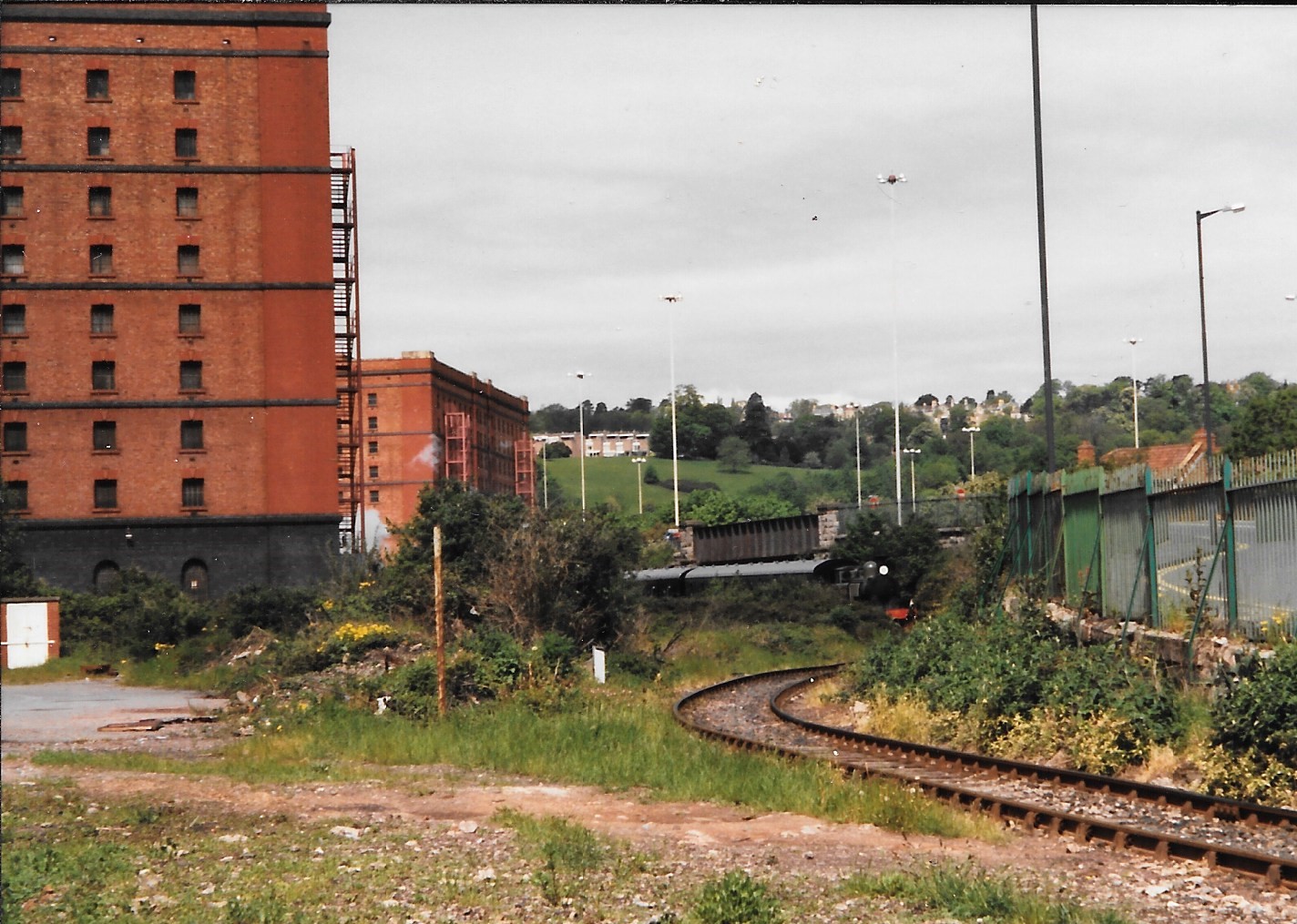
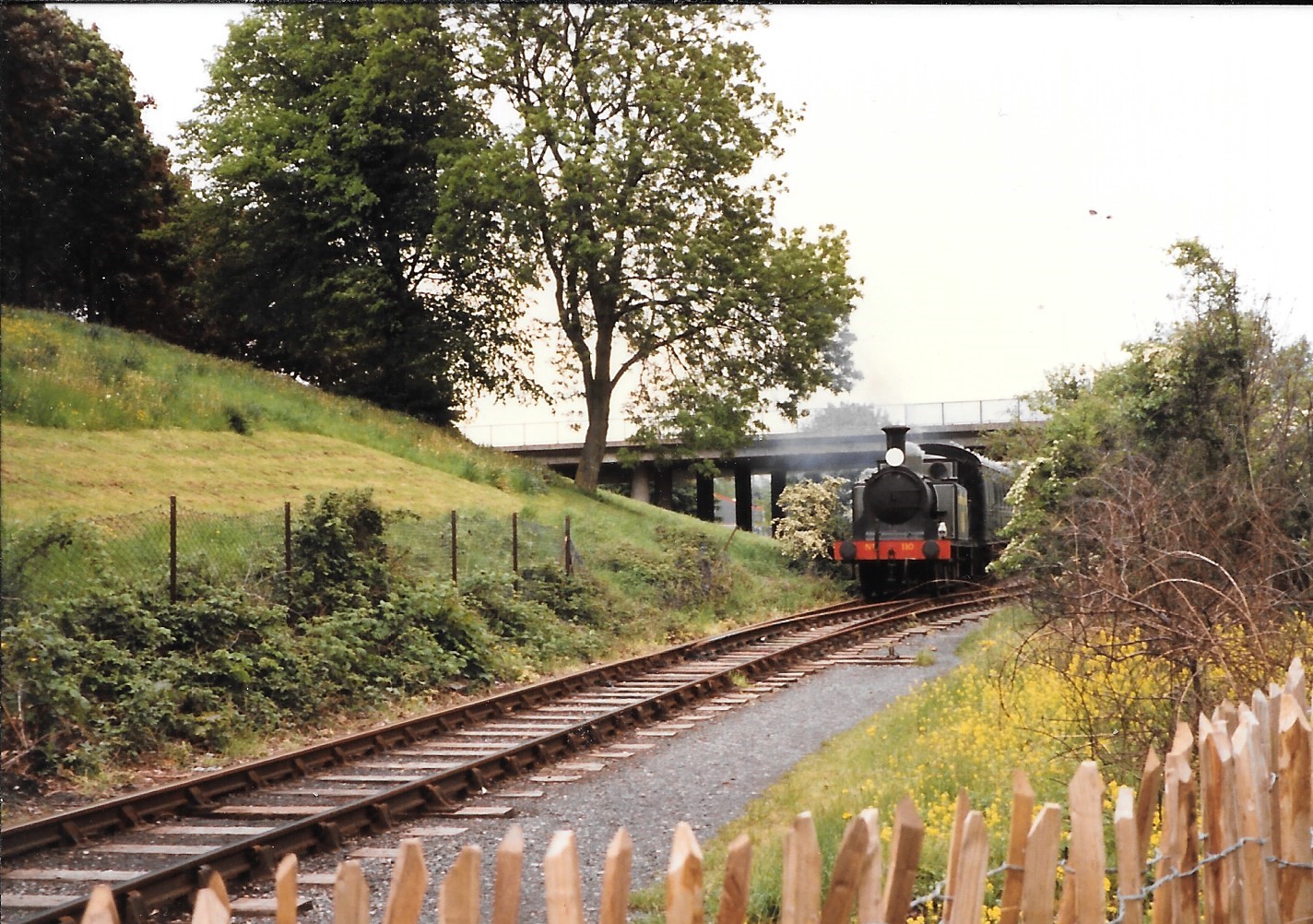
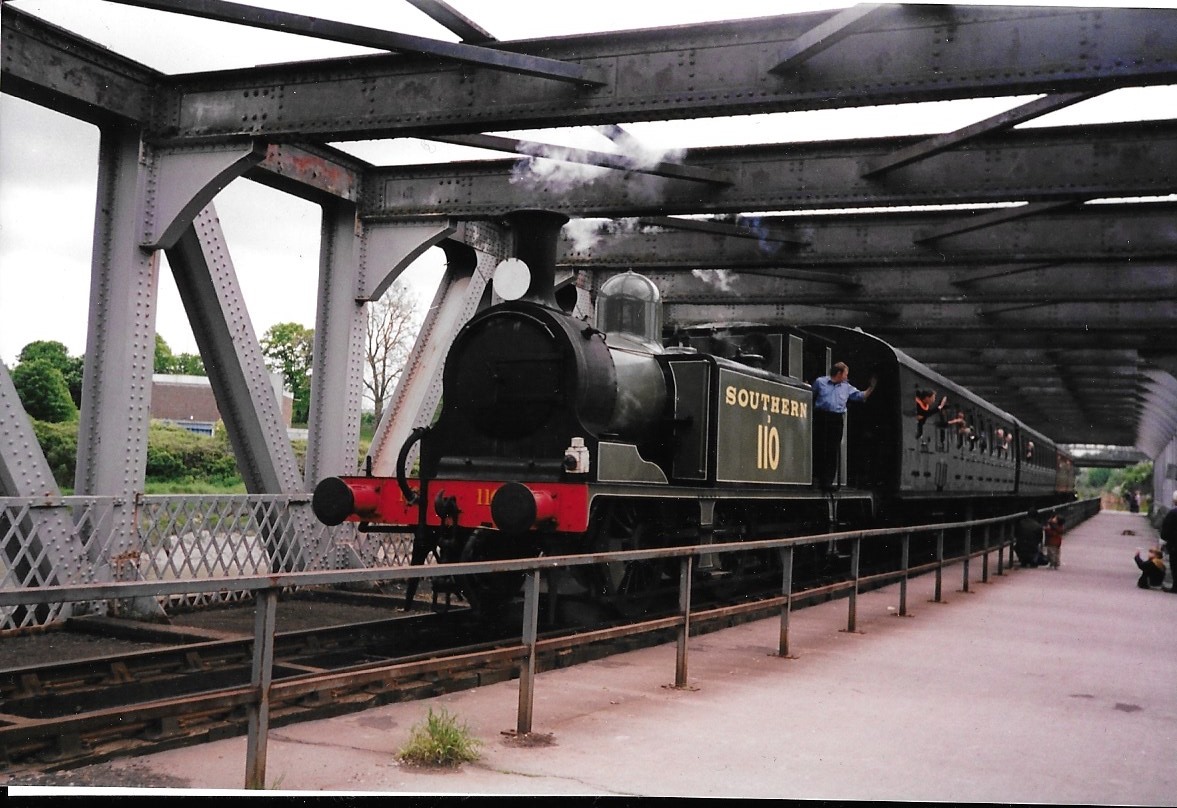
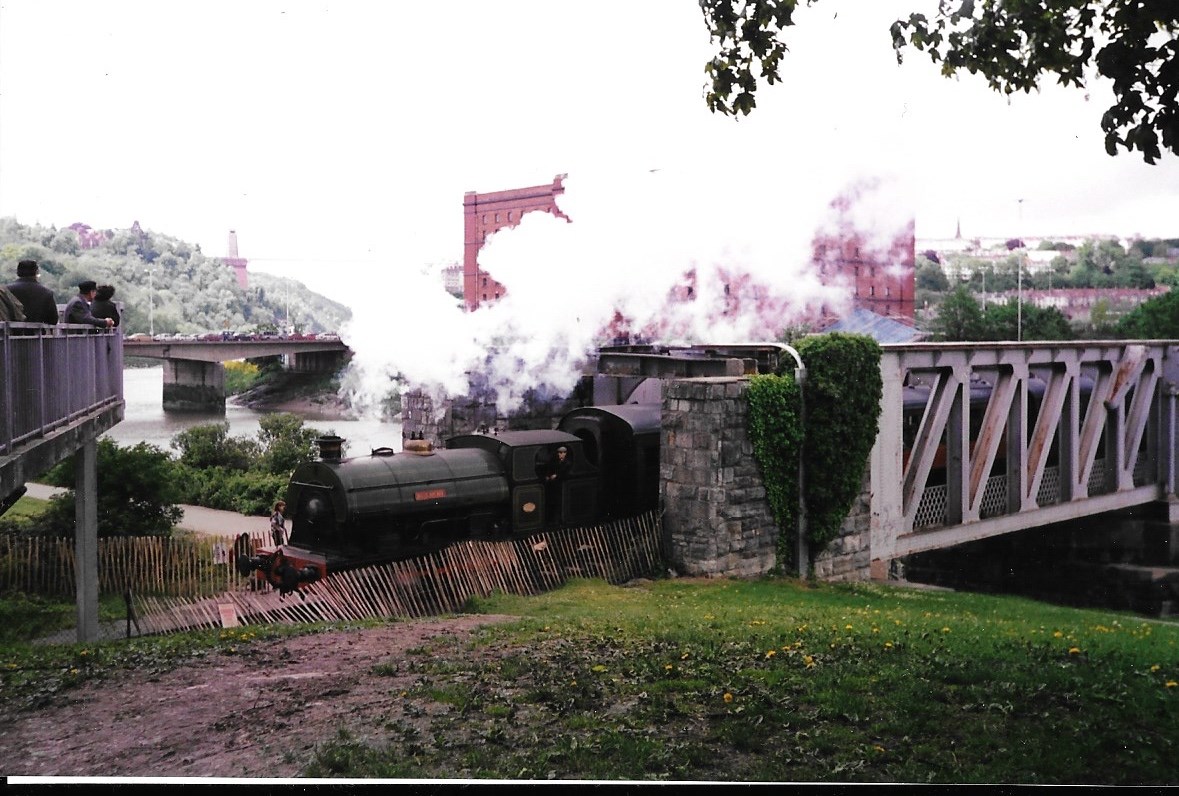
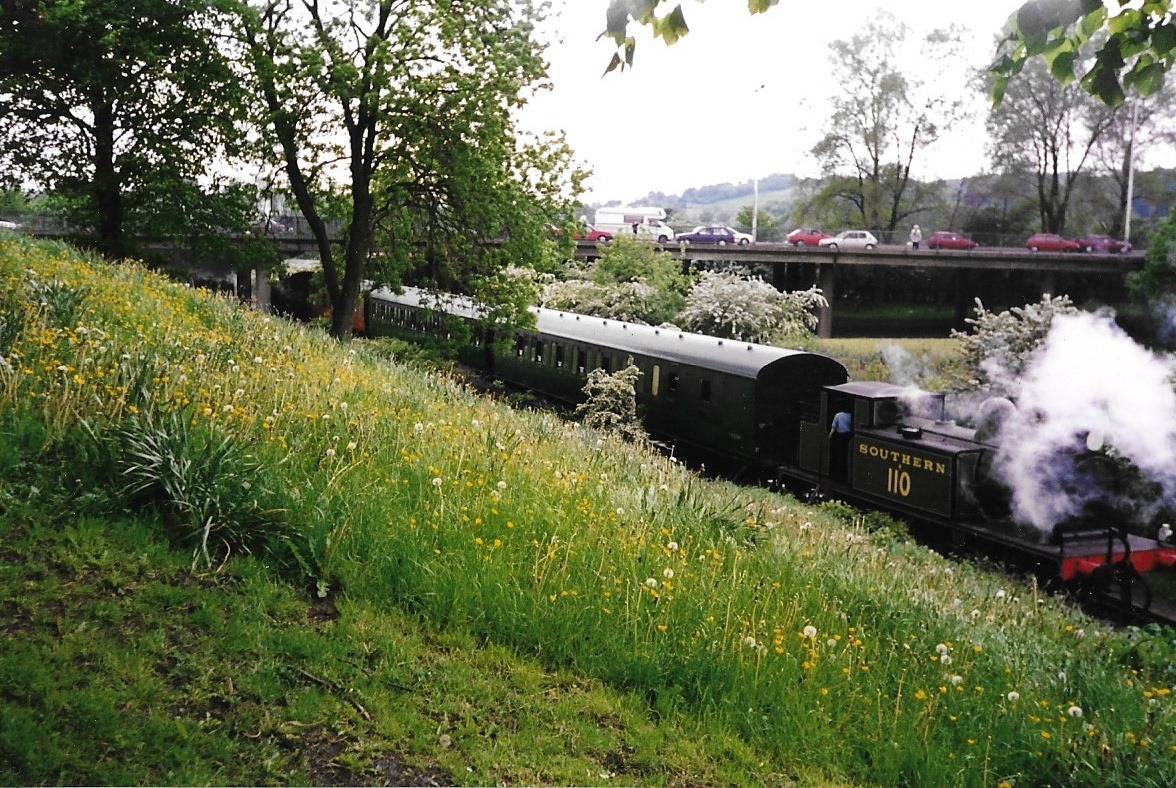
From the 24-27th May 1996, Bristol Harbour was host to the International Festival of the Sea. This was a huge event featuring many guest ships and attractions, and of course the BHR played a part. A shining and fully-lined out ‘Henbury’ and ‘Portbury’ were joined by LB&SCR E1 class 0-6-0T No.B110, then based at the East Somerset Railway (Now being restored to service on the Isle of Wight as No.W2 ‘Yarmouth’). The two locos operated a shuttle service between the station at Ashton Meadows and the Bristol Industrial Museum with 3 loaned coaches.
Thanks to Eric Gates for these photos.
Phil Cass was also there to capture these photos, thanks to Phil for sharing them.
Before the Bristol Harbour Railway as we know it today was opened, the locomotives ‘Henbury’ and ‘Portbury’ travelled around a bit, spending some time at Radstock before relocating to Bishop’s Lydeard on the West Somerset Railway.
Whilst looking through the Cornwall Railway Society’s website I found these two photos by Ron Kosys showing the motley collection of industrial locos in 1976.
Click the images to go to the website. The photos are the copyright of Ron Kosys.
Poor Portbury looks in a rough state, Henbury had last been in steam at Radstock in 1973, and would not run again until the opening of the BIM’s line in 1978.
Nicholas Tozer published this rather lovely video of a blue ‘Portbury’ operating trains in the early 1990s. It’s amazing to see the differences in the background, like the old sidings, the sleeper wall where the flats near SS GB halt now are. Also note the W.Vincent wagon being used for passengers, these days it is back to being a coal wagon.
In 1998, ex-Lancashire & Yorkshire Railway 0F ‘Pug’ No.51218, now based at the Keighley and Worth Valley Railway but once allocated to Bristol Barrow Road shed, ran on a special photo charter at Bristol Industrial Museum.
Robert Tarling was there to capture the occasion, these are his photos and I am very grateful to Robert for allowing them to be reposted here. Please click here to see more of Robert’s work
Courtesy Robert Tarling, with thanks. No unauthorised reproduction.
Courtesy Robert Tarling, with thanks. No unauthorised reproduction.
Courtesy Robert Tarling, with thanks. No unauthorised reproduction.
Courtesy Robert Tarling, with thanks. No unauthorised reproduction.
Courtesy Robert Tarling, with thanks. No unauthorised reproduction.
Courtesy Robert Tarling, with thanks. No unauthorised reproduction.
Courtesy Robert Tarling, with thanks. No unauthorised reproduction.
Courtesy Robert Tarling, with thanks. No unauthorised reproduction.
Courtesy Robert Tarling, with thanks. No unauthorised reproduction.
Courtesy Robert Tarling, with thanks. No unauthorised reproduction.
In 2006, Bristol Industrial Museum was host to a 1940s event. One of the highlights saw Fairbairn Steam Crane, built in the 1870s, lift up a restored Sherman M4A4 tank and place it on a goods train. The immense strength of the Fairbairn design is evident, and the crane is still in operation to this day as part of M Shed.
As the 40th year of the BHR’s operation enters Autumn, here’s a look back to 1978 and 1979.
These photographs were taken by Tim Venton, to whom I am very grateful for allowing them to be reproduced here.
The first two are from May 1978 and show ‘Henbury’ and the TOAD brake van at rest outside the Bristol Industrial Museum.
27th May 1978
The first two items of rolling stock to operate BHR services, 27th May 1978
The second batch of photographs were taken on 16th September 1979. These are fantastic as historical references as they show the extent of track on the quayside and the difference to the present-day.
Almost everything visible in this photo has now changed but the location can be identified by the previous photo. The sidings on the left (and the wall of sleepers are the site of the SS GB car park). 16th September 1979 (Tim V)
Amazingly most of the buildings in this photo are still extant. The TANTRA building is derelict and covered by sheeting as of 2018. The line on the left heads toward Albion Dockyard, and bits of track in the concrete can still be seen today. 16th September 1979 (Tim V)
At this time, the branch off towards the New Cut on the Left was double track under the bridge. Apartments now occupy the site of the sidings. 16th September 1979 (Tim V)
A brake van on the New Cut line. In the distance is the site of the Lloyds Building. 16th September 1979 (Tim V)
A familiar scene to many is the crossover. The buildings on the far end now form Brunel’s Buttery. 16th September 1979 (Tim V)
The line for the Western Fuel Co.’s is off to the right. Just visible is ‘Western Pride’ the Hudswell Clarke diesel. 16th September 1979 (Tim V)
The yard. Some of the stone setts on the left are still extant as part of the cycle path. 16th September 1979 (Tim V)
The weigh bridge in the sidings. This area is now the yard for the BHR, where the goods stock is kept. 16th September 1979 (Tim V)
The sidings. This area is now the yard for the BHR, where the goods stock is kept. 16th September 1979 (Tim V)
The buildings on the right now form the Olive Shed and the Art Gallery. The track layout here has been simplified but the area is easily recognisable. 16th September 1979 (Tim V)
‘Henbury’ in action pulling the TOAD loaded with passengers. 16th September 1979 (Tim V)
On Saturday March 24th 2018, the Bristol Harbour Railway celebrated 40 years of operation on Bristol’s Harbourside, accompanied by the Lydney Town Band and of course a cake to commemorate the occasion! 101-year old ‘Portbury’ did the honours, pushing and pulling the freshly-refurbished passenger train up and down all day. What started as a group of enthusiasts, one locomotive (Henbury) and a brake van has seen dozens of changes on the harbourside, with the disused industrial area changing into a vibrant tourist hotspot. Long may it continue to bring delight to passengers, giving a unique experience in UK preservation.
YouTube channel Unseen Steam recently posted this video of a railtour visit to Avonmouth in the days of steam.
On 21st July 1963 the RCTS ran what has been described as a “chaotic” railtour (not their fault) from Paddington to the Bristol area behind ‘Grange” class no. 6841 “Marlas Grange” which got the train to the Docks almost bang on time after a good run down the GWR main line to Swindon and then the connection to the Docks at Hallen Marsh Junction. In the Docks the train was worked by one of the Port of Bristol Authority’s tank locomotives, no S11 “Bristol”. All went well until the train was due to leave the Docks which took place around half an hour late. Further troubles ensued, with the train returning to London some one and a half hours late – many passengers had detrained at Stroud to try and find a quicker train home! (Information from http://www.sixbellsjunction.co.uk, with thanks to Gary Thornton)