TBT – Portbury’s Slumber

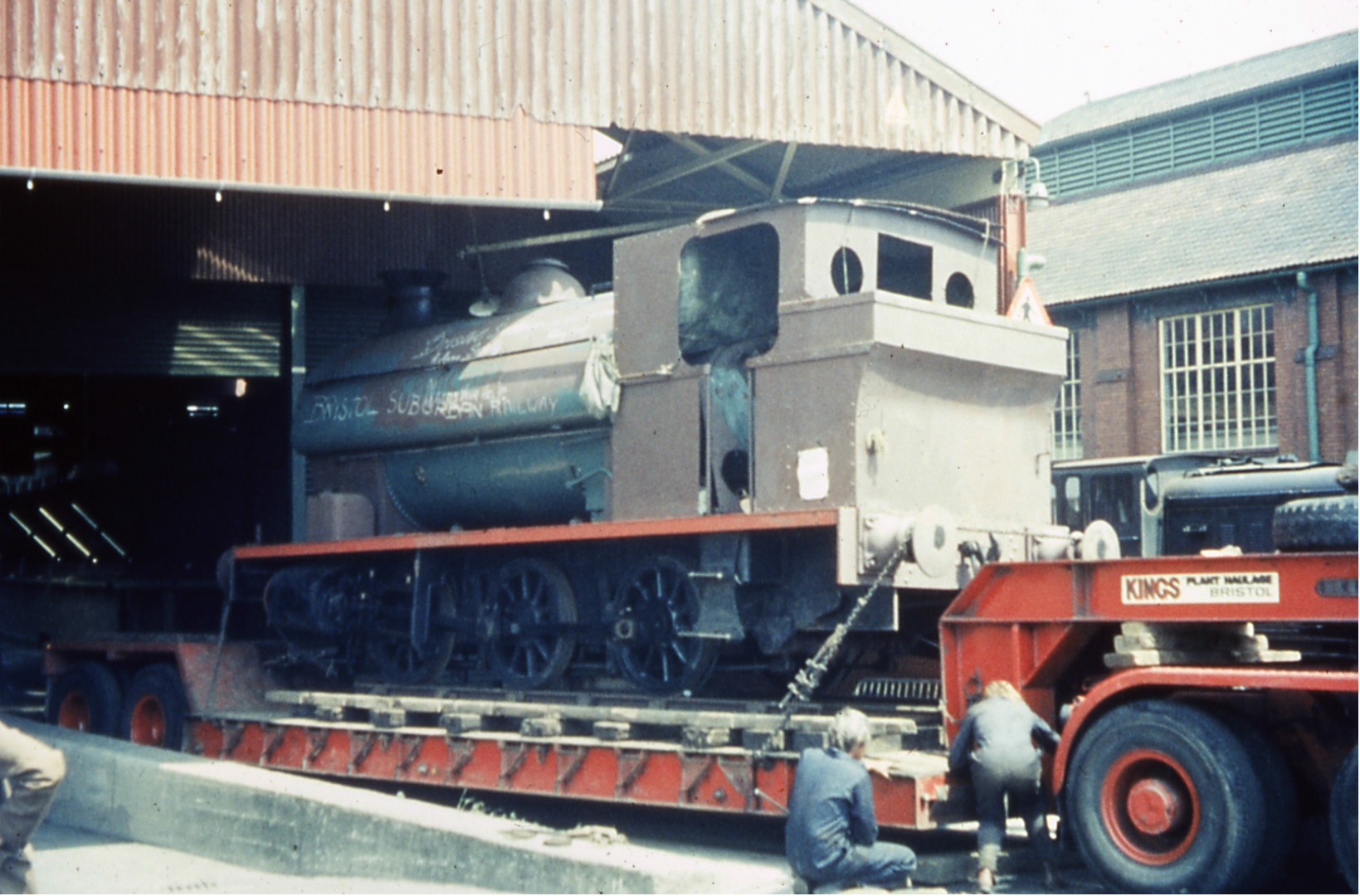
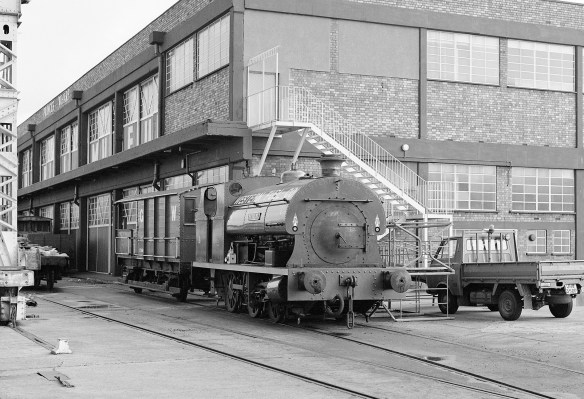
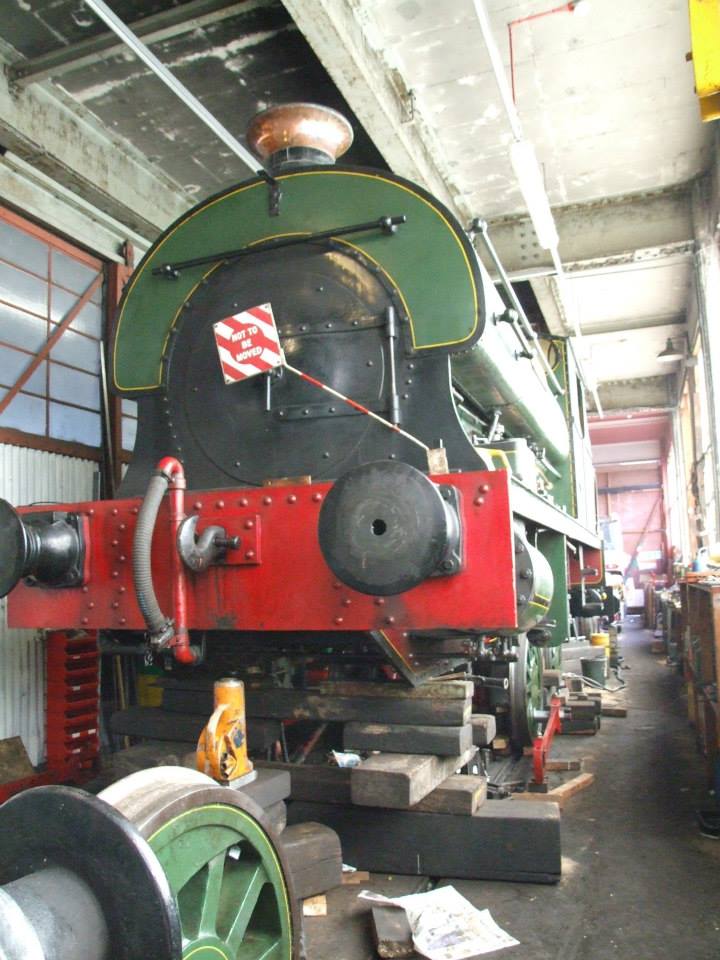
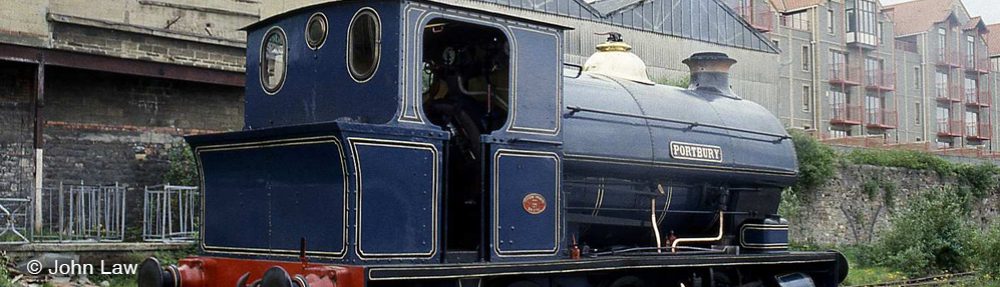
After the preservation project at Radstock closed, and before she was brought to L Shed for restoration, Portbury was stored in a warehouse at Avonmouth Docks. Some restoration work had been undertaken at Radstock, and the loco was re-assembled before delivery back to Avonmouth. It was to be another 10 years until she returned to steam.

The photographs on this page (Unless otherwise stated) were taken by Kevin Hughes and purchased from the Rail Correspondance and Travel Society’s website. They appear here for research purposes only and may not be used for profit or gain without permission. 

TBT – Portbury takes on Foxfield Bank, 2008

At the Foxfield Railway’s 2008 gala, Portbury paid a visit and was given the chance to attack the famous 1-in-19 to 1-in-26 Foxfield Bank, the climb away from Foxfield Colliery itself.

Youtube user ‘Pennysteam’ was there to capture the event (If you like railway videos, be sure to subscribe to pennysteam as their footage is spectacular)

Part 1:

Part 2, Portbury ascends the gradient again at around 5.20:

Portbury’s Twin Needs Your Help!

Based just a few miles away at the Avon Valley Railway is an almost identical loco to the BHR’s own ‘Portbury’, Avonside No.1798.

An appeal has been launched to get this locomotive restored and back in steam. It was the first steam loco on-site at Bitton in 1973, and worked there right up until it needed a heavy overhaul in the mid 1980s.

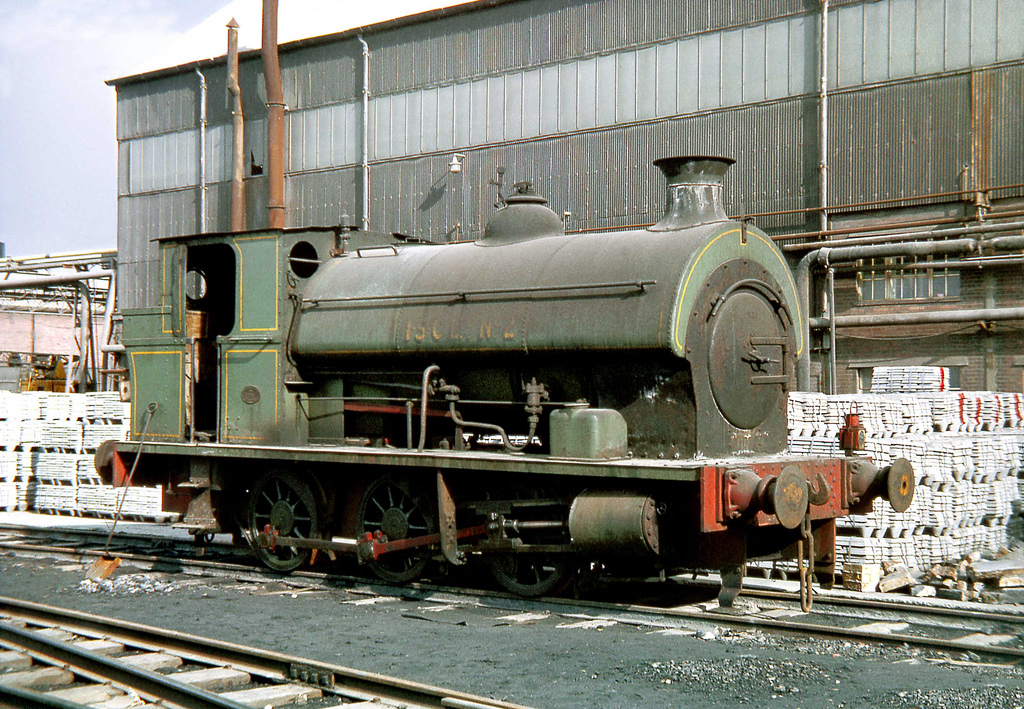
Built in 1918 at the same Bristol works as ‘Portbury’, it was delivered to the Imperial Smelting Works in Avonmouth, where it laboured away its whole working life.

ISC Ltd. No.2 at work in Avonmouth (Photo copyright Gordon Edgar)

ISC Ltd. No.2 at work in Avonmouth (Photo copyright Gordon Edgar)

The above photo appears here with the kind permission of Gordon Edgar, please take a look at his flickr site for more great railway images

When restored at the Avon Valley Railway, the loco received a plain black livery and was named ‘Edwin Hulse’ after a founder member of the railway.

En route to Bitton

En route to Bitton

The first steam-hauled trains at Bitton

The first steam-hauled trains at Bitton

A lot has changed since 1974, but this loco has seen it all!

A lot has changed since 1974, but this loco has seen it all!

How you can help

You can help by sponsoring one of the major parts listed in this brochure (download link) or by joining the 1798 Club whereby you covenant to donate £17.98 each month by standing order for up to 24 months. Whether you sponsor a specific item or donate monthly, you will automatically become members of the 1798 Club and be entitled to a range of benefits.

Every penny received from sponsorship or donation is spent on restoring this important engine.

Further details can be obtained by downloading the leaflet.

Please take a look at the official website for more details.

Henbury in Preservation

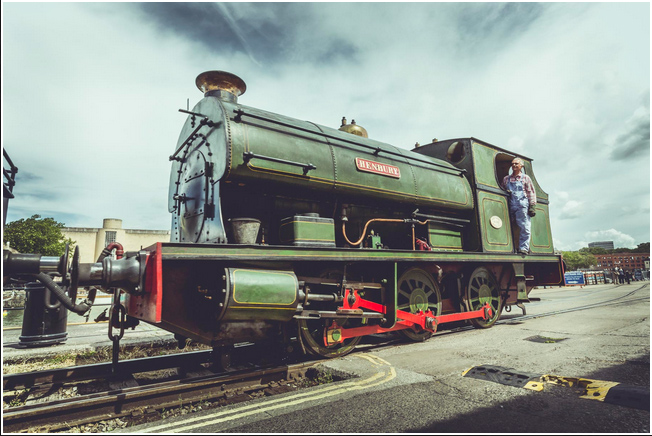
Following up from the story of Portbury in Preservation, here are a few highlights from Henbury’s career after being withdrawn from Avonmouth shed in the 1960s.

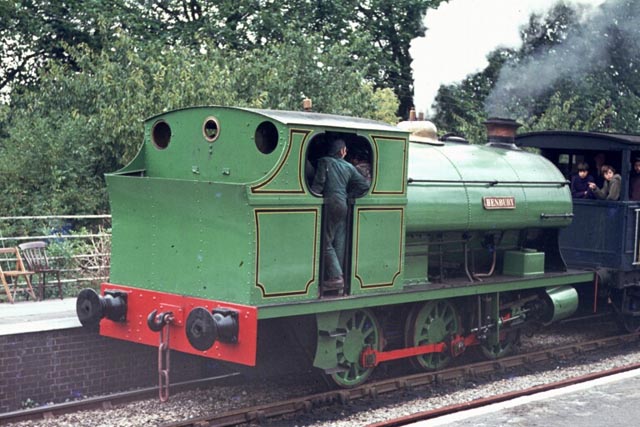
Henbury was rebuilt with the 5 year old boiler from a sister engine, and in after a spell in store, in 1972 she was located at Radstock engine shed with No.242 and Portbury.

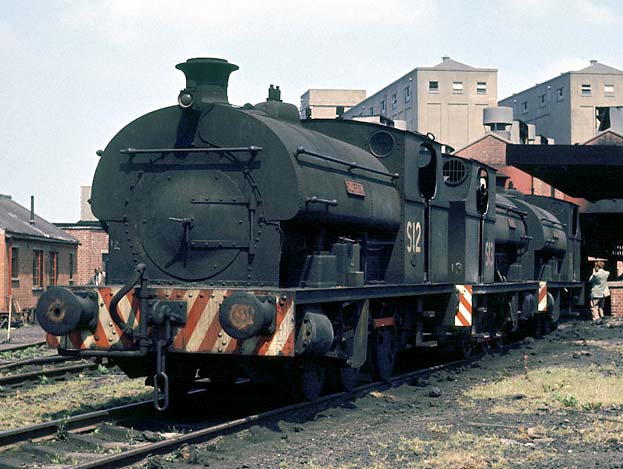
Peckett S12 'Clifton' - Henbury now uses this loco's boiler

‘Henbury’s classmate, Peckett S12 ‘Clifton’ on shed at Avonmouth, (Photo copyright Geoff Plumb, used here with permission)

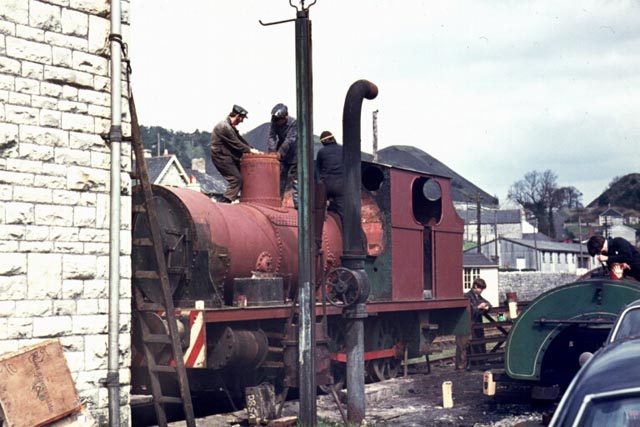
Henbury under restoration at Radstock in 1972 - note the striped bufferbeam typical of Avonmouth locos

Henbury under restoration at Radstock in 1972 – note the striped bufferbeam typical of Avonmouth locos

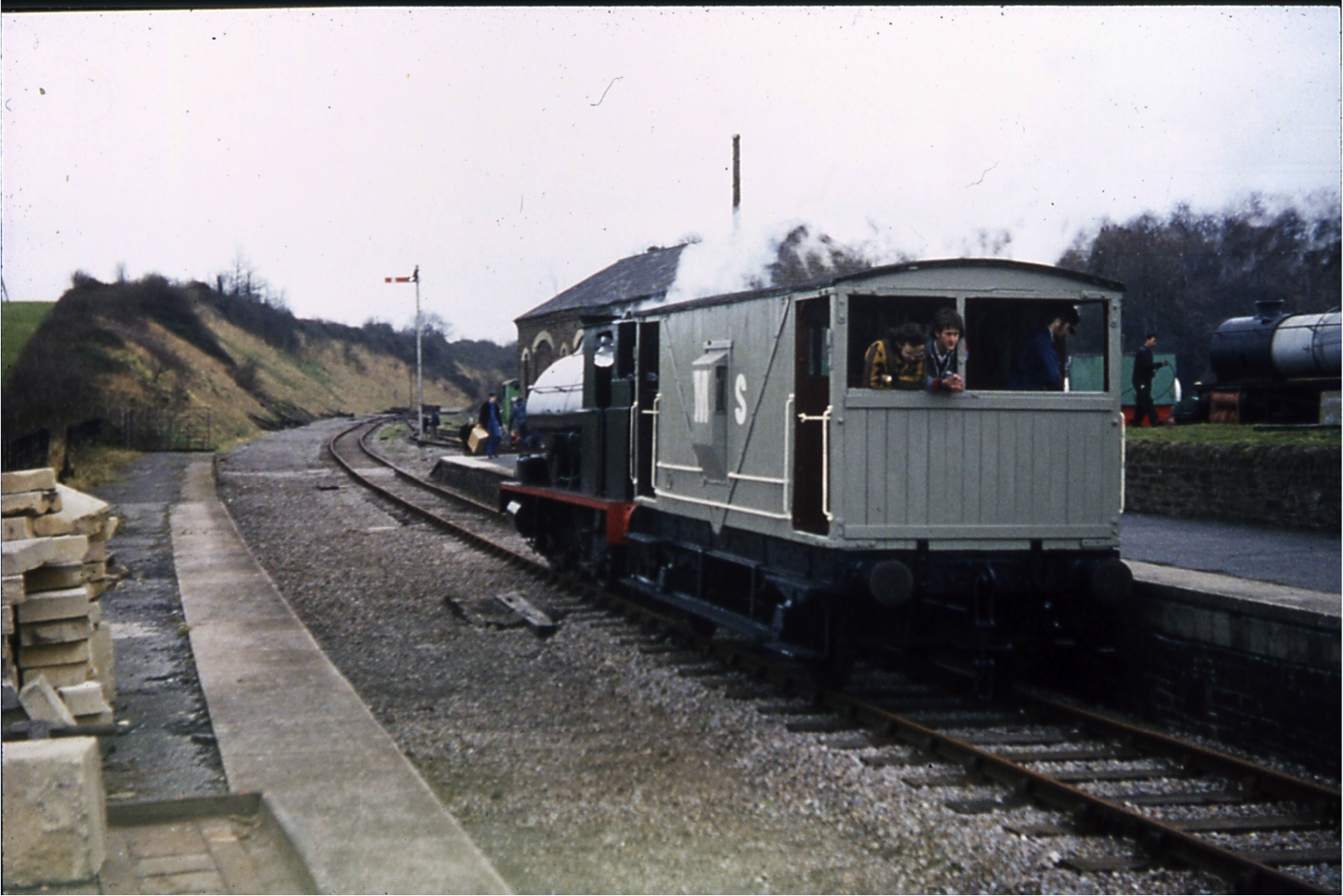
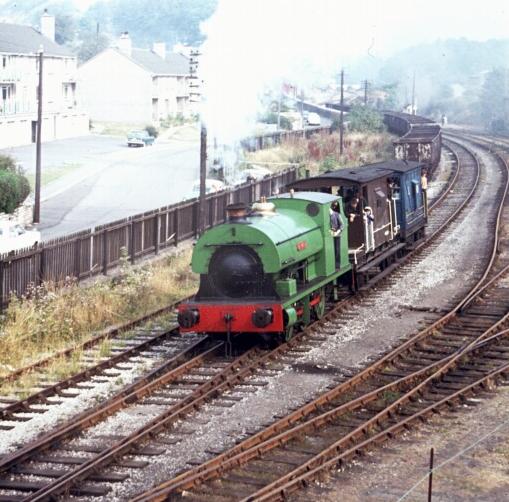
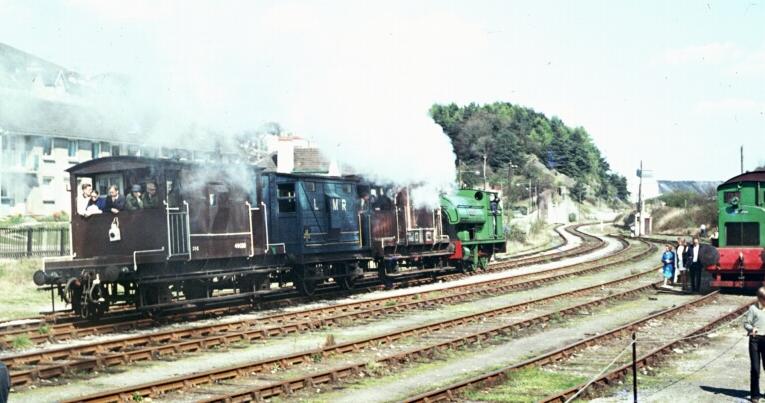
She was put to work hauling brake van specials from Radstock Station to Writhlington – a distance of approximately 1.5 miles.
At this time she wore a partly lined out green livery (lining on the cabside and front of the saddletank only), lighter than the shade she had when withdrawn, with red buffer beams.

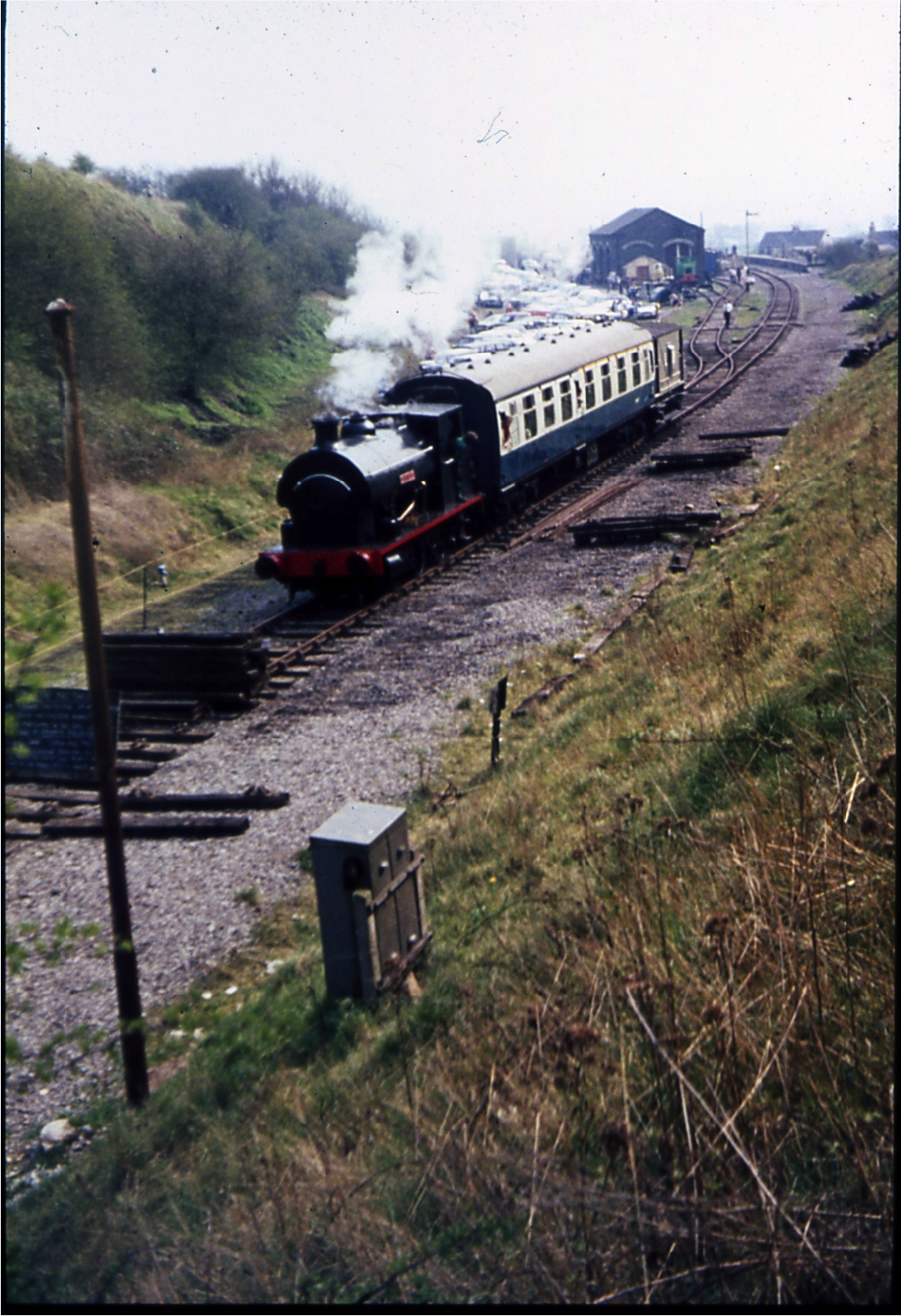
Henbury working on passenger trains at Radstock

Henbury working on passenger trains at Radstock

Henbury returning to Radstock North in 1973

Henbury setting away for Writhlington in 1973

As mentioned before, the Radstock operation finished in 1975 and Henbury was homeless for a short while, until in 1978, the Bristol Industrial Museum opened.

Henbury outside M Shed, before it opened as Bristol Industrial Museum, December 1975

Henbury outside M Shed, before it opened as Bristol Industrial Museum, December 1975

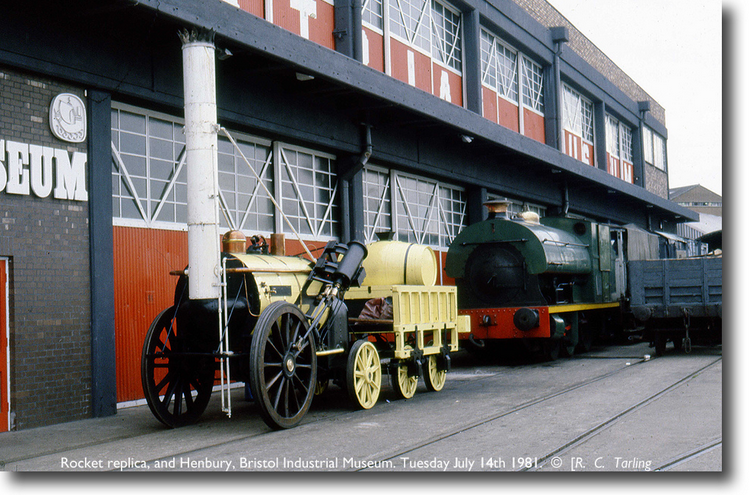
Henbury was present at the opening ceremony of the museum, and was immediately put to work pulling passenger trains on the quayside.
At this time, coal trains from the main line would regularly travel down to Whapping Wharf sidings, either trip worked a BR loco, or thereafter by the Western Fuel Company’s Hudswell Clark shunter.
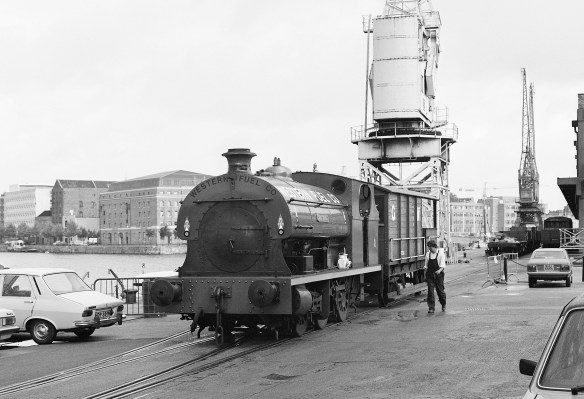
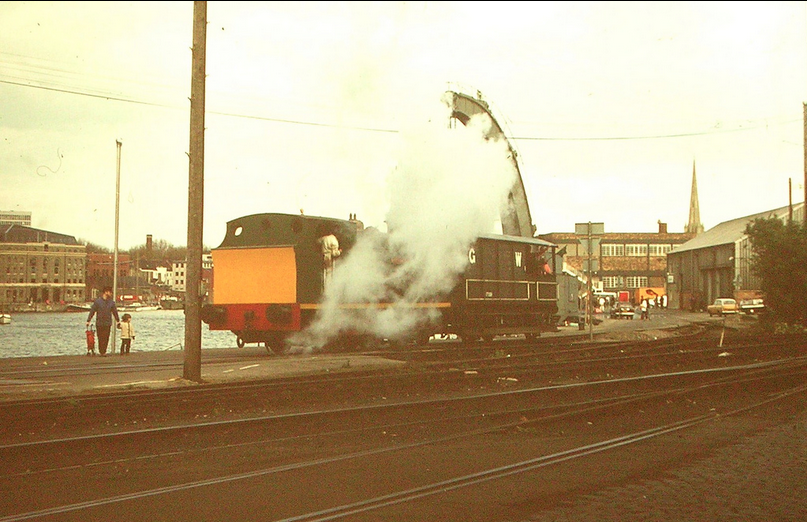
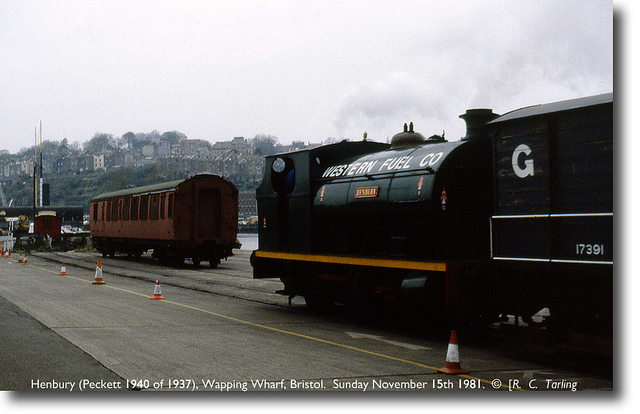
It was in 1981 that the diesel loco required repairs, the Western Fuel Co. turned to the nearby museum for assistance, and Henbury was pressed into service to keep coal coming in to Bristol, thereby becoming the first preserved steam loco to haul scheduled goods trains for British Rail.
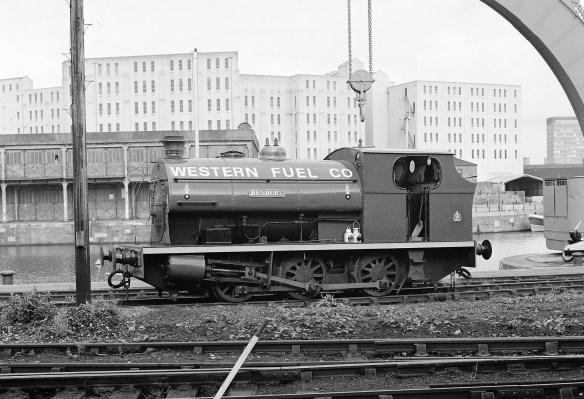
Repainted with a yellow bunker, running plate and WESTERN FUEL CO. lettering on the tank sides, she pulled full wagons from Ashton Meadows to Whapping Wharf, and empties back, for two weeks.

On shuttle runs, 27/09/1981

On shuttle runs, 27/09/1981

At the old passenger halt, 27/09/1981

At the old passenger halt, 27/09/1981

In Western Fuel Co. markings, ready to pull coal trains, 27/09/1981

In Western Fuel Co. markings, ready to pull coal trains, 27/09/1981

The above photographs are copyright John Chalcraft and can be purchased from Railphotoprints

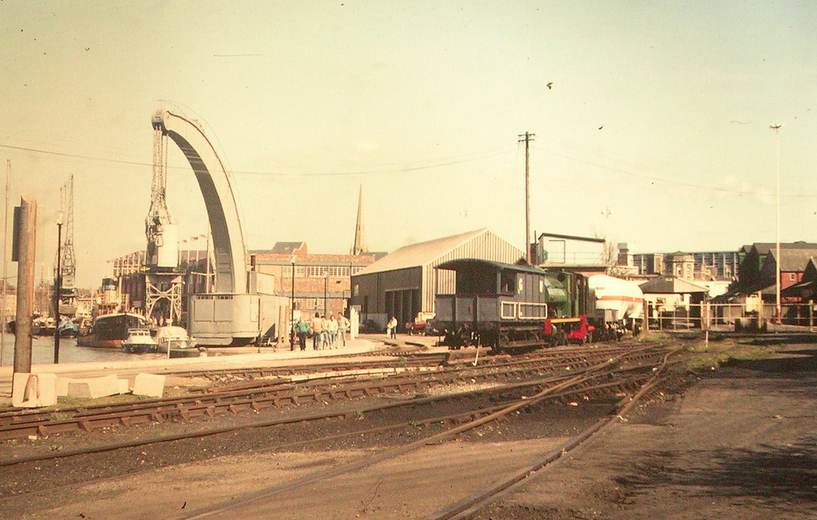
At the Wapping Wharf sidings, Fuel Co. compound to the right

At the Wapping Wharf sidings, Fuel Co. compound to the right

Approaching the site of the current SS Great Britain Halt

Approaching the site of the current SS Great Britain Halt

On shuttle runs showing the yellow bunker

On shuttle runs showing the yellow bunker

The above photos are copyright flickr user Emmdee

Sharing the line with an unusual stablemate

Sharing the line with an unusual stablemate

At the site of SS GB Halt

At the site of SS GB Halt

Above photos are copyright Robert Tarling

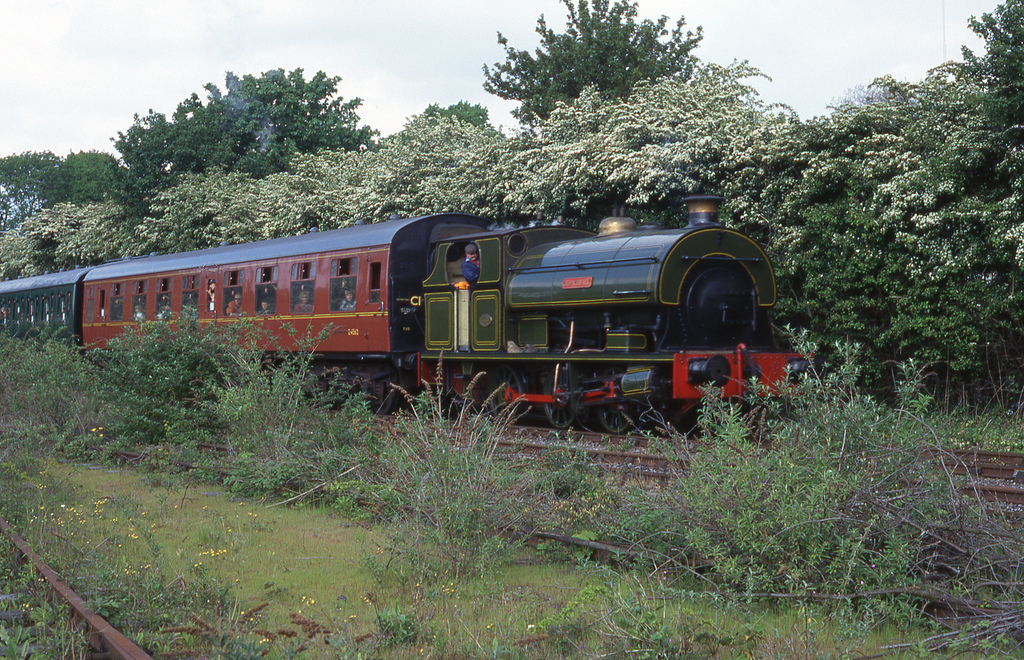
Henbury has hauled thousands of passengers over the years. In the 1990s her livery was altered again, the lining more closely resembles that which she wore at Avonmouth, but extending over the saddle tank as well as the cab.
Here she is pulling BR Mk1 carriages at the Festival of the Sea in 1996, before the main line link was severed.

Henbury in ex-works condition, 1996

Henbury in ex-works condition, 1996

Rob Skuse on the M Shed working exhibits page compiled a little selection of Henbury’s exploits over the past 10 years. These pictures are all copyright Rob Skuse.

Receiving some attention in the old workshops

Receiving some attention in the old workshops


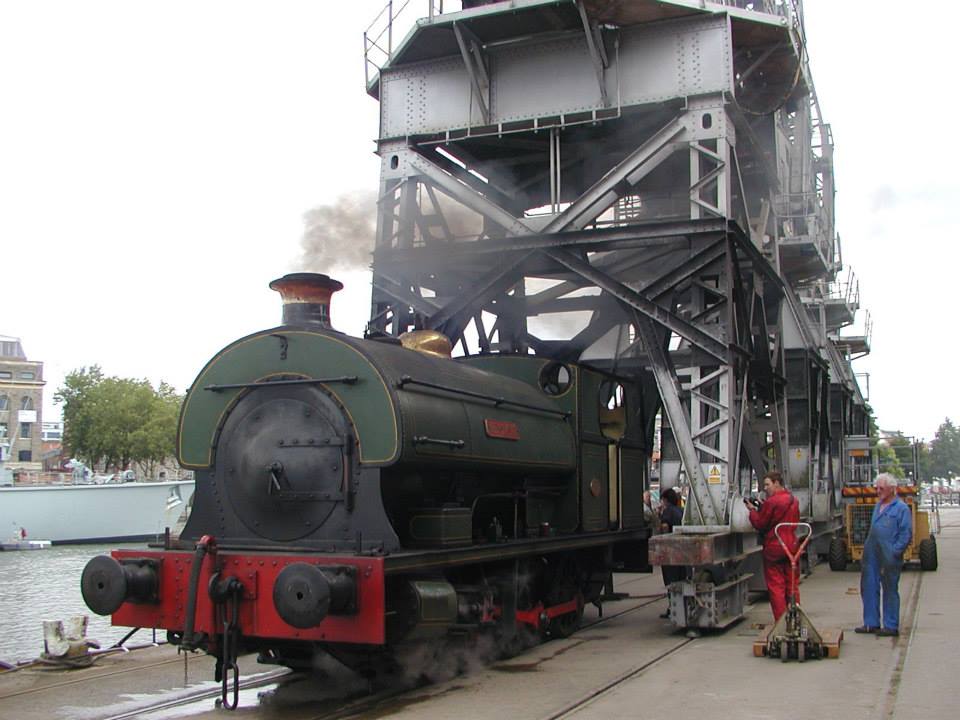
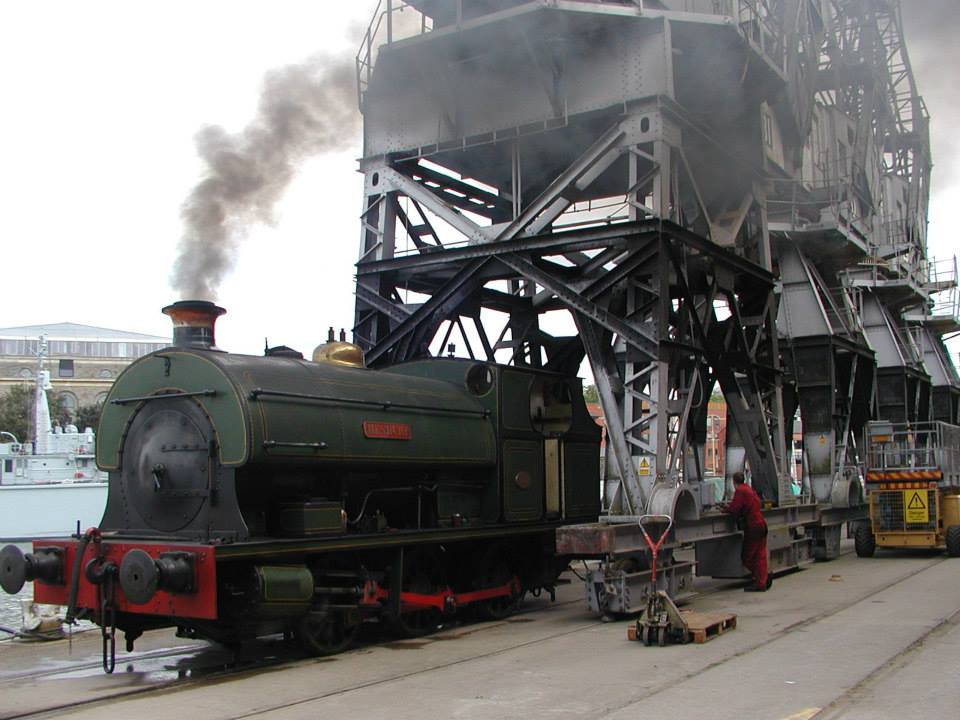
With the refurbishment of M Shed under way, the power supply to the cranes was cut off. Henbury stepped in to help once more, and with the help of some chains, dragged the cranes into position

With the refurbishment of M Shed under way, the power supply to the cranes was cut off. Henbury stepped in to help once more, and with the help of some chains, dragged the cranes into position

Ready to go

Ready to go

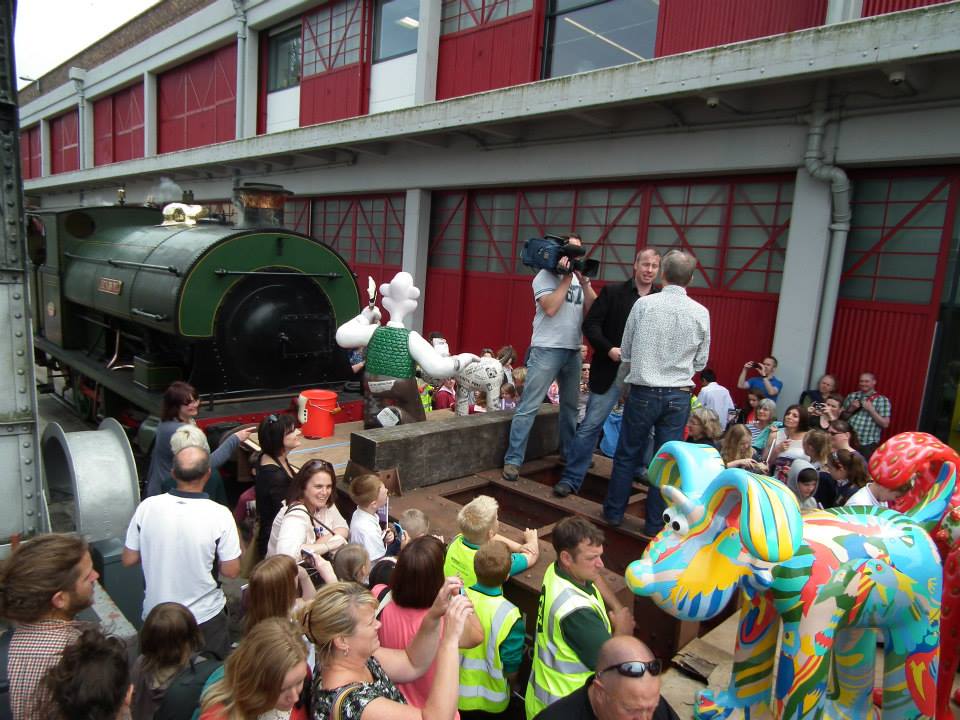
At the 'Gromits Unleashed' launch in 2013 with Aardman's Nick Park.

At the ‘Gromits Unleashed’ launch in 2013 with Aardman’s Nick Park.

On winter holiday at Midsomer Norton

On winter holiday at Midsomer Norton

Ready to attack the incline

Ready to attack the incline

10352196_670686603018067_1210955677307665377_n

In July 2014, she was withdrawn once more, and will be dismantled to allow her boiler to be inspected.

Photo courtesy of Juliet Eden

Photo courtesy of Juliet Eden

TBT – Portbury to Portbury – 2001

Way back in 2001, the previously-mothballed rail link to Portbury had been renovated and was due for re-opening. The opportunity was taken to run a special 3-coach train hauled by the museum’s own loco ‘Portbury’ from Parson Street Station (Where the Portishead branch leaves the Great Western Main Line) to the new terminal at Portbury dock.
A full write-up of this historic event written by Paul Stanford can be read on the Avon Valley Railway’s website here:
http://semaphore.avonvalleyrailway.org/html/avonside.html

Here are two videos on YouTube documenting the event, one taken from the leading carriage of the special train.

TBT – Another Ruston at Canon’s Marsh

While the BHR currently operates the ex-British Gas shunter (Known as ‘The Bug’), this isn’t the first Ruston & Hornsby Diesel to have worked on the docks railways in Bristol.
In July 1952, just over the water at the Bristol Gas Company’s works at Canon’s Marsh (Now the site of luxury new build and re-build flats), a 4-wheel diesel mechanical shunter is at work.

This photo is reposted from Rail Photoprints and can be purchased at this link.

TBT – Pannier on Hotwells Road

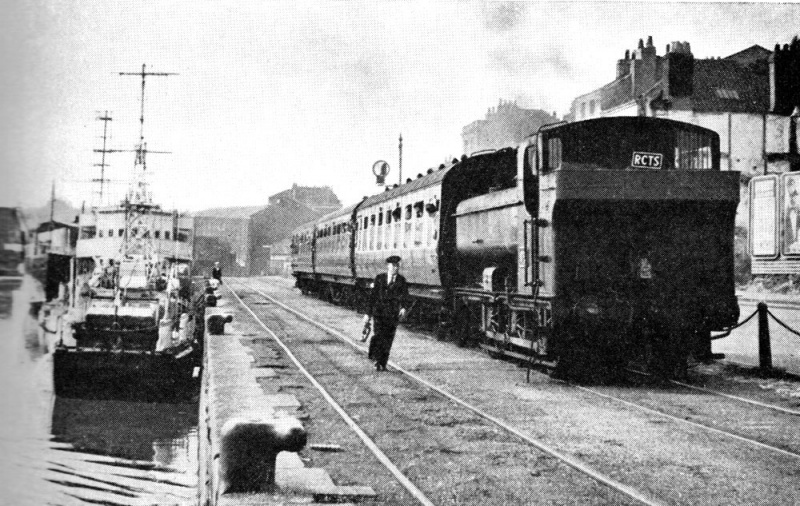
This fantastic photo posted on the magnificent Bristol Railway Archive site shows ex-GWR pannier tank loco No.9769 taking a special train for the Railway Correspondance & Travel Society down the quayside line along Hotwells road in 1959.
This photo is property of The Railway Magazine.
800px-Hotwells_Road2-No9769-1959

TBT – Steam meets diesel on the wharf

Source: http://bristol-rail.co.uk/wiki/File:Wapping_Railway_Wharf7.jpg
Copyright Mike Radford

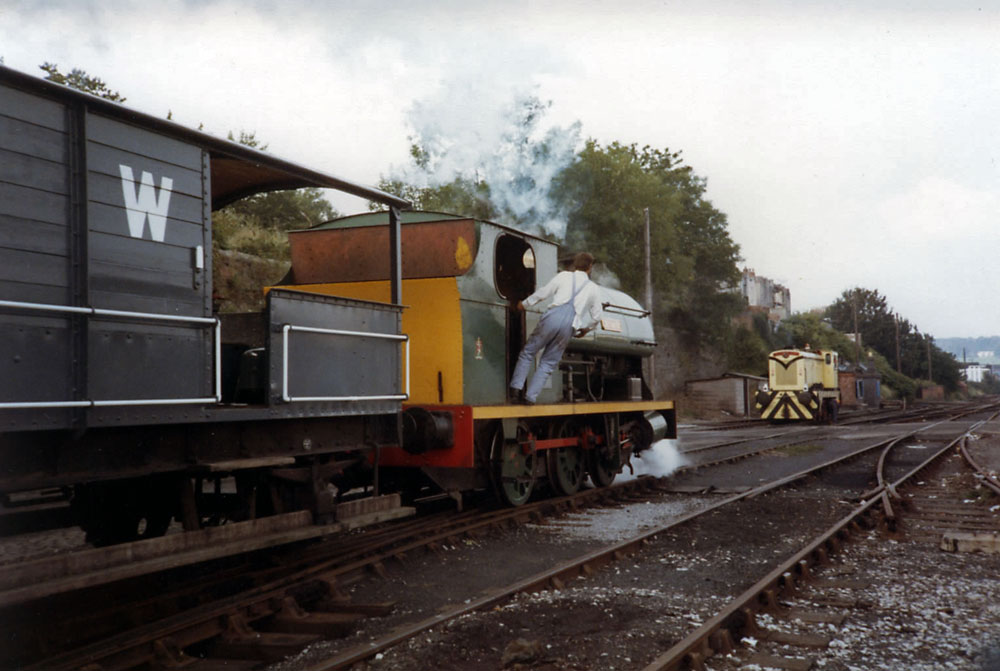
In this photo found on the Bristol Railway Archive, ‘Henbury’ complete with full yellow end and bufferbeam, meets ‘Western Pride’ on Whapping wharf circa 1981.
The diesel loco is standing on what is now the long siding in the yard. This photo also illustrates the industrial backdrop of the early days of the Harbour Railway, quite a contrast to the contemporary view.

TBT – Southern E1 at the Festival of the Sea

From the 24-27th May 1996, Bristol Harbour was host to the International Festival of the Sea. This was a huge event featuring many guest ships and attractions, and of course the BHR played a part. A shining and fully-lined out ‘Henbury’ was joined by LB&SCR E1 class 0-6-0T No.B110, then based at the East Somerset Railway (Now being restored to service on the Isle of Wight as No.W2 ‘Yarmouth’). The two locos operated a shuttle service between the station at Ashton Meadows and the Bristol Industrial Museum with 3 loaned coaches.
The following pictures appear with the kind permission of Geoff Hartland.

11090872625_7325697da6_b

11090873575_dc9f0d3290_b

11090965126_556f5b687a_b

11090977424_b3c8457deb_b

Number 110 was built at Brighton Works in 1877 and named ‘Burgundy’. It was withdrawn in 1927 and sold to a colliery in Rugeley, which resulted in it being the only member of its class to survive scrapping, being sold into preservation in 1963. It was in service on the ESR between 1993 and 1997, when it was withdrawn early due to firebox problems. She is now on display at the Isle of Wight Steam Railway’s ‘Train Story’ exhibition, and will be restored in due course.