Well, that’s the end of the 2015 operating season on the BHR. Plenty of exciting updates to come, with the ongoing metrobus and Whapping Wharf/Sugar Quay developments, and M Shed’s own projects.
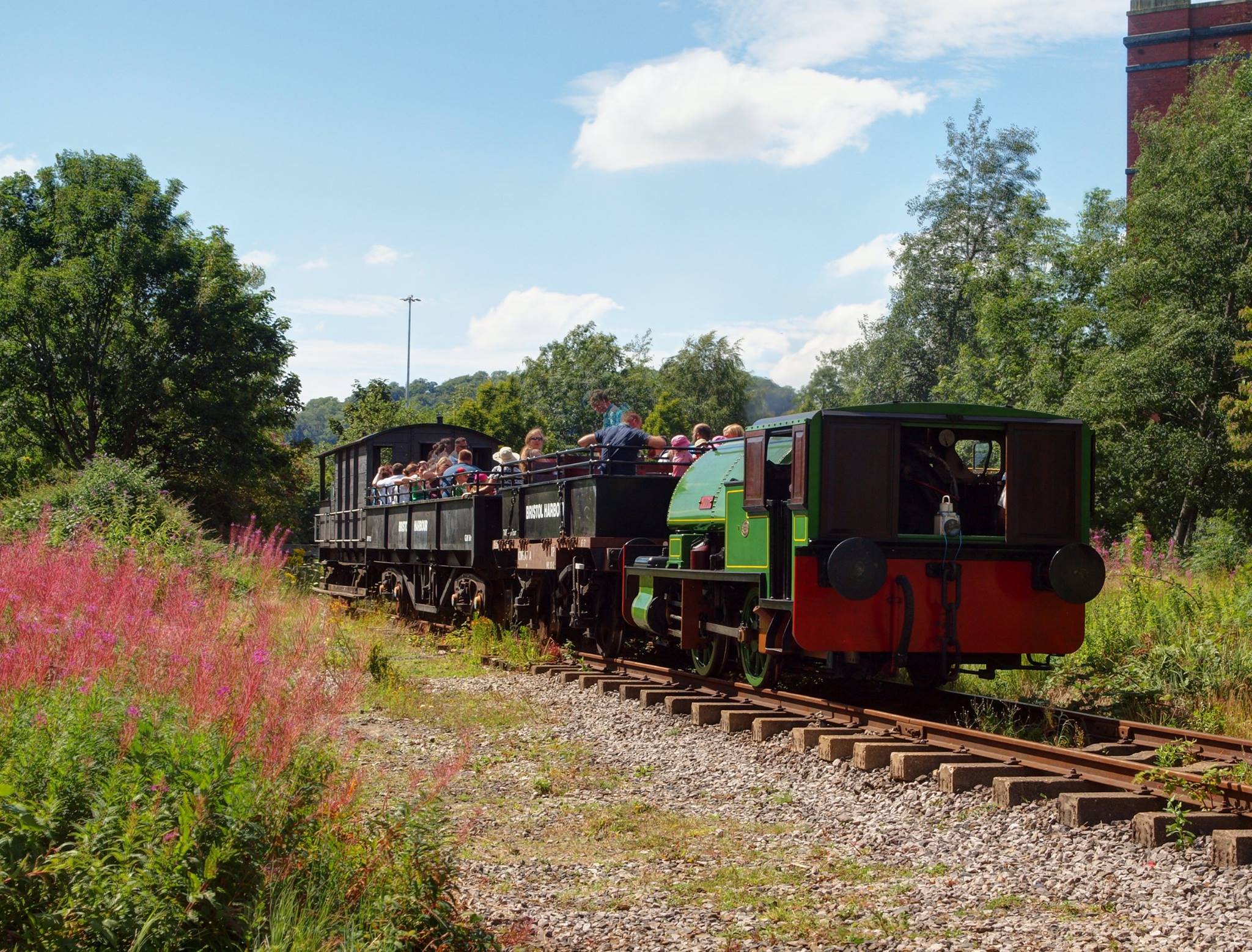
Here’s a photo of a scene that won’t be repeated again, the old Butterfly Junction halt with ‘Judy’ on the passenger train.
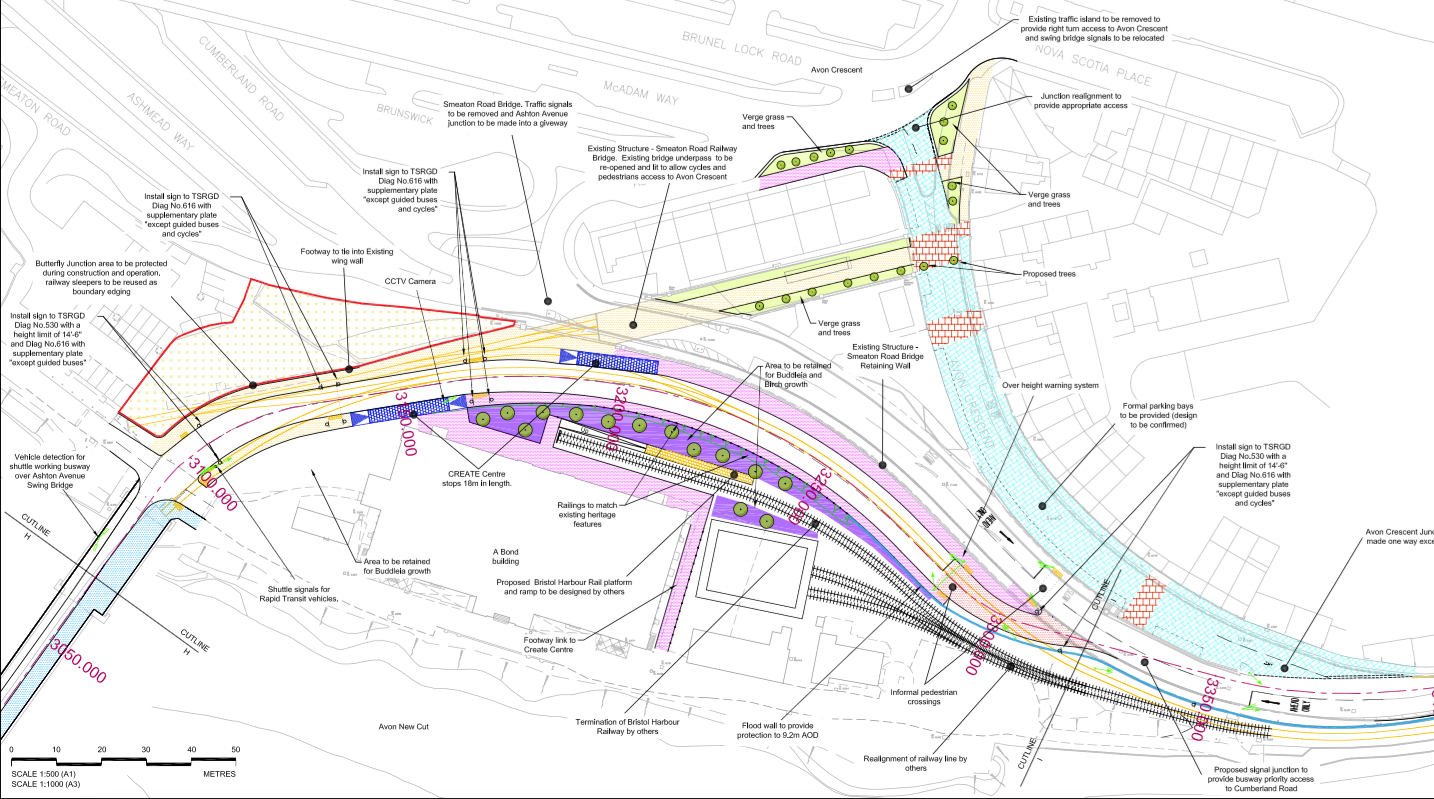
The above diagram (available via the MetroBus website) shows the intentional junction for the guided busway with Cumberland Road, and the re-routing of the harbour railway as a result. The large sweeping curve into Butterfly Junction is gone and replaced with a halt alongside the Bond Warehouse, whilst the ‘Barn’ is retained.
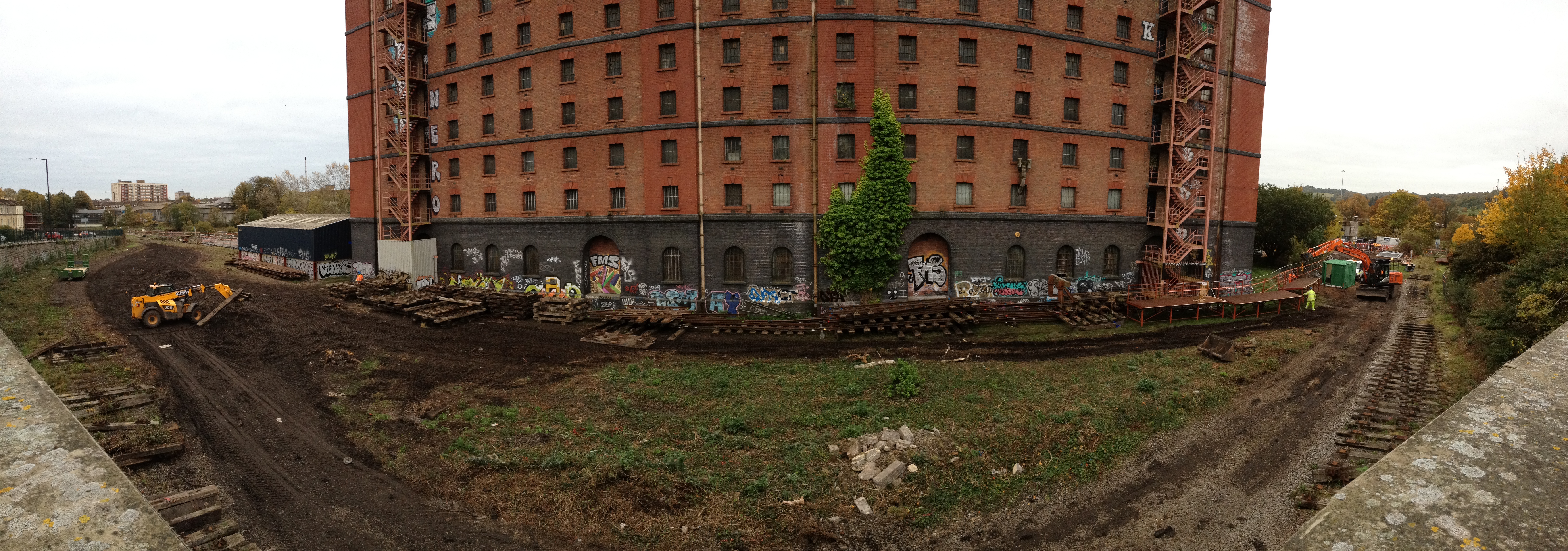
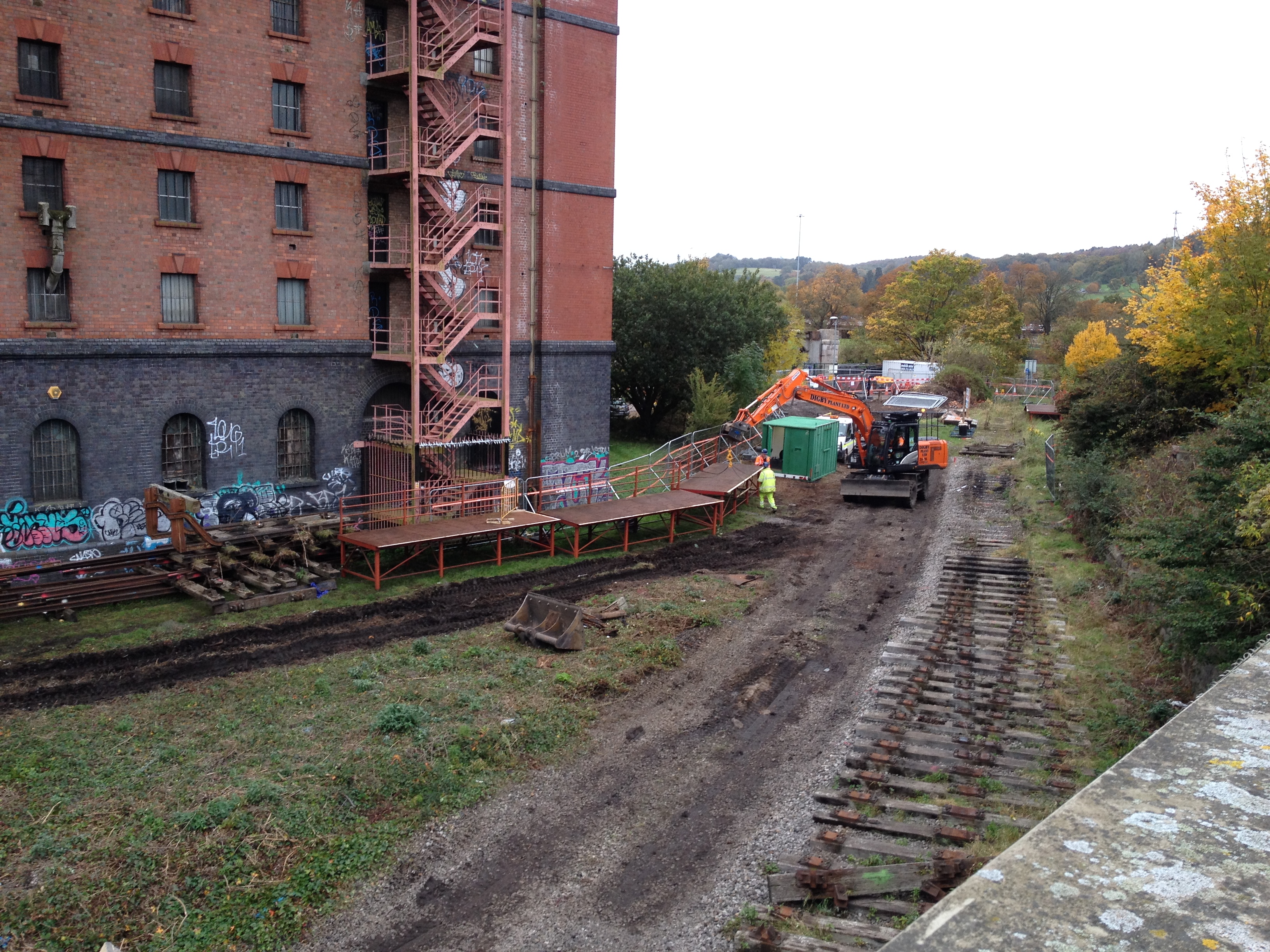
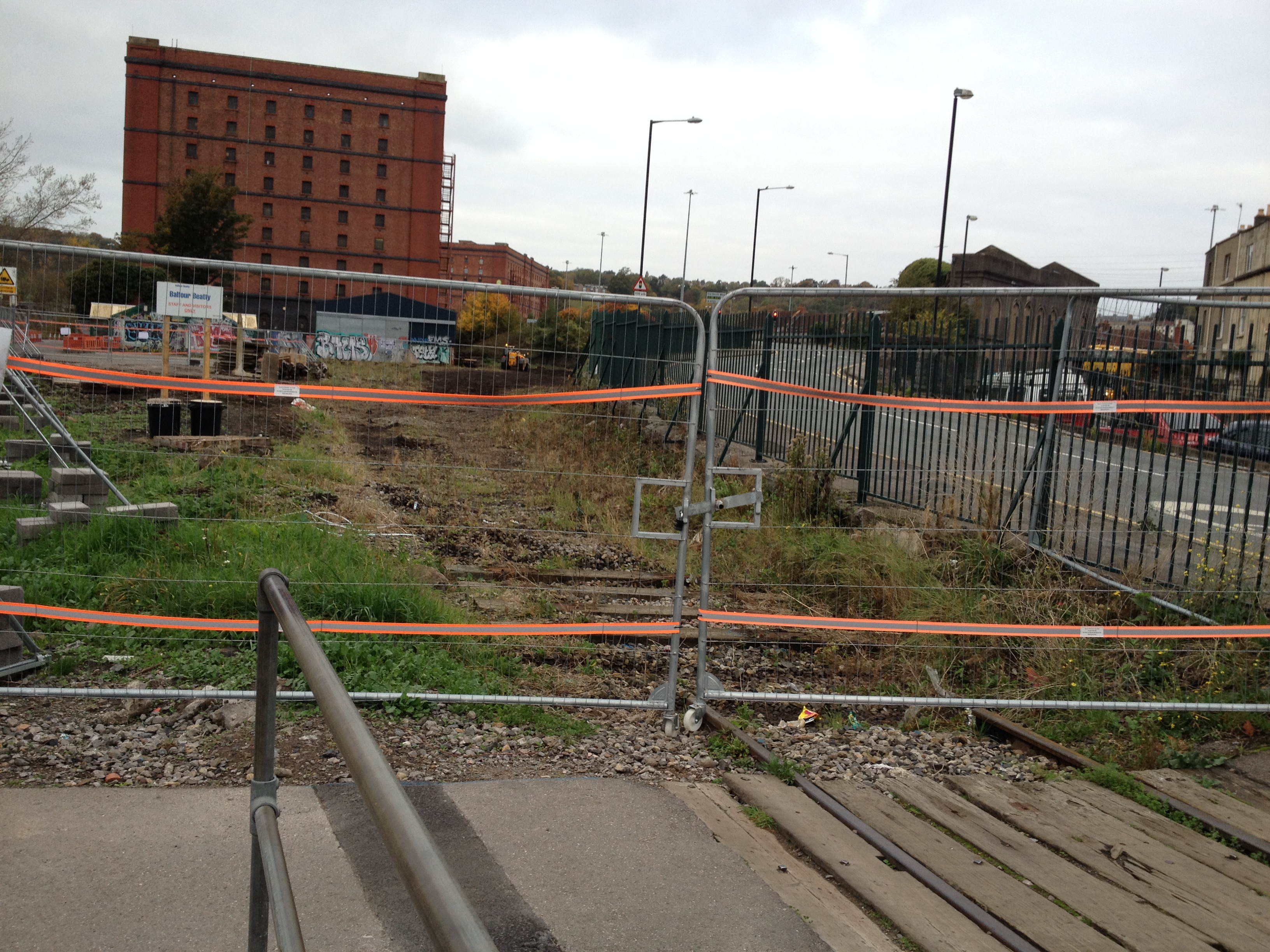
This was the view this morning, the platform in the final stages of removal, and the pointwork rails removed.
The track has been removed as far as the foot crossing to the chocolate path.
Track lifting is well under way at Butterfly Junction, just the pointwork rails and the sleepers remaining in the station area. These photos also show the vegetation clearance that has taken place.
Ashton Avenue Bridge is now closed for refurbishment, along with the former trackbed. No doubt the rails still on the bridge will be coming out shortly.
A different scene over at SS Great Britain Halt, where the buffer stop has been moved from the end of the line here. I believe that this is to be used as the basis for a small shed, which should come in useful if the branch along the New Cut is closed while MetroBus is under construction.
What a nice weekend! The weather was good and the crowds turned out to both the Docks Heritage Weekend, and on Saturday evening, the Crane Dance. The dance, featuring live music and choreographed lighting and movement, was devised by Laura Kriefman and was a collaboration between:
M Shed, Underfall Yard, RSVP Bhangra, The Balmoral, Bristol Pilot Gig Club, Bristol Channel Social Rowers, Watershed, Studio 360.
Here’s a few clips:
Jamie Corbin put together this timelapse of the crane dance:
In the daytime, there were dockside loading and unloading demonstrations, actors from the Show of Strength Theatre Company, mosaics, the steam crane in operation, rides on the tug John King, and the chance to drive Judy for £10, and more…
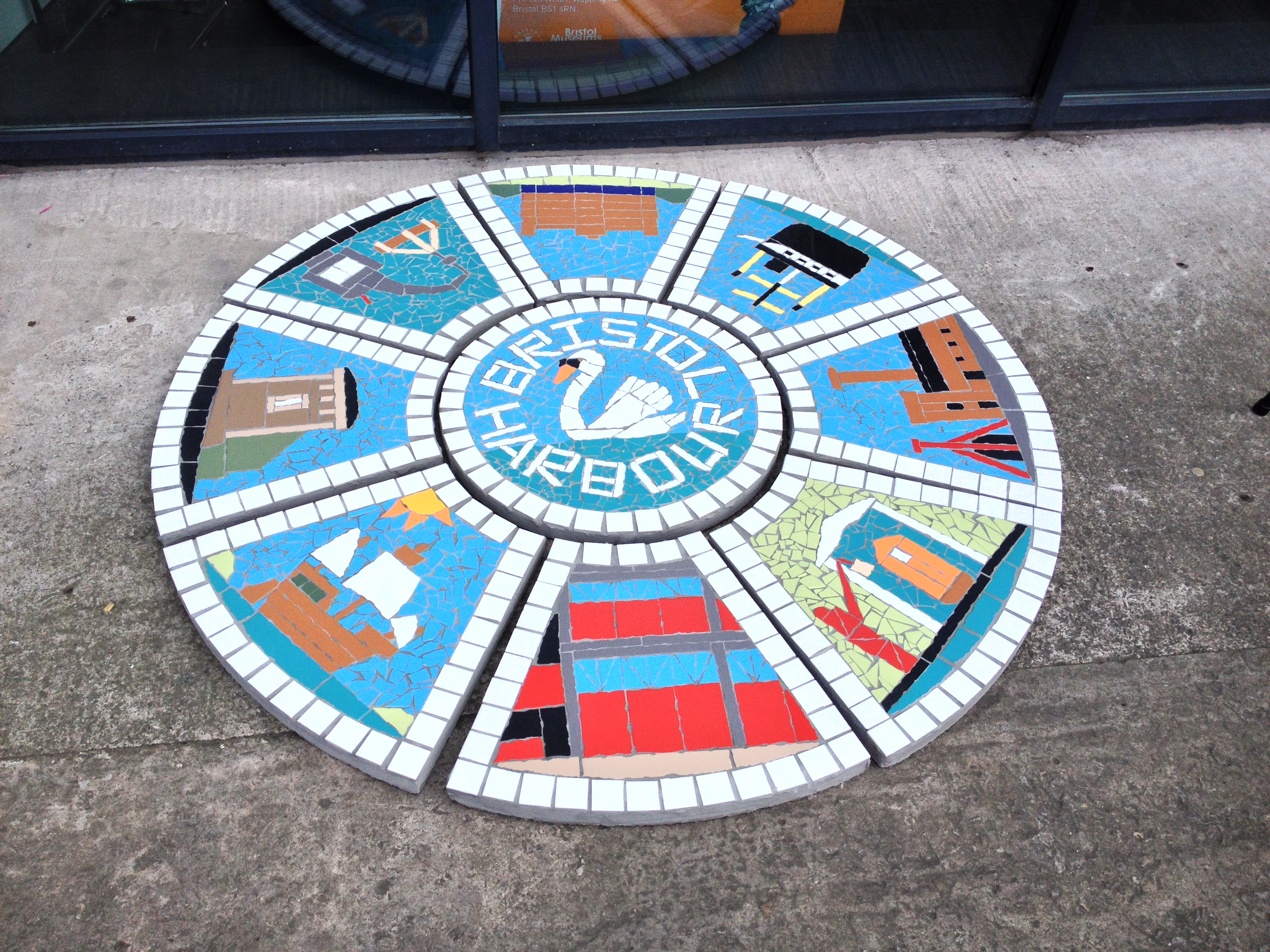
Here’s an example of one of the mosaics made by Mosaic Madness
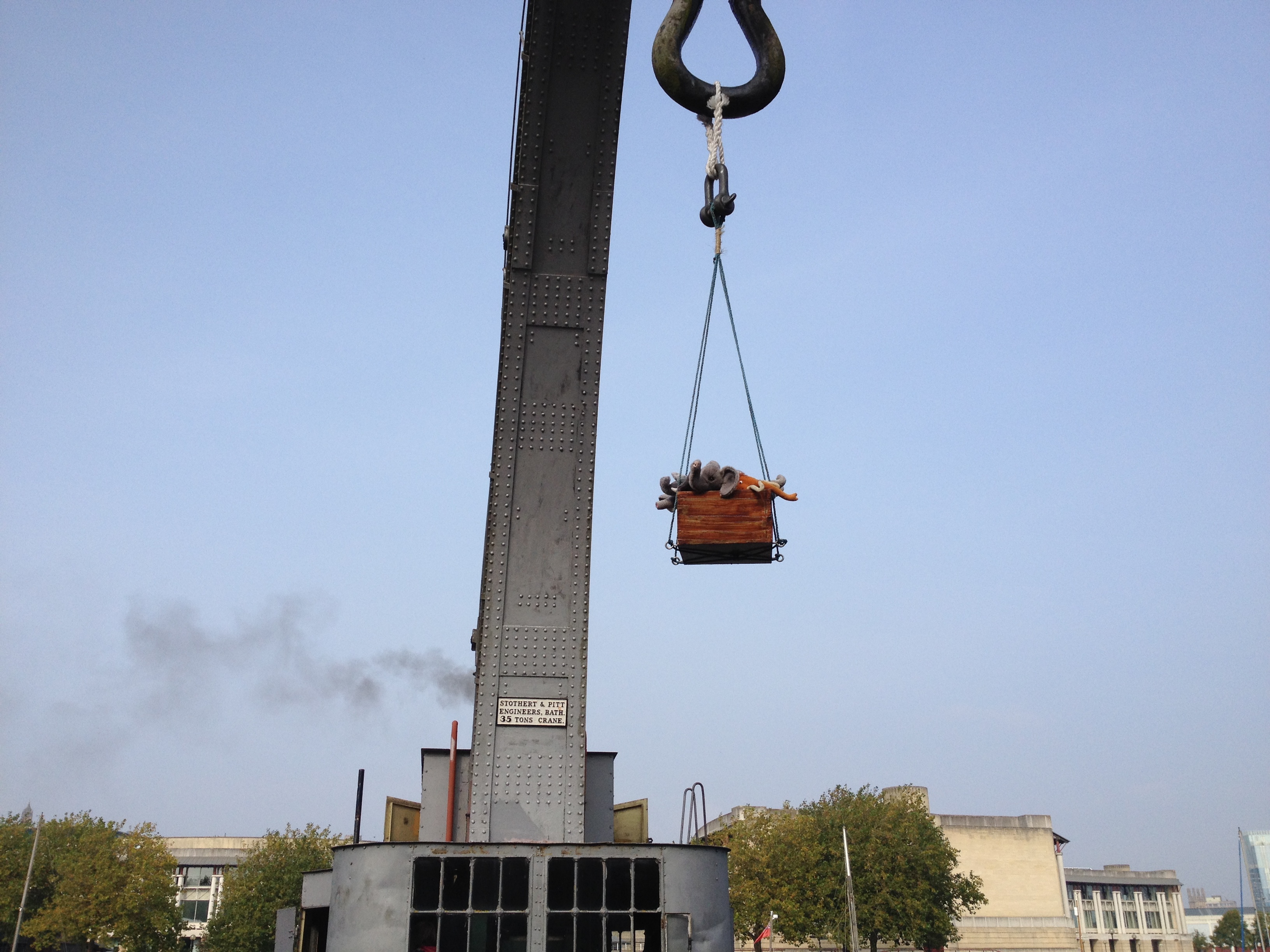
The steam crane had quite an unusual load…
Henbury was on display in the yard. She is in need of 149 new boiler tubes for her overhaul and any and all donations towards this are very welcome!
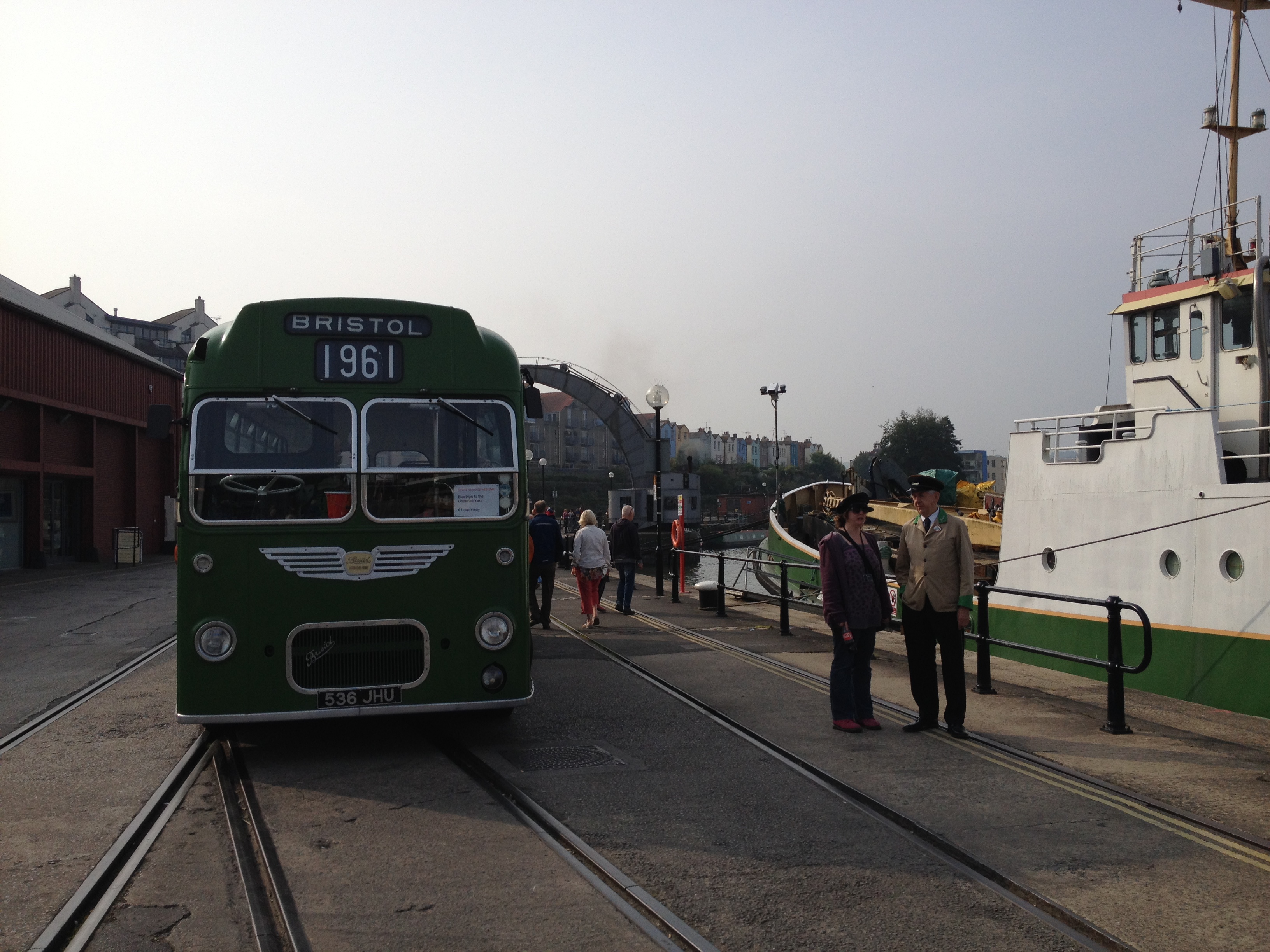
This delightful Bristol bus was busy ferrying people between M Shed and Underfall Yard.
It’s been a while since I’ve done any Throw Back Thursday posts, but with summer just around the corner, there are more to come!
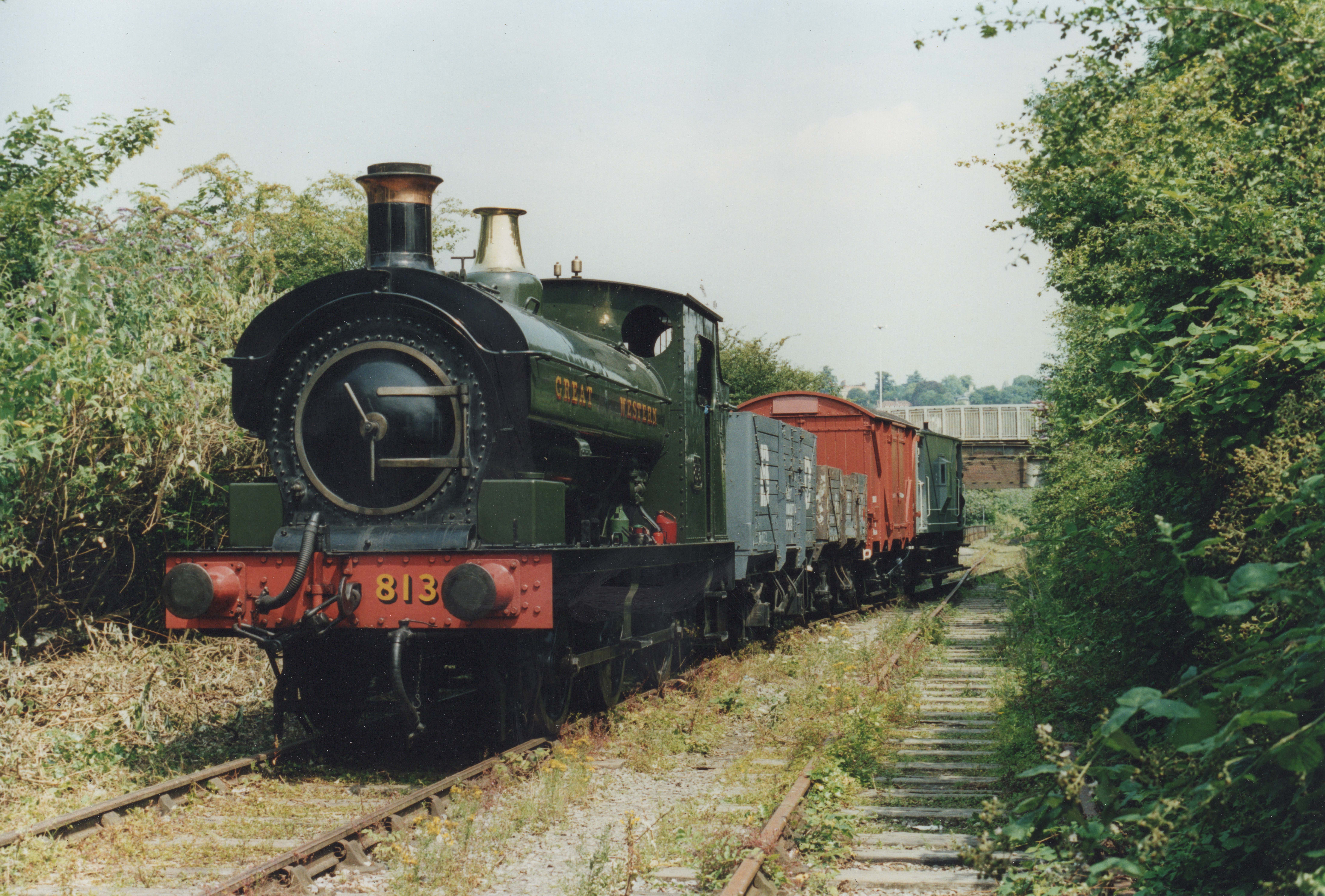
This is a photo from a charter in 2001, during the last days of Ashton Meadows sidings (note the overgrown bushes). The loco is GWR 813, a unique survivor built in 1901 for the Port Talbot Railway in Wales. The 813 fund have given permission for this photo to be reproduced here.
In this first look at the changing face of the Butterfly Junction area, you can see the extensive clearance of foliage that has taken place. Surveyors have been working in the area over the past few weeks.
Further down the line, the area around the Cumberland Road Bridge siding has also been cleared. The spare wagon wheelsets have been moved out of the way. The plans for the bridge indicate that the path here will be raised up to platform height in order to meet the new bridge.
Paul Jarman of Beamish Transport Online has posted updates on Portbury’s arrival at Beamish. Shunted off the lorry siding by departing hire loco ‘John Howe’ (An Andrew Barclay 0-4-0ST), Portbury was in steam the next day and immediately put to work shunting the yard at Rowley station.
In May 2014, a shunting move to get rolling stock out of the Smeaton Road shed and into the rebuilt ‘Barn’ saw Fox, Walker and Sons No.242 (NCB No.3) out in the open air. This loco had new bearings fitted before the rebuild of M Shed in 2006, so is a rolling chassis and can be moved around.
The photos also give an indication as to the condition of the loco, and the scale of any restoration that might take place.
These pictures were taken by Michelle Scoplin of the Create Centre and appear here with her kind permission.
The Coles crane is moved out first as part of the shunt
With the crane out of the way, the Ruston couples up
‘For Sale’ – very funny!
Pinholes in the tank give an idea as to the thickness of the metal
The view from the Ruston’s footplate as it drags the Victorian locomotive out
Gently eased out on to the running line
Out on the New Cut – the furthest the loco has been in a long time
As previously mentioned on this blog, in 1981, the Western Fuel Co.’s diesel shunter Western Pride was in need of an overhaul. This locomotive was used to shunt wagons on the dockside and into the WFC compound, as well as trip workings along the New Cut to Ashton Meadows sidings, from where a BR loco would take the wagons onto the main line.
So it was that Henbury was hired as the first preserved steam loco to pull scheduled goods trains for British Railways (BR having stopped using steam traction in 1968). She crept onto the Western Fuel Co.’s site at 7am on Monday 28th September 1981 and worked for the next three weeks hauling coal trains of up to 450 tons.
This cinefilm was captured by Bob Edwardes and appears here with permission.
Points of particular interest include running on the main line to Bristol Bath Road engine shed to use the turntable (creating quite a contrast to the BR Blue mainline diesels at Bristol Temple Meads!) and double heading with the PBA Rolls-Royce Sentinel No. 41 (10220) that took over duties from Henbury.
Taking loaded wagons up to the Wharf (John Stanford)
October 1981, in between shunting moves (John Stanford)